About this artwork
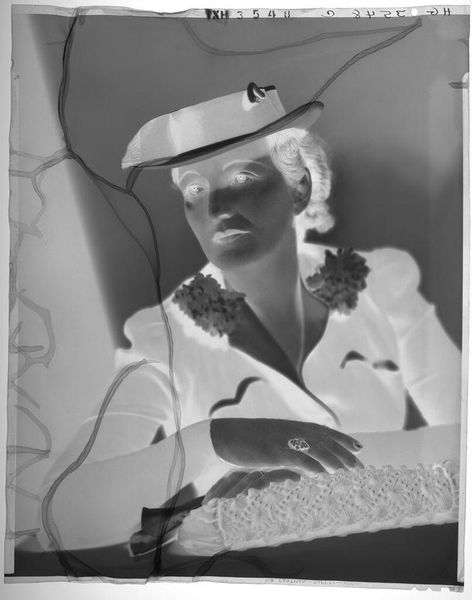
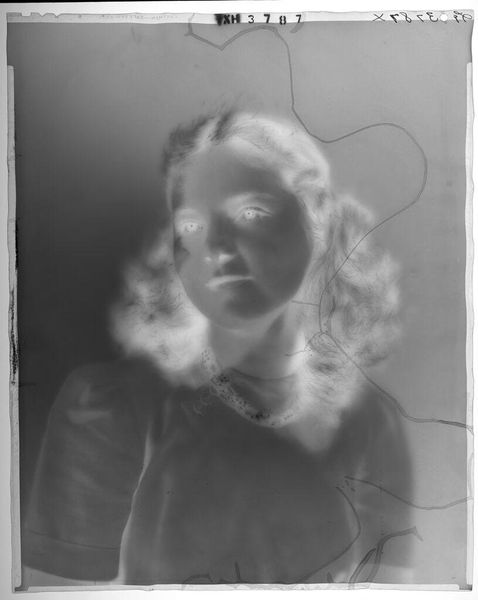
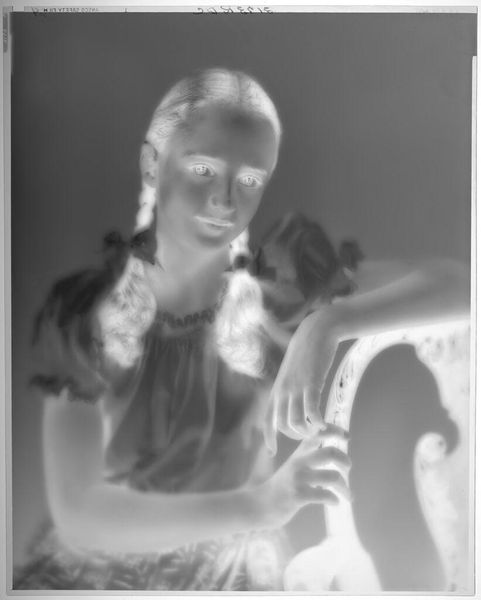
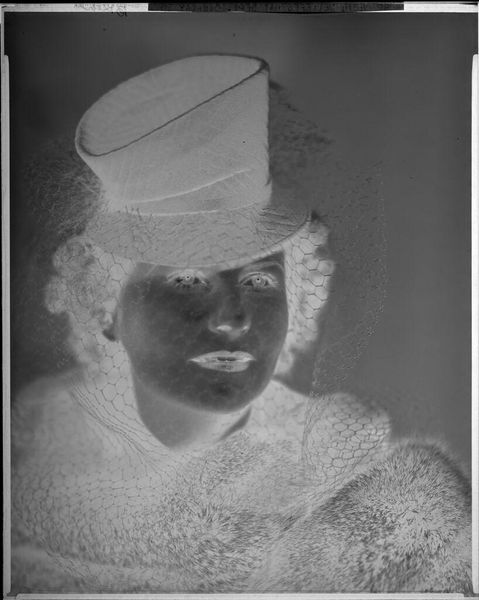
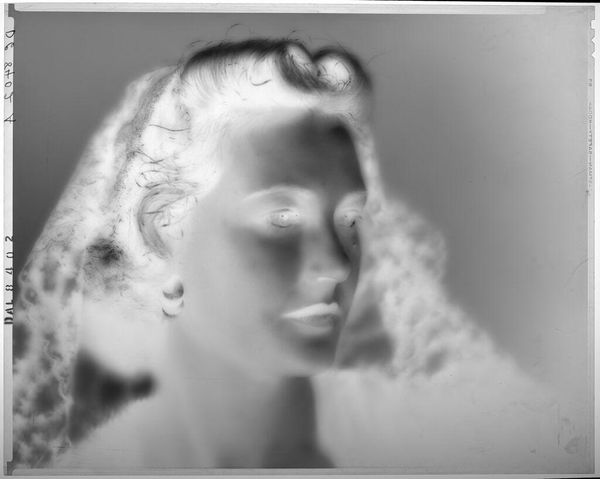
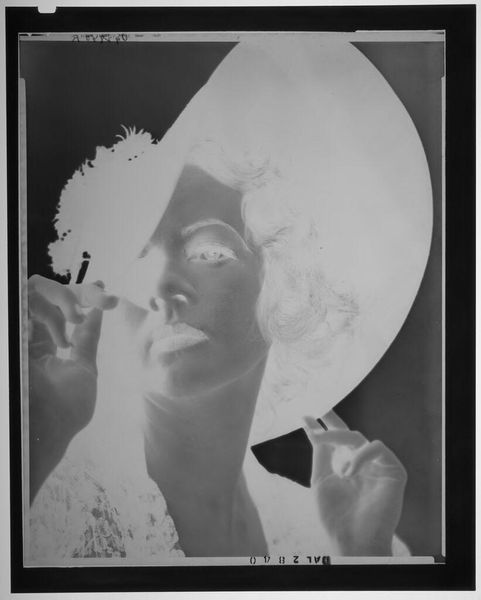
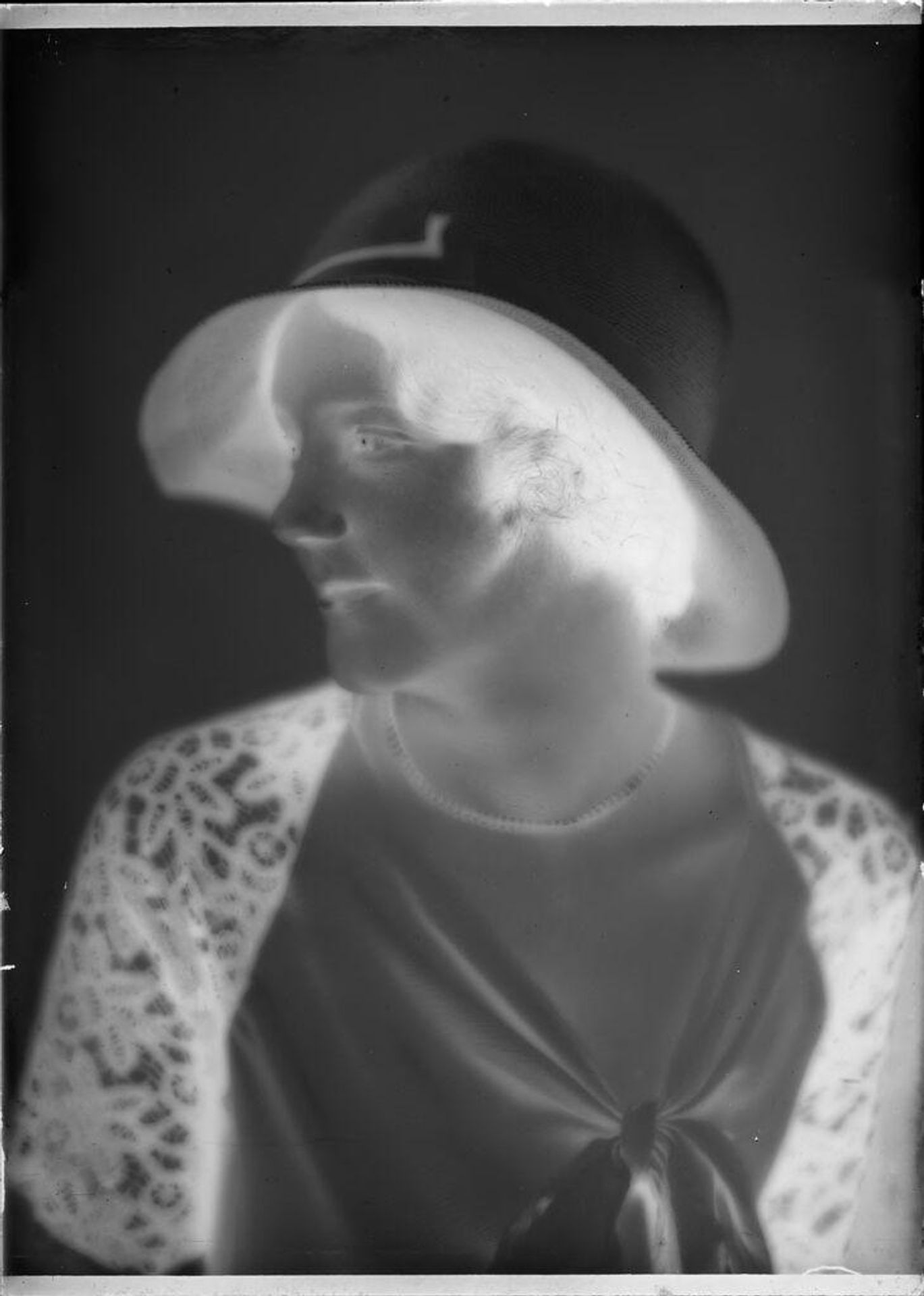
Curator: This arresting portrait, currently held at the Harvard Art Museums, is attributed to C. Bennette Moore and is believed to depict Phyllis Moore Stoll. Editor: It has a ghostly, almost ethereal quality, doesn't it? Like peering into a memory, the stark contrast giving it a dreamlike feel. Curator: Indeed. The photographic negative format lends a certain visual drama. Historically, portraiture served to immortalize its subjects, to broadcast status, and here, the interplay of light and shadow adds a layer of introspection. Editor: I wonder, too, about the hat and lacy shawl. They speak to a particular era, don't they? One where clothing was an integral part of crafting an image, a persona. The way the light dances on the lace almost feels like a secret language. Curator: Precisely. It invites a conversation between the visible and invisible, a hallmark of photographic portraiture from this period. What we see, and what remains hidden. Editor: In the end, it feels like more than just a likeness; it's an echo of a life.
Untitled (Phyllis Moore Stoll)
c. 1935

Artwork details
- Dimensions
- 17.8 x 12.7 cm (7 x 5 in.)
- Location
- Harvard Art Museums
- Copyright
- CC0 1.0
Comments
Share your thoughts
About this artwork
Curator: This arresting portrait, currently held at the Harvard Art Museums, is attributed to C. Bennette Moore and is believed to depict Phyllis Moore Stoll. Editor: It has a ghostly, almost ethereal quality, doesn't it? Like peering into a memory, the stark contrast giving it a dreamlike feel. Curator: Indeed. The photographic negative format lends a certain visual drama. Historically, portraiture served to immortalize its subjects, to broadcast status, and here, the interplay of light and shadow adds a layer of introspection. Editor: I wonder, too, about the hat and lacy shawl. They speak to a particular era, don't they? One where clothing was an integral part of crafting an image, a persona. The way the light dances on the lace almost feels like a secret language. Curator: Precisely. It invites a conversation between the visible and invisible, a hallmark of photographic portraiture from this period. What we see, and what remains hidden. Editor: In the end, it feels like more than just a likeness; it's an echo of a life.
Comments
Share your thoughts