1608
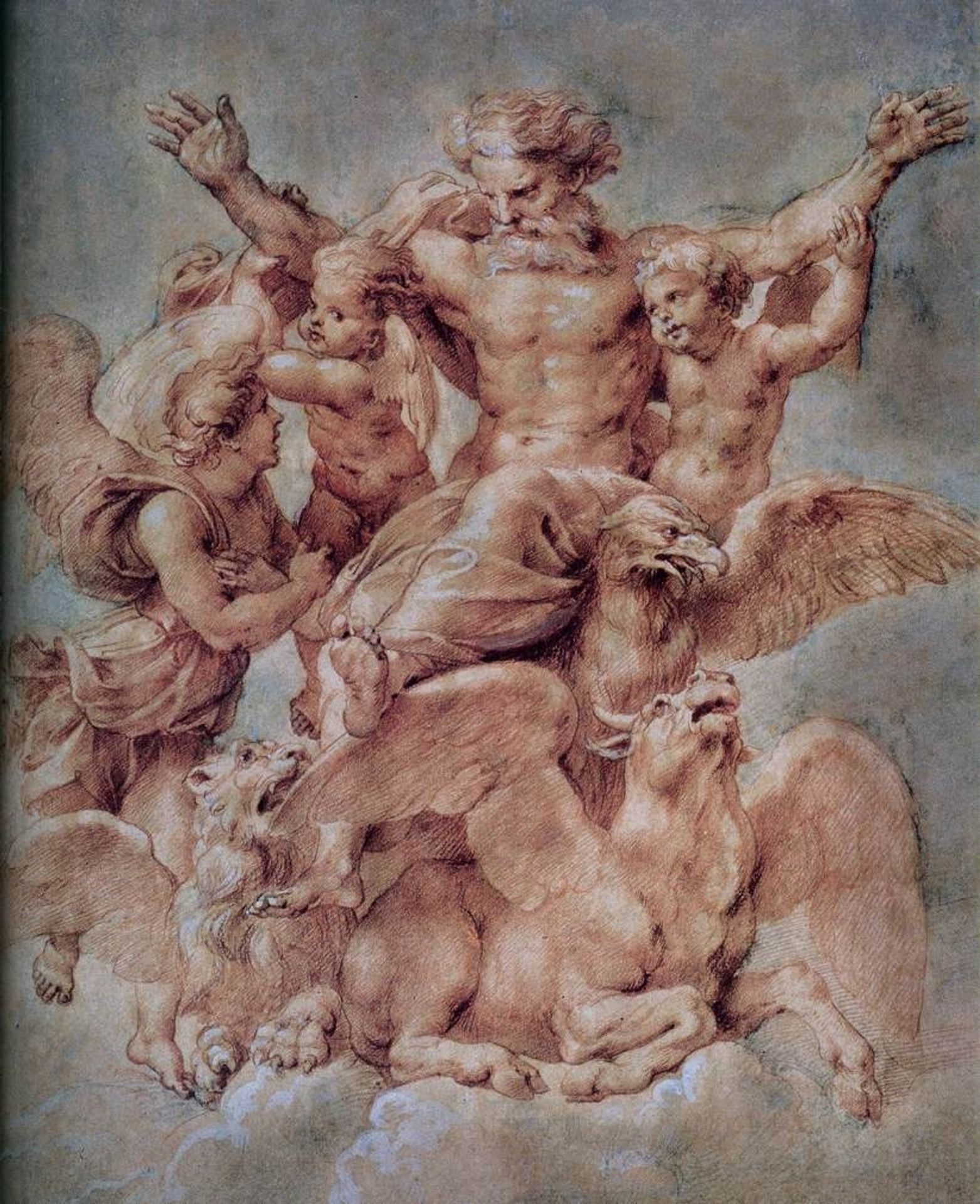
Vision of Ezekiel

Peter Paul Rubens
1577 - 1640Location
Museo Horne, Florence, ItalyListen to curator's interpretation
Curatorial notes
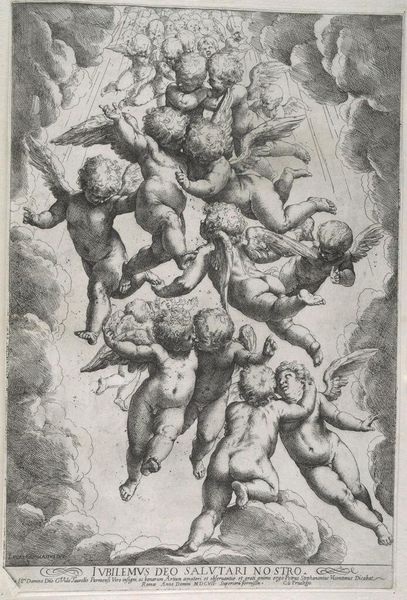
Peter Paul Rubens rendered this "Vision of Ezekiel" with pen and brown ink, sometime around 1610-1620. Dominating the scene are the tetramorphs – the four creatures symbolizing the Evangelists: Matthew, Mark, Luke, and John. The angel, lion, ox, and eagle, all bearing wings, surround a powerful, God-like figure amidst a host of cherubic angels. The tetramorph motif, rooted in ancient Near Eastern and early Christian art, resurfaces here with a renewed vigor. Consider the lion, a symbol of strength and royalty, echoing through millennia from ancient Egyptian art to medieval heraldry. Note how its representation has shifted, adapted, yet retains its core association with power. Rubens masterfully taps into this collective memory, evoking a primal awe and reverence. The upward surge of the composition, the dynamic tension between the figures, all work to create a powerful, almost overwhelming emotional experience. This is not merely an illustration; it's a visceral engagement with the divine, a reminder of the enduring power of symbols to transcend time and awaken deep-seated emotions.