About this artwork
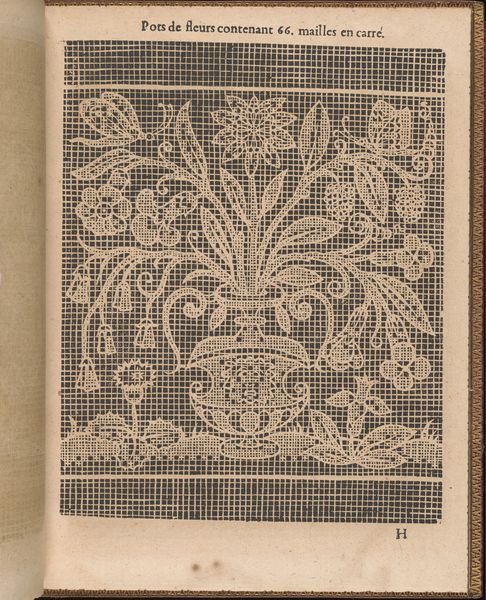
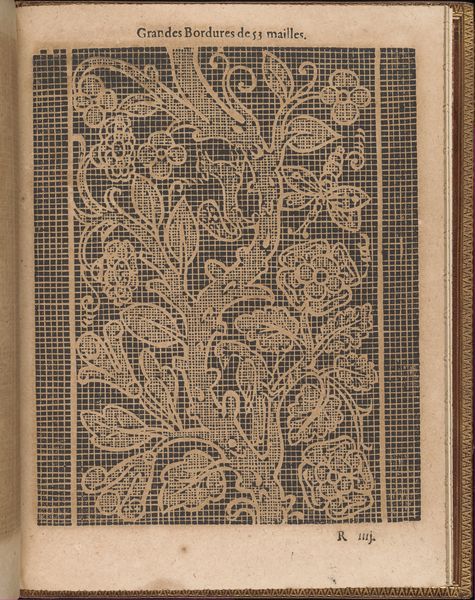
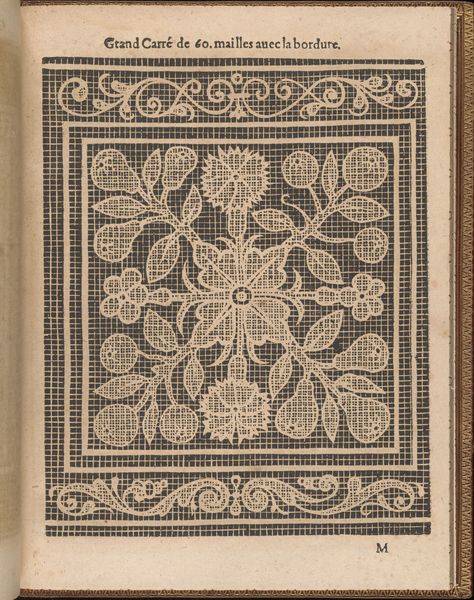
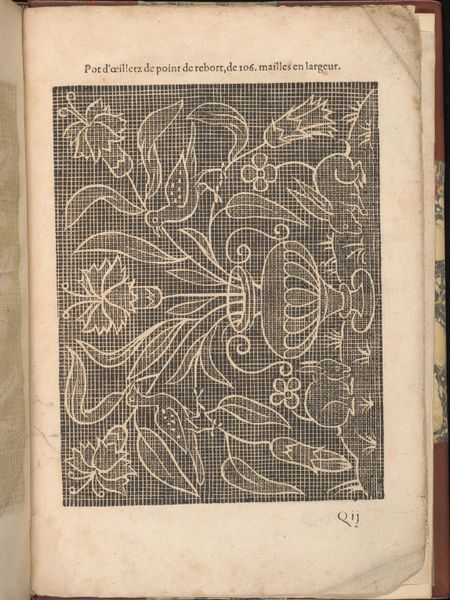
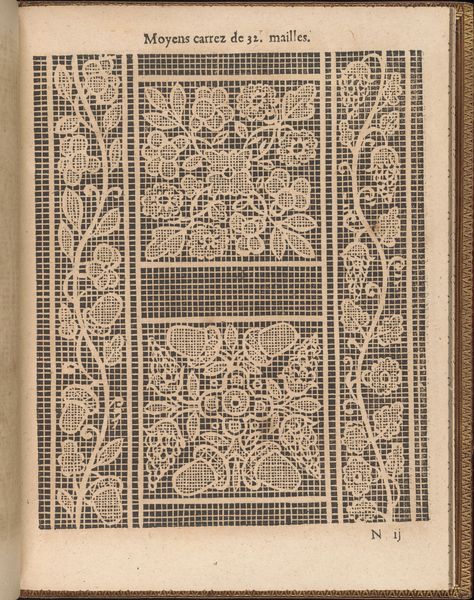
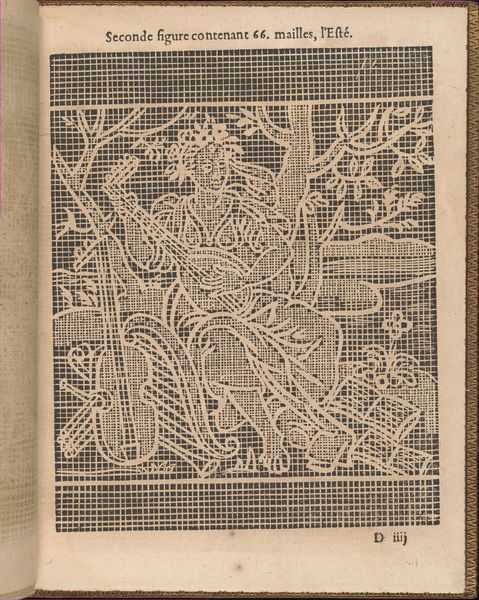
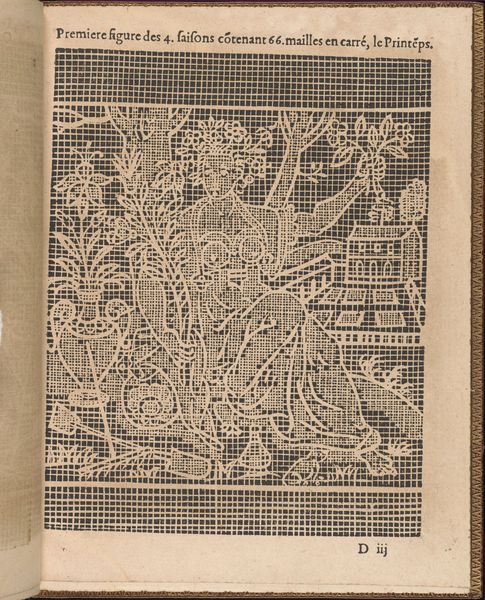
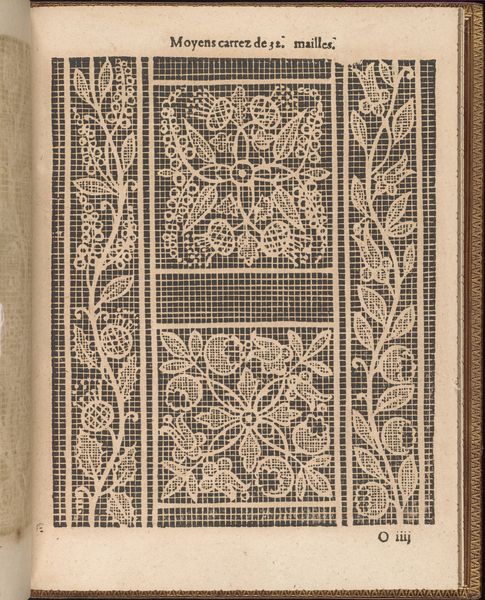
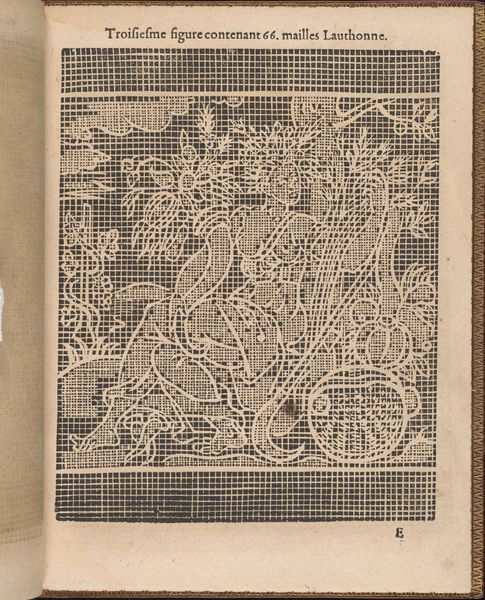
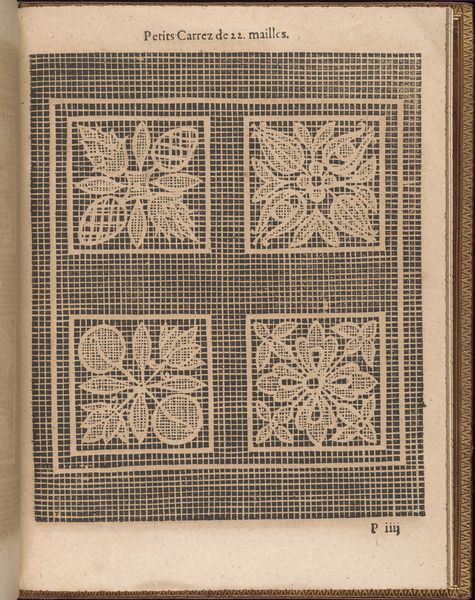
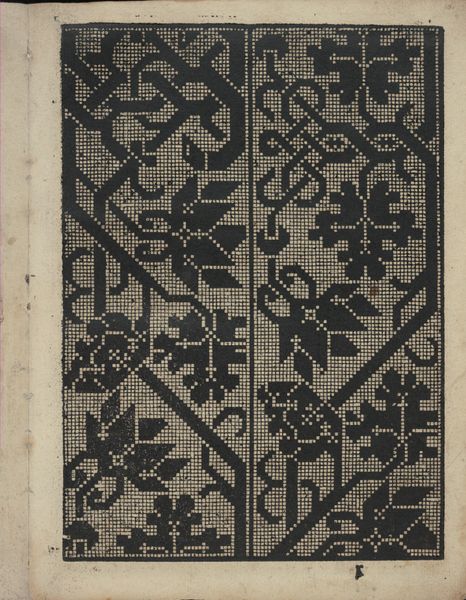
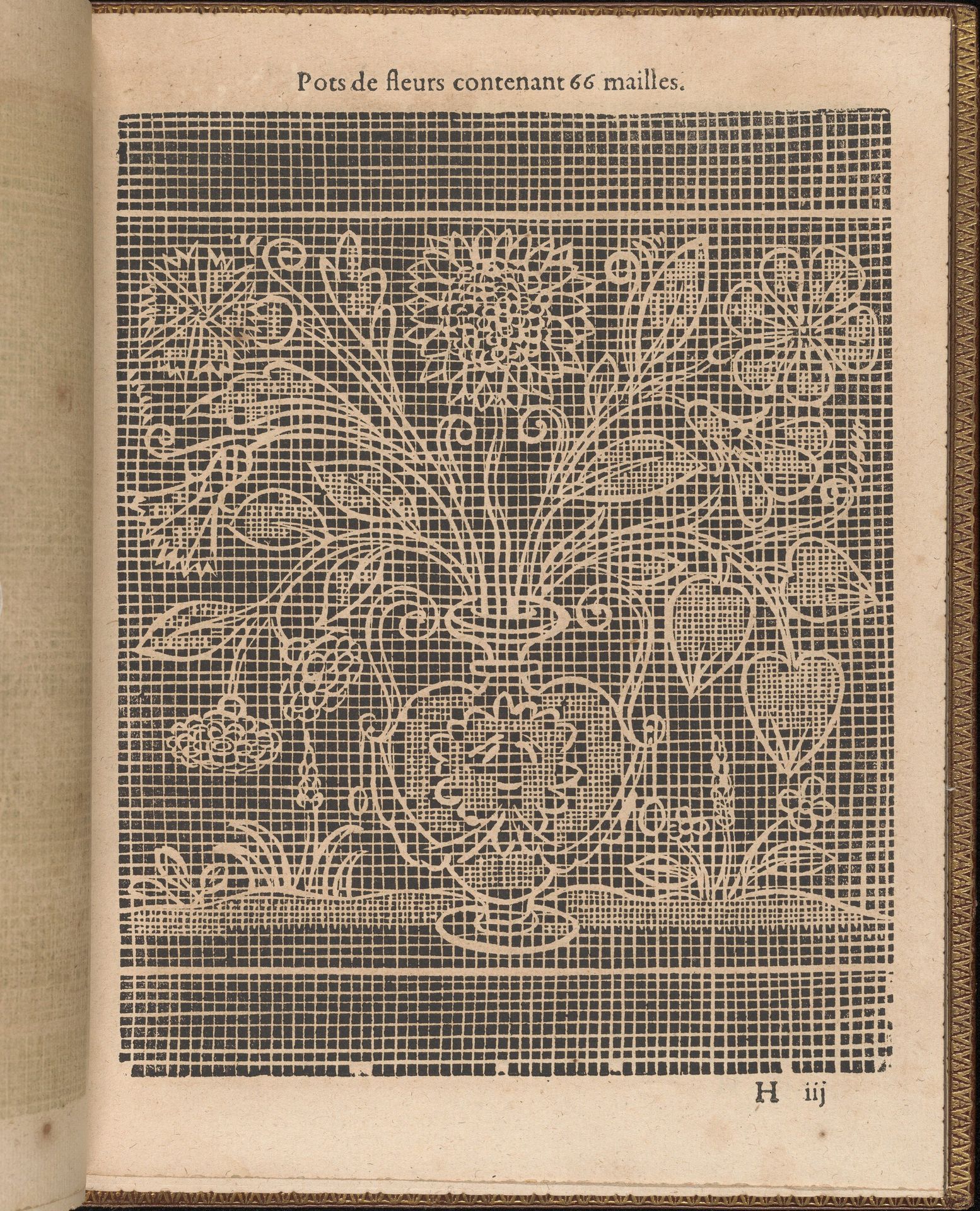
This is page 30 from Matthias Mignerak's book "La Pratique de l'Aiguille," an instruction manual of needlework patterns. The image, rendered in a woodcut technique, depicts a design for counted thread embroidery featuring a vase of flowers. Published in France, these manuals reflect the social structures of the 16th and 17th centuries, when needlework was a highly valued skill for women of the noble and merchant classes. These skills demonstrated gentility, patience, and piety, virtues prized in women of the time. Manuals like this helped standardize tastes and skills across wide geographical areas. By examining similar manuals, household inventories, and even portraits depicting needlework, social historians uncover the cultural values and economic activities that shaped artistic production. Here, the politics of imagery reflect the status of women in society, and the intersection of domestic labor with artistic creativity.
La Pratique de l'Aiguille, page 30 (recto)
1605

Matthias Mignerak
@matthiasmignerak
The Metropolitan Museum of Art
Metropolitan Museum of Art, New York, NYArtwork details
- Medium
- drawing, print, paper, woodcut
- Dimensions
- Overall: 9 1/4 x 7 1/16 in. (23.5 x 18 cm)
- Location
- Metropolitan Museum of Art, New York, NY
- Copyright
- Public Domain
Tags
Comments
Share your thoughts
About this artwork
This is page 30 from Matthias Mignerak's book "La Pratique de l'Aiguille," an instruction manual of needlework patterns. The image, rendered in a woodcut technique, depicts a design for counted thread embroidery featuring a vase of flowers. Published in France, these manuals reflect the social structures of the 16th and 17th centuries, when needlework was a highly valued skill for women of the noble and merchant classes. These skills demonstrated gentility, patience, and piety, virtues prized in women of the time. Manuals like this helped standardize tastes and skills across wide geographical areas. By examining similar manuals, household inventories, and even portraits depicting needlework, social historians uncover the cultural values and economic activities that shaped artistic production. Here, the politics of imagery reflect the status of women in society, and the intersection of domestic labor with artistic creativity.
Comments
Share your thoughts