1882
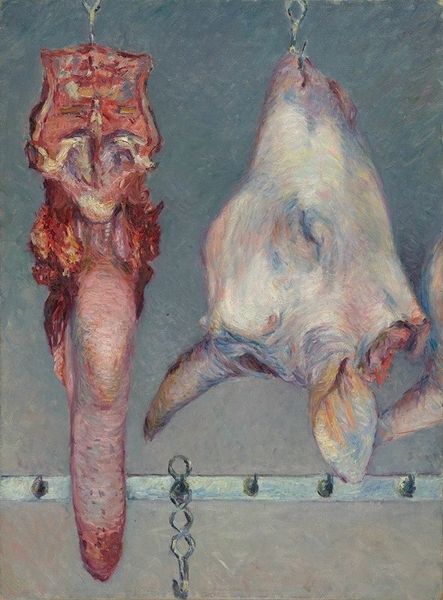
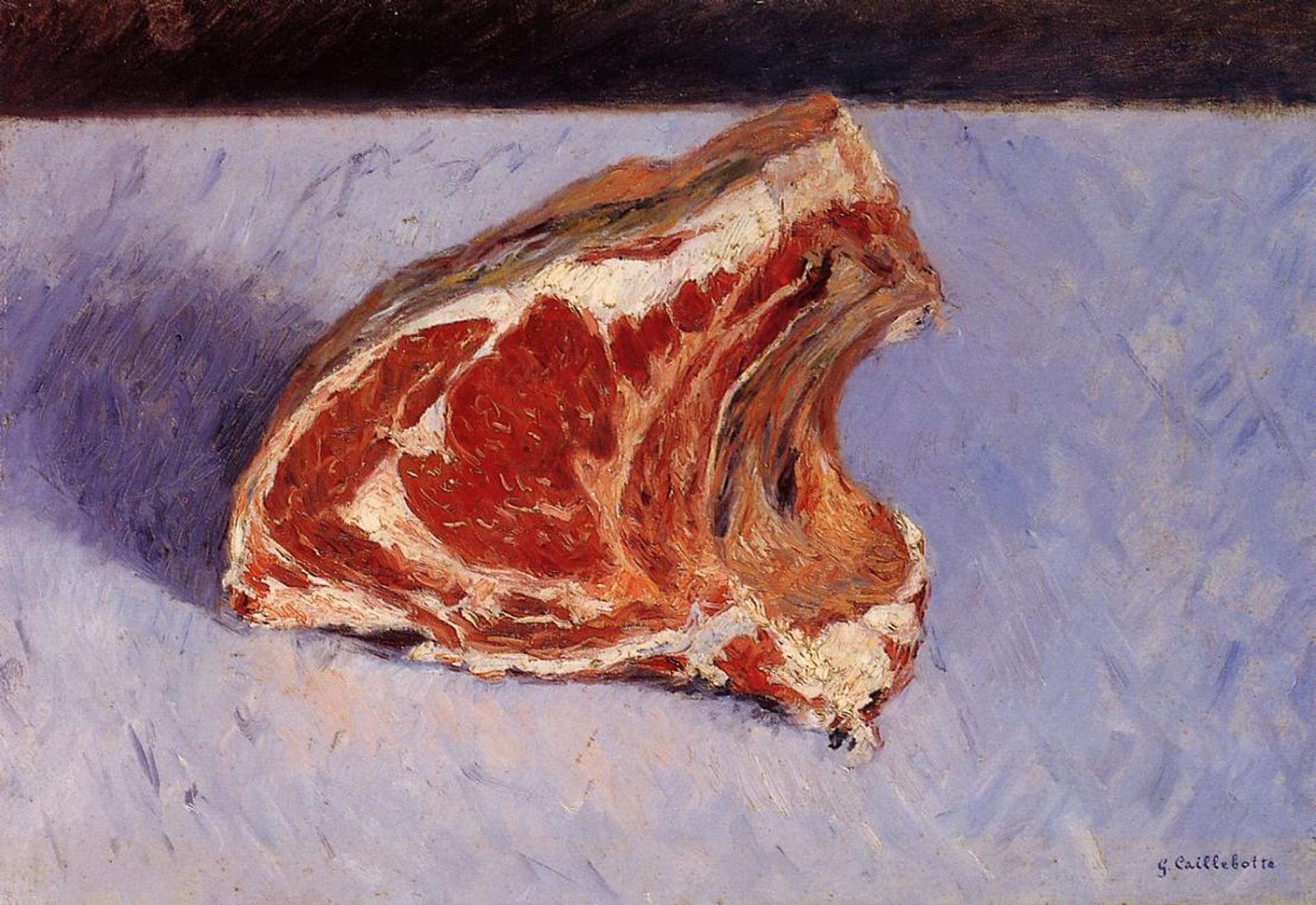
Rib of Beef

Gustave Caillebotte
1848 - 1894Location
Private CollectionListen to curator's interpretation
Curatorial notes
Editor: We’re looking at Gustave Caillebotte's "Rib of Beef," painted in 1882. It’s an oil painting and quite a direct representation, wouldn’t you say? The composition really throws me, it's such a close crop, it’s almost unsettling. What’s your take on this, formally? Curator: Precisely! The radical cropping is key here. Note how Caillebotte rejects traditional still-life compositions. Instead, he presents a fragmented, almost abstract, form. Observe the stark contrast between the deep reds and marbled whites of the meat against the cool blue and violet background. Doesn't that chromatic opposition create a visual tension? Editor: I see that tension, and the brushwork! It's so loose, yet conveys the texture of the beef remarkably well. Do you think the lack of context --no table setting, no narrative -- adds to its power? Curator: Absolutely. By isolating the subject, Caillebotte compels us to confront the materiality of the object itself. The thick impasto, the visible brushstrokes - they draw attention to the act of painting, making the surface a crucial element of the artwork’s meaning. It's less about representing a rib of beef and more about exploring the language of paint itself. Where do you see connections with realism here? Editor: I understand now! The formal elements are carrying the weight, not the subject matter alone. I initially thought the piece was about representing reality, but you’ve reframed it as exploring paint and form *through* reality. It's brilliant! Curator: Precisely. Consider how Caillebotte anticipated the formal investigations of later modernists. This "Rib of Beef," viewed formally, provides rich insights into the evolution of painting.