About this artwork
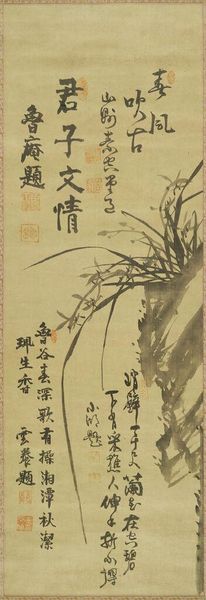
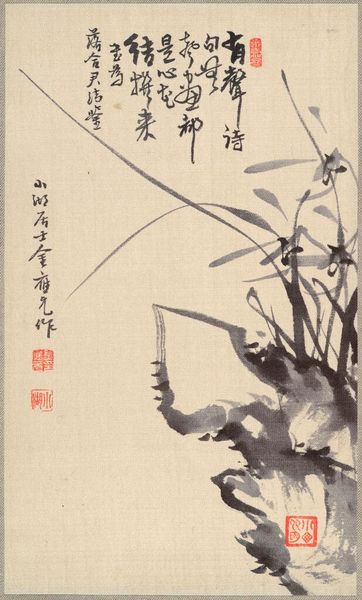
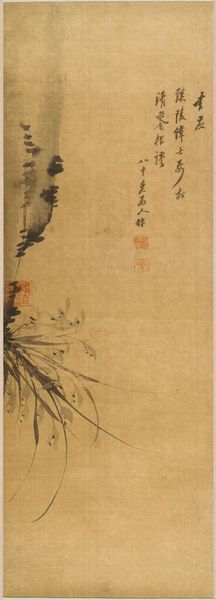
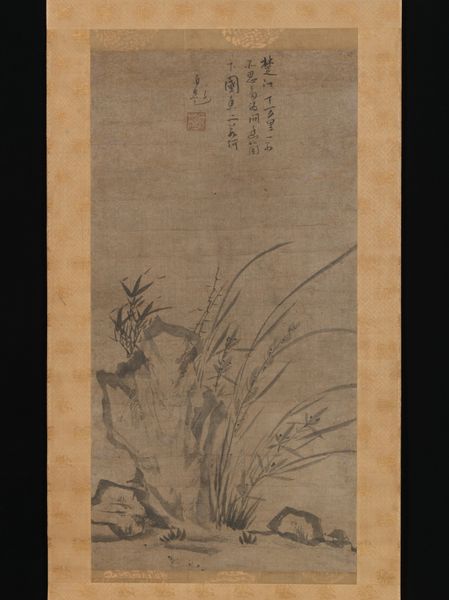
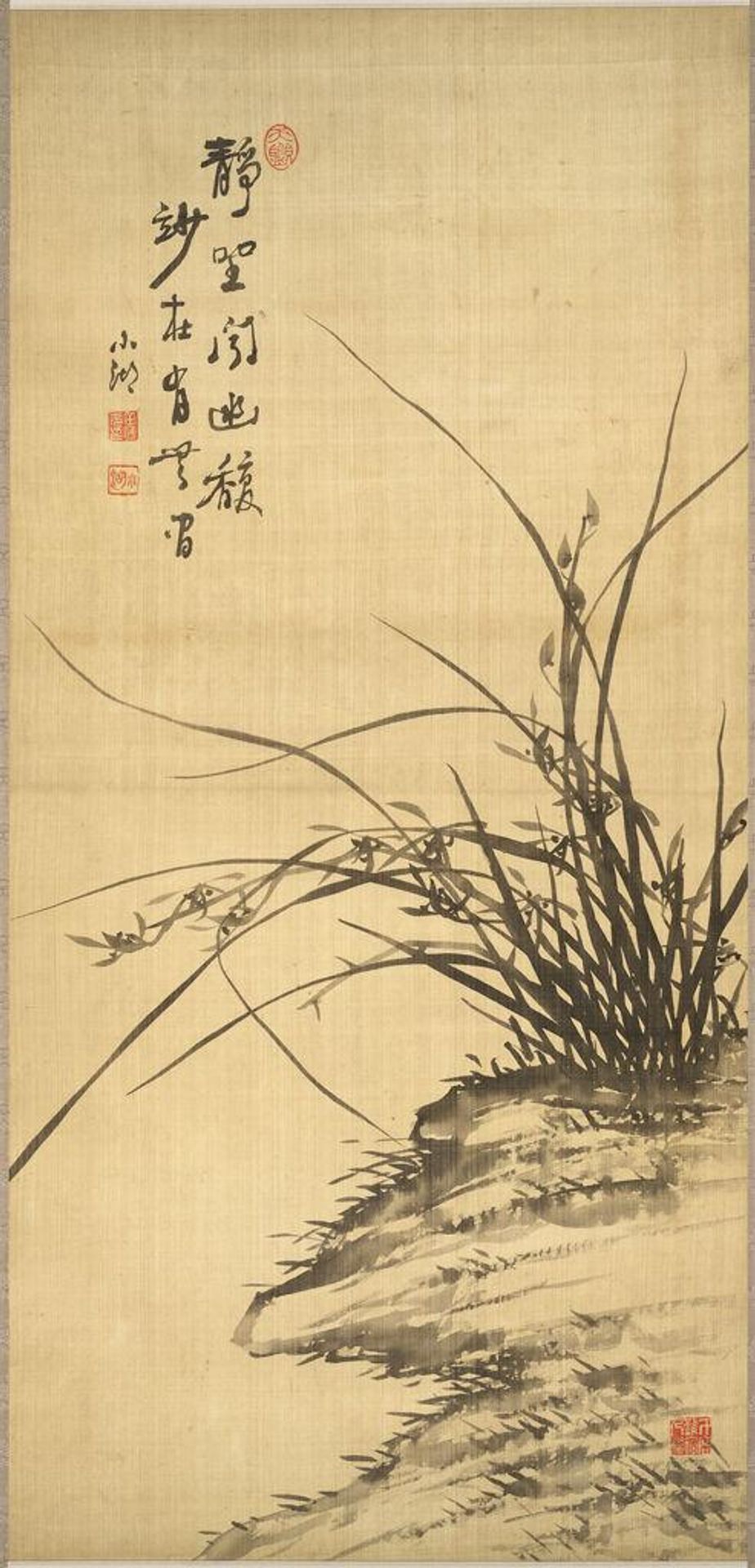
Editor: This scroll painting is called "Orchid and Rock" by Kim Ŭng-wÅn. I find the composition of the orchid and rock so simple, yet elegant. What do you see in this piece? Curator: Note the artist's masterful control of ink tonality and brushstroke. The varying densities create depth and texture, while the "boneless" method, avoiding outlines, emphasizes organic form. Editor: So, the technique itself is part of the meaning? Curator: Precisely. The restraint and precision in execution reflect the Confucian ideals of scholarship and moral cultivation. Editor: I see it now – a unity of form and content. Curator: Indeed. A visual expression of philosophical principles.
Orchid and Rock
late 19th-early 20th century
Kim Ŭng-wÅn (also spelled Gim Eung'won; also known as So-ho and Ch'Ån-ram)
@kimangwanalsospelledgimeungwonalsoknownassohoandchanram
Harvard Art Museums
Harvard Art MuseumsArtwork details
- Dimensions
- painting proper: H. 120 x W. 56.9 cm (47 1/4 x 22 3/8 in.) mounting, including cord and roller ends: H. 191.1 x W. 79.4 cm (75 1/4 x 31 1/4 in.)
- Location
- Harvard Art Museums
- Copyright
- CC0 1.0
Comments
Share your thoughts
About this artwork
Editor: This scroll painting is called "Orchid and Rock" by Kim Ŭng-wÅn. I find the composition of the orchid and rock so simple, yet elegant. What do you see in this piece? Curator: Note the artist's masterful control of ink tonality and brushstroke. The varying densities create depth and texture, while the "boneless" method, avoiding outlines, emphasizes organic form. Editor: So, the technique itself is part of the meaning? Curator: Precisely. The restraint and precision in execution reflect the Confucian ideals of scholarship and moral cultivation. Editor: I see it now – a unity of form and content. Curator: Indeed. A visual expression of philosophical principles.
Comments
Share your thoughts