About this artwork
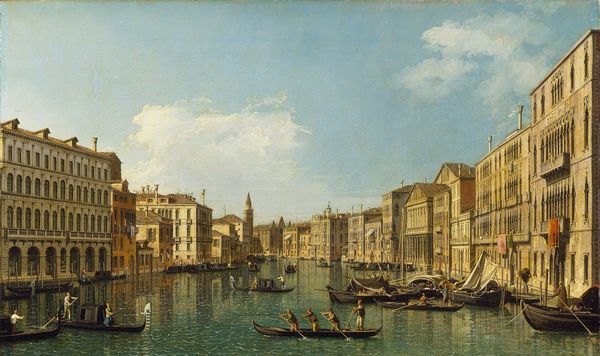
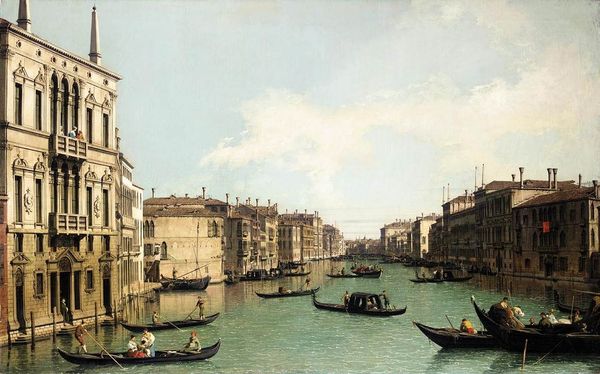
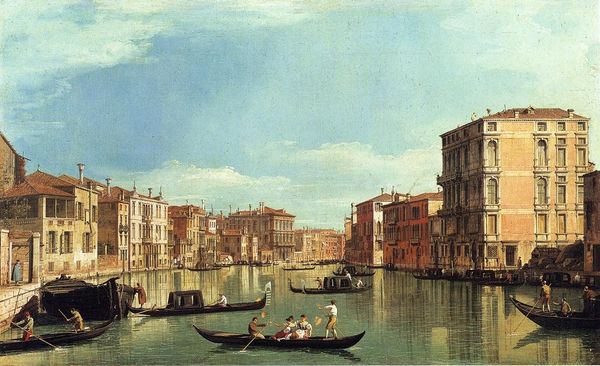
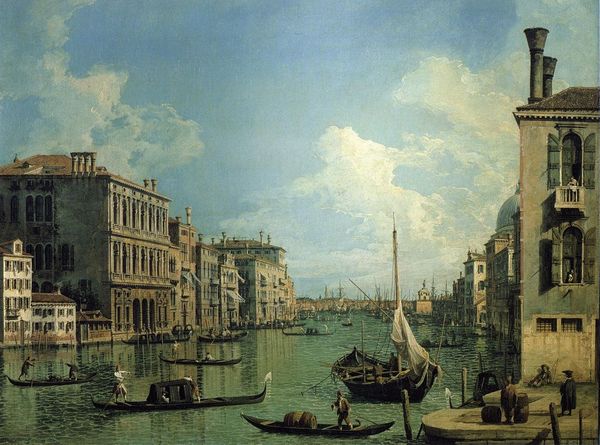
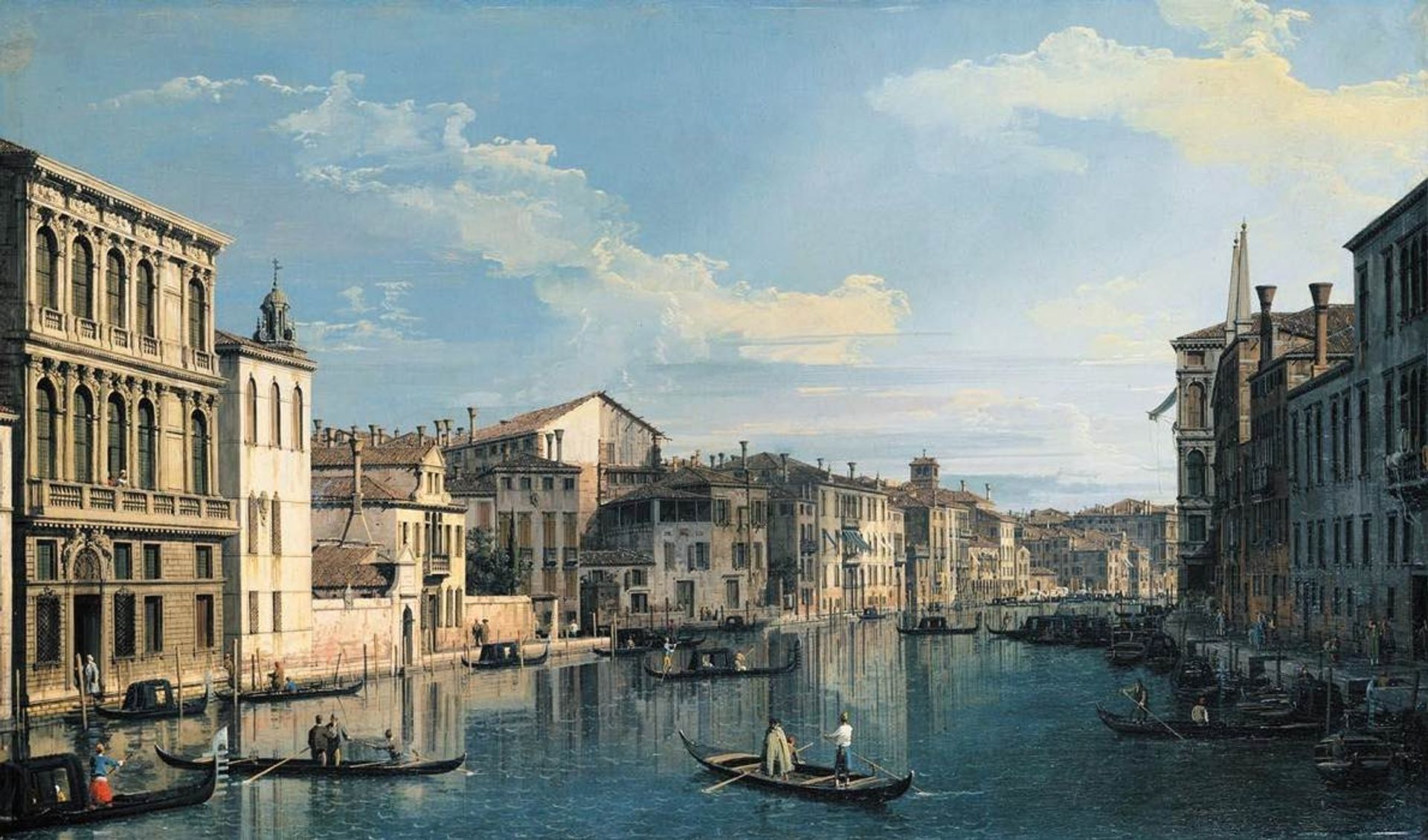
Canaletto painted ‘Venice: The Grand Canal from Palazzo Flangini to the Church of San Marcuola’ using oil on canvas. Immediately striking is the composition; the buildings on either side of the canal create a visual frame, leading our eyes into the distance. The use of light and shadow gives depth to the buildings and water, while the sky is rendered with soft brushstrokes suggesting a calm day. The canal itself acts as a mirror, reflecting the architectural details and opening a dialogue between the real and its representation, and echoing the philosophical interest in perception. The architectural facades on the left show an evolving understanding of space and perspective, moving away from strictly religious or mythological themes toward scenes of everyday life. The painting, in this sense, is both a representation of a place and an exploration of seeing. It invites us to consider the layers of representation inherent in any artistic endeavor.
Venice: The Grand Canal from Palazzo Flangini to the Church of San Marcuola
1738

Canaletto
1697 - 1768Location
Private CollectionArtwork details
- Medium
- painting, oil-paint
- Dimensions
- 47 x 78 cm
- Location
- Private Collection
- Copyright
- Public domain
Tags
Comments
Share your thoughts
About this artwork
Canaletto painted ‘Venice: The Grand Canal from Palazzo Flangini to the Church of San Marcuola’ using oil on canvas. Immediately striking is the composition; the buildings on either side of the canal create a visual frame, leading our eyes into the distance. The use of light and shadow gives depth to the buildings and water, while the sky is rendered with soft brushstrokes suggesting a calm day. The canal itself acts as a mirror, reflecting the architectural details and opening a dialogue between the real and its representation, and echoing the philosophical interest in perception. The architectural facades on the left show an evolving understanding of space and perspective, moving away from strictly religious or mythological themes toward scenes of everyday life. The painting, in this sense, is both a representation of a place and an exploration of seeing. It invites us to consider the layers of representation inherent in any artistic endeavor.
Comments
Share your thoughts