About this artwork
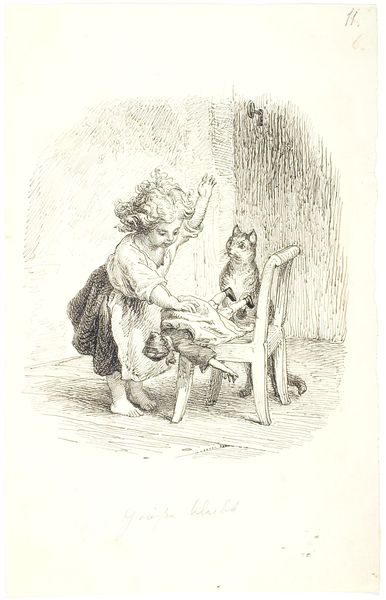
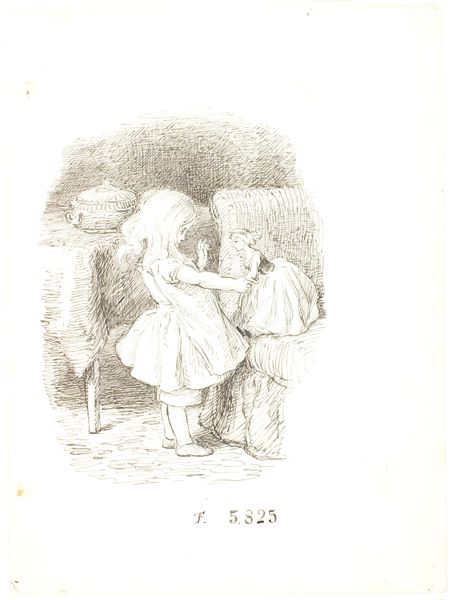
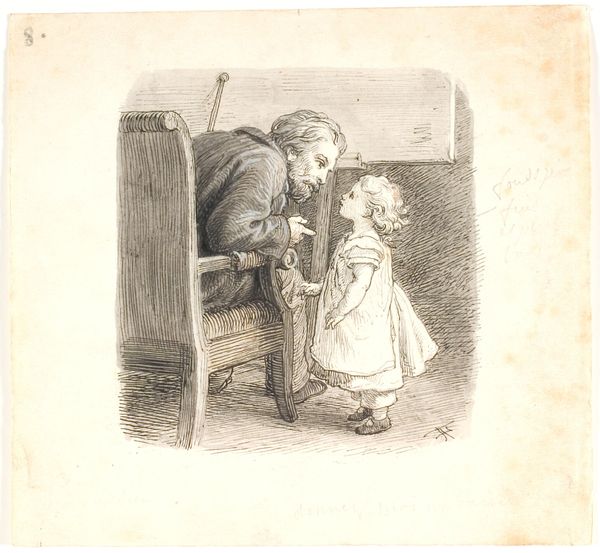
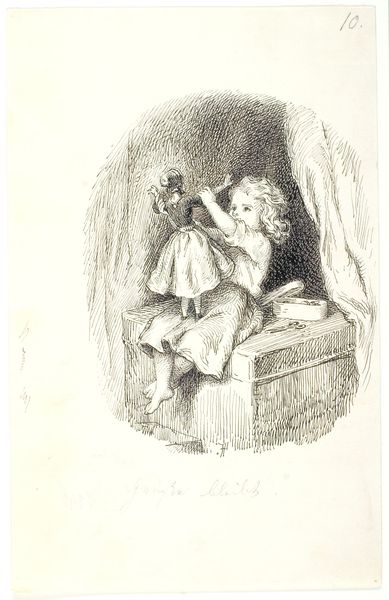
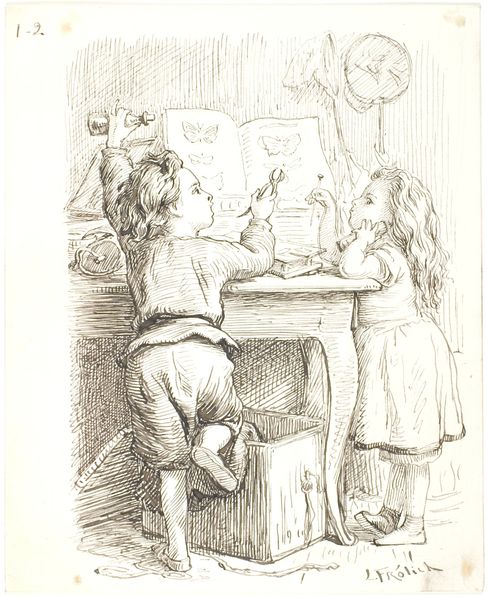
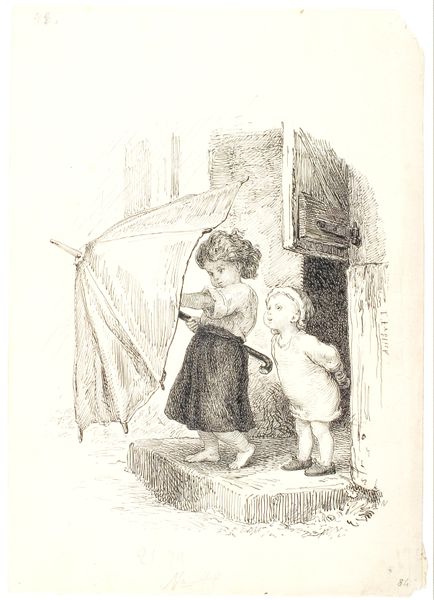
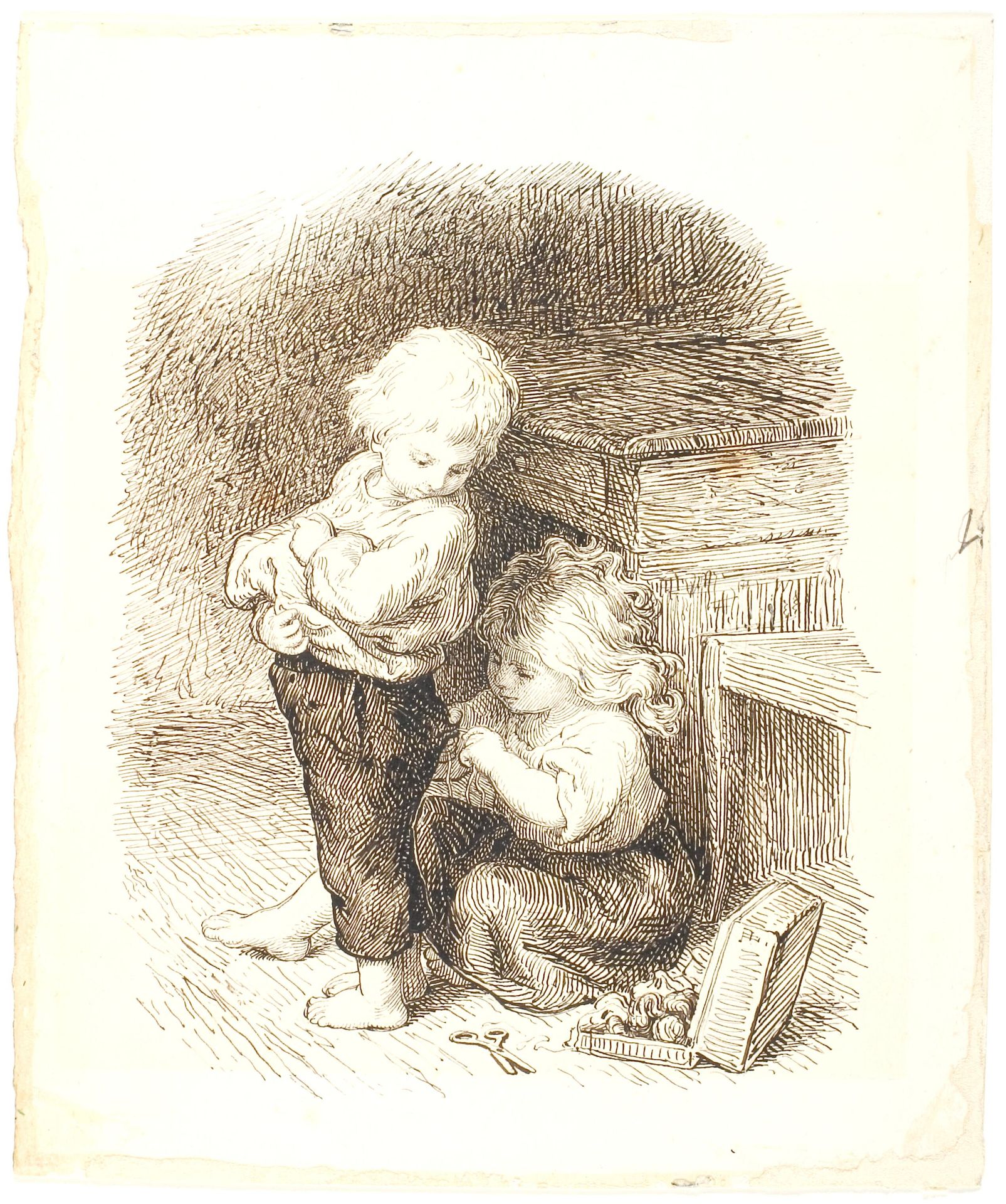
Lorenz Frølich created this drawing, "Little Girl Mending a Boy's Trousers," using pen and brown ink, sometime in the 19th century. Here we see the domestic sphere, but not as a simple, sentimental scene. Frølich's image speaks volumes about gender roles. The girl, perhaps no older than five, is already engaged in mending, a task associated with women's work. The boy, standing awkwardly beside her, represents a kind of innocent masculinity, dependent on the girl’s labor. Consider the power dynamics at play here, how these children are being shaped by societal expectations. How does this image challenge or reinforce stereotypes about gender and labor? The girl's focused expression versus the boy's almost embarrassed stance tells a story of imposed responsibilities and learned helplessness. The image offers a tender, yet critical glimpse into the making of gender. The emotional resonance of this piece lies in its quiet portrayal of how we learn to perform our roles.
Lille pige reparerer en drengs bukser 1878


Artwork details
- Medium
- drawing, ink, pencil
- Dimensions
- 176 mm (height) x 147 mm (width) (bladmaal)
- Location
- SMK - Statens Museum for Kunst
Tags
portrait
drawing
ink
pencil
genre-painting
Comments
No comments
About this artwork
Lorenz Frølich created this drawing, "Little Girl Mending a Boy's Trousers," using pen and brown ink, sometime in the 19th century. Here we see the domestic sphere, but not as a simple, sentimental scene. Frølich's image speaks volumes about gender roles. The girl, perhaps no older than five, is already engaged in mending, a task associated with women's work. The boy, standing awkwardly beside her, represents a kind of innocent masculinity, dependent on the girl’s labor. Consider the power dynamics at play here, how these children are being shaped by societal expectations. How does this image challenge or reinforce stereotypes about gender and labor? The girl's focused expression versus the boy's almost embarrassed stance tells a story of imposed responsibilities and learned helplessness. The image offers a tender, yet critical glimpse into the making of gender. The emotional resonance of this piece lies in its quiet portrayal of how we learn to perform our roles.
Comments
No comments