About this artwork
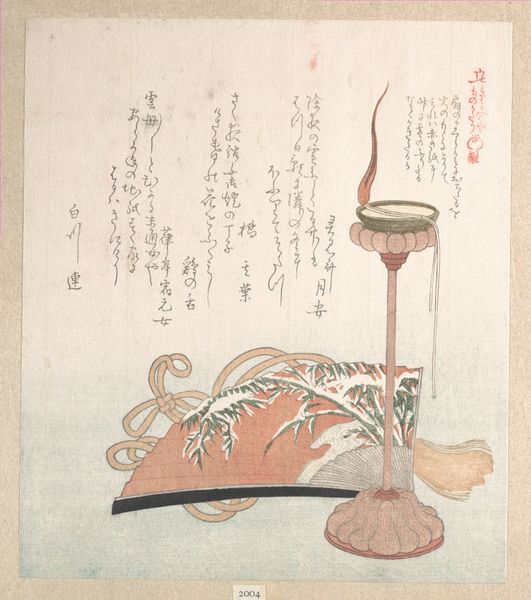
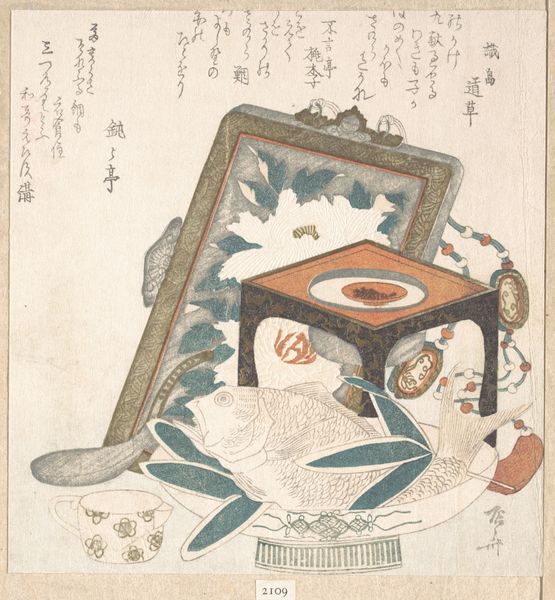
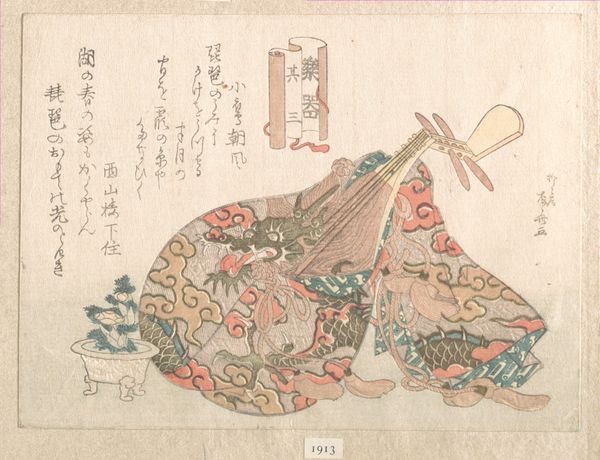
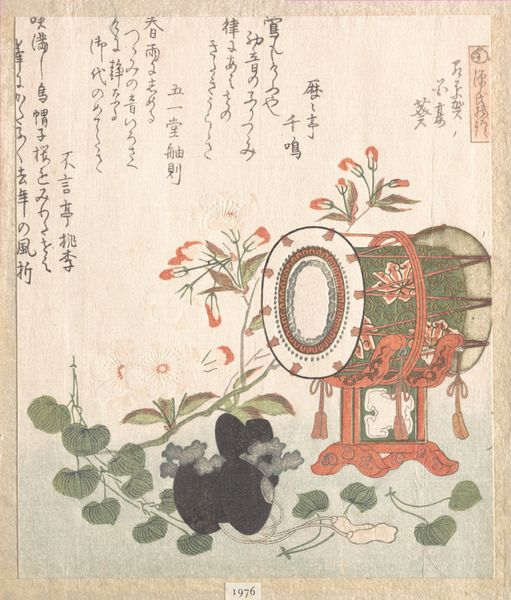
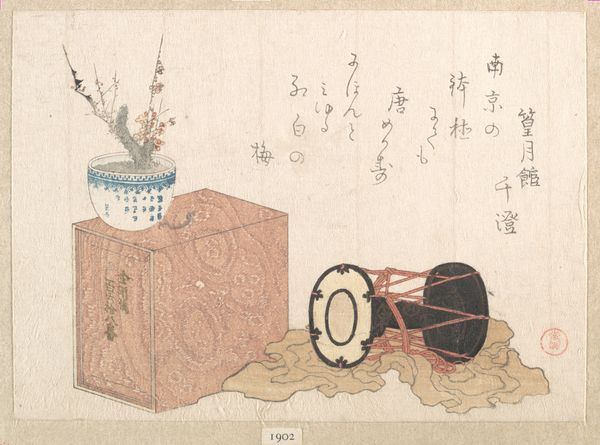
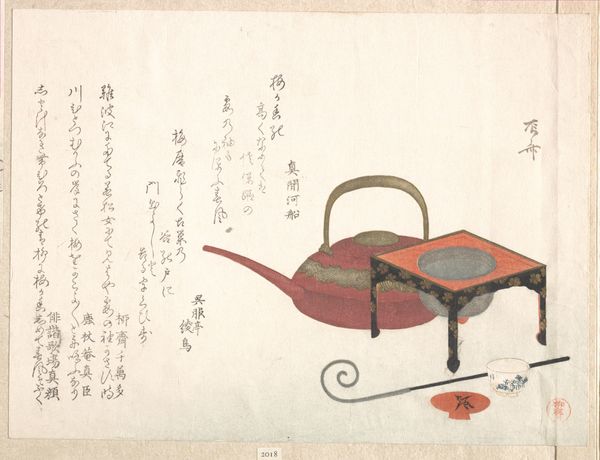
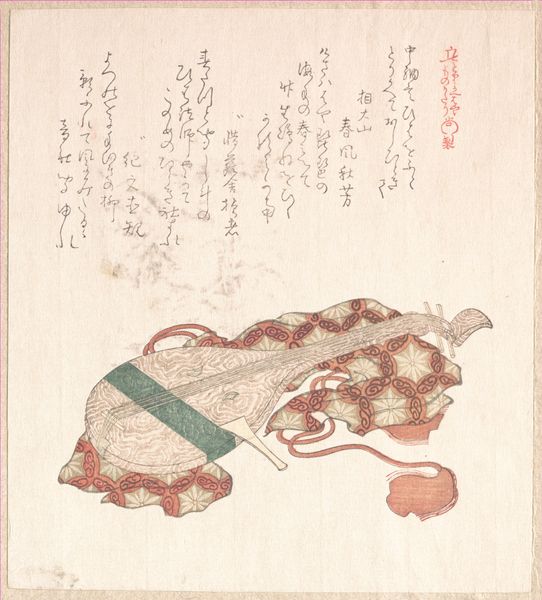
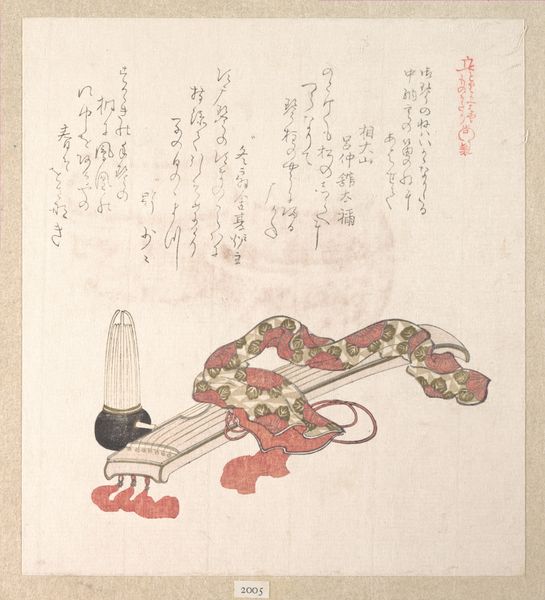
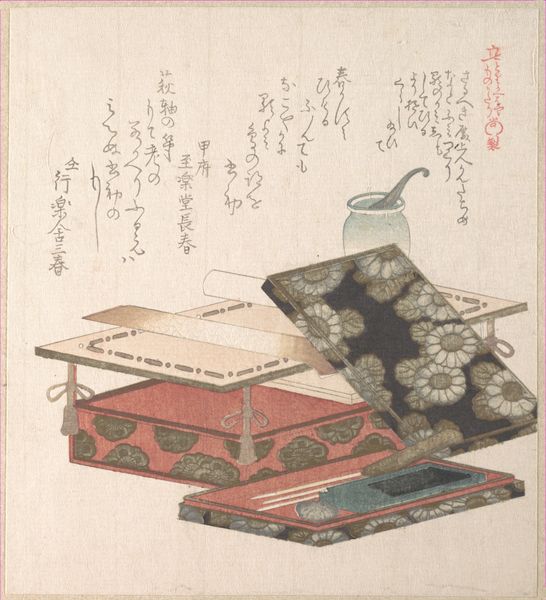
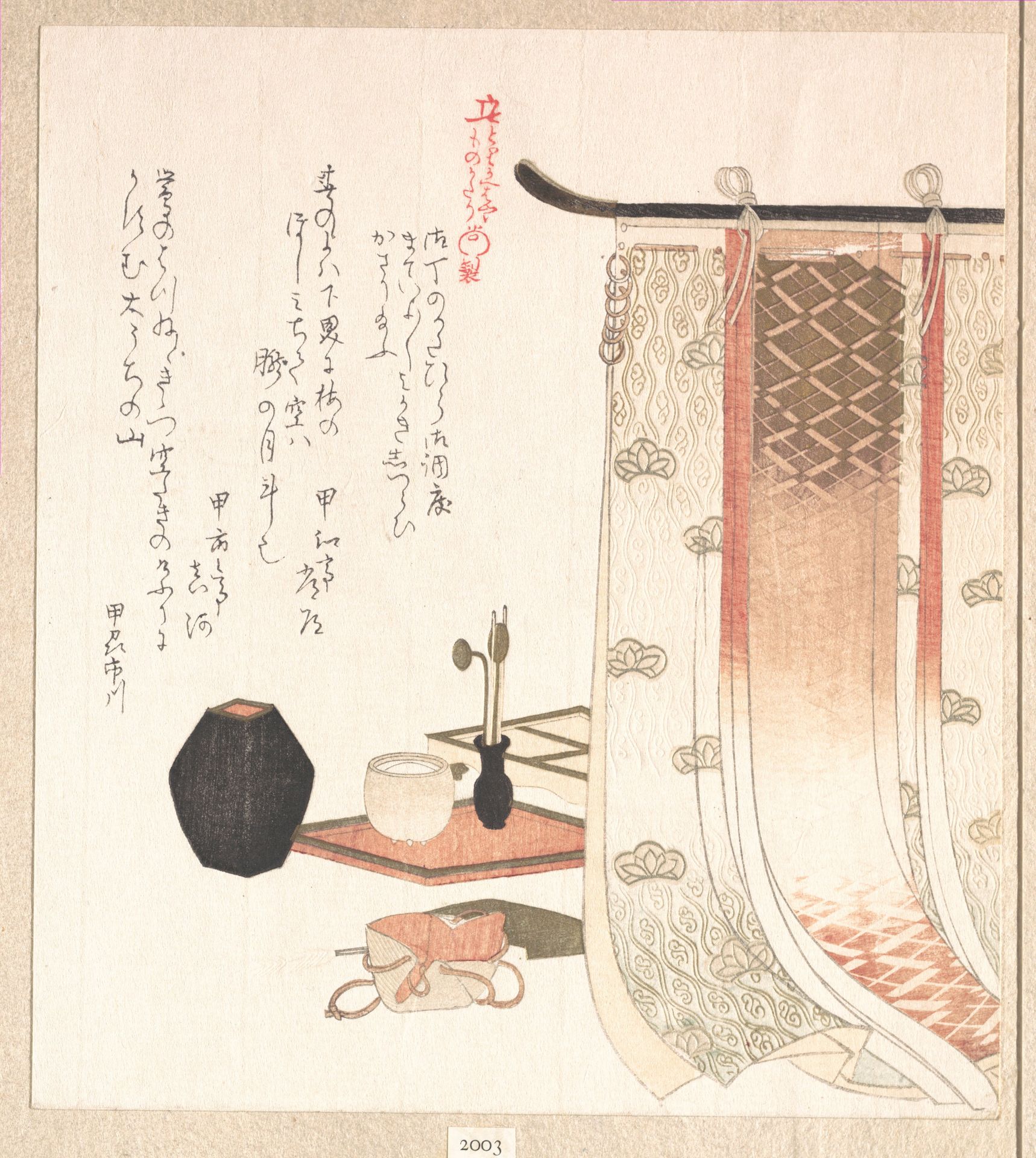
This woodblock print, created by Kubo Shunman, depicts objects used in the incense ceremony. Note the cloud motifs patterned on the screen. Clouds, in Japanese art, are often used as symbols for realms beyond earthly existence or borders between the human and divine. We see the cloud motif not only in Japanese art but also consider how it appears in Italian Renaissance paintings—such as in Botticelli's work—as a divine signal. This continuity indicates a shared human impulse to connect with the celestial. The use of clouds in art reveals our collective subconscious, our shared desire to understand the mysteries of life, death, and spirituality. This symbol reappears and evolves across cultures, acting as a powerful force that engages us on a deep, subconscious level. It reflects the cyclical progression of symbols, resurfacing and evolving in different historical contexts.
Screen and Utensils for the Incense Ceremony 19th century


Artwork details
- Medium
- print, woodblock-print
- Dimensions
- 8 1/16 x 7 1/4 in. (20.5 x 18.4 cm)
- Location
- Metropolitan Museum of Art, New York, NY
- Copyright
- Public Domain
Tags
asian-art
ukiyo-e
japan
woodblock-print
orientalism
Comments
No comments
About this artwork
This woodblock print, created by Kubo Shunman, depicts objects used in the incense ceremony. Note the cloud motifs patterned on the screen. Clouds, in Japanese art, are often used as symbols for realms beyond earthly existence or borders between the human and divine. We see the cloud motif not only in Japanese art but also consider how it appears in Italian Renaissance paintings—such as in Botticelli's work—as a divine signal. This continuity indicates a shared human impulse to connect with the celestial. The use of clouds in art reveals our collective subconscious, our shared desire to understand the mysteries of life, death, and spirituality. This symbol reappears and evolves across cultures, acting as a powerful force that engages us on a deep, subconscious level. It reflects the cyclical progression of symbols, resurfacing and evolving in different historical contexts.
Comments
No comments