About this artwork
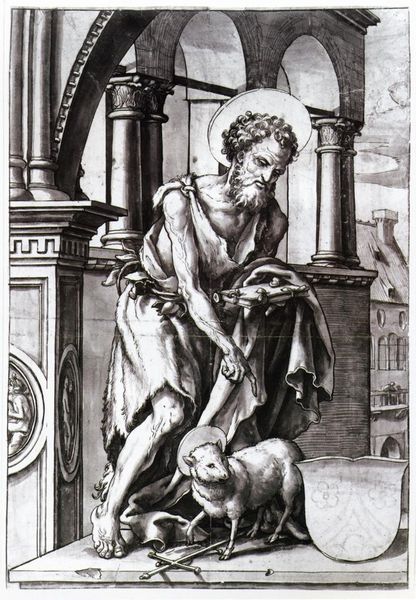
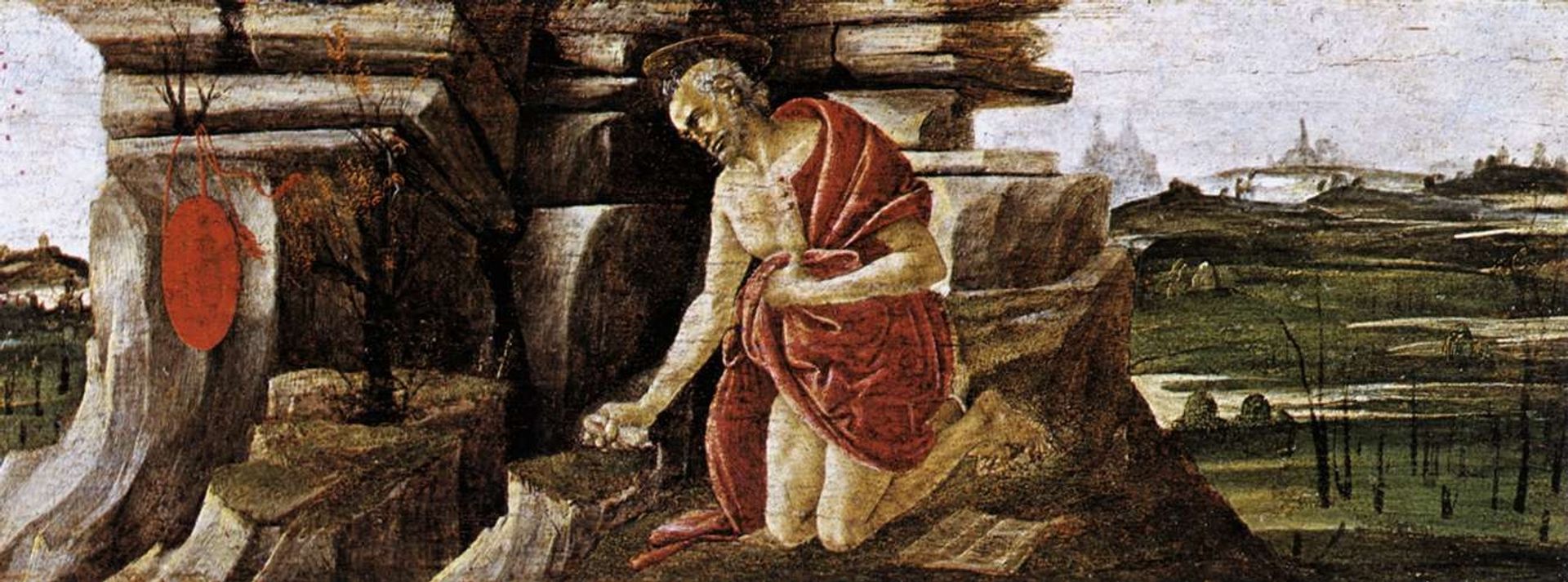
Sandro Botticelli rendered "St Jerome in Penitence" as a predella panel for the Altarpiece of St Mark. Observe Saint Jerome, kneeling in the wilderness, a setting laden with symbolic weight, as it represents a space of spiritual trial. His red cloak, a splash of potent color, signifies his cardinal status but also evokes the passion and suffering central to Christian iconography. Note the stone he holds, a tool for self-mortification, echoing ancient ascetic practices. Consider the motif of penitence: the act of seeking atonement is echoed across cultures. From the flagellants of the Middle Ages to the rituals of purification in ancient Greece, the desire to cleanse the soul manifests in myriad forms. Even the desert setting resonates, harking back to the wanderings of the Israelites and Christ's temptation, illustrating how certain symbolic environments become charged with collective memories of spiritual crisis. Botticelli masterfully touches upon the psychoanalytic understanding of guilt and redemption, engaging the viewer in a profound, subconscious dialogue about human fallibility and the yearning for absolution.
St Jerome in Penitence, predella panel from the Altarpiece of St Mark
1490


Artwork details
- Medium
- panel, painting, oil-paint
- Dimensions
- 21 x 269 cm
- Location
- Uffizi Gallery, Florence, Italy
- Copyright
- Public domain
Tags
Comments
Share your thoughts
About this artwork
Sandro Botticelli rendered "St Jerome in Penitence" as a predella panel for the Altarpiece of St Mark. Observe Saint Jerome, kneeling in the wilderness, a setting laden with symbolic weight, as it represents a space of spiritual trial. His red cloak, a splash of potent color, signifies his cardinal status but also evokes the passion and suffering central to Christian iconography. Note the stone he holds, a tool for self-mortification, echoing ancient ascetic practices. Consider the motif of penitence: the act of seeking atonement is echoed across cultures. From the flagellants of the Middle Ages to the rituals of purification in ancient Greece, the desire to cleanse the soul manifests in myriad forms. Even the desert setting resonates, harking back to the wanderings of the Israelites and Christ's temptation, illustrating how certain symbolic environments become charged with collective memories of spiritual crisis. Botticelli masterfully touches upon the psychoanalytic understanding of guilt and redemption, engaging the viewer in a profound, subconscious dialogue about human fallibility and the yearning for absolution.
Comments
Share your thoughts