About this artwork
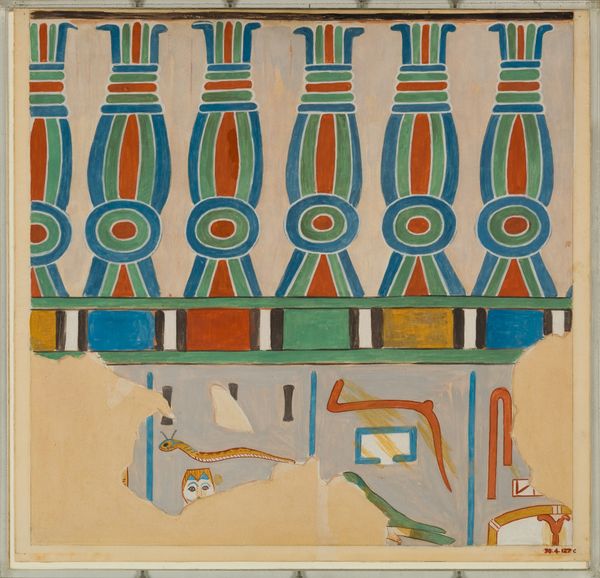
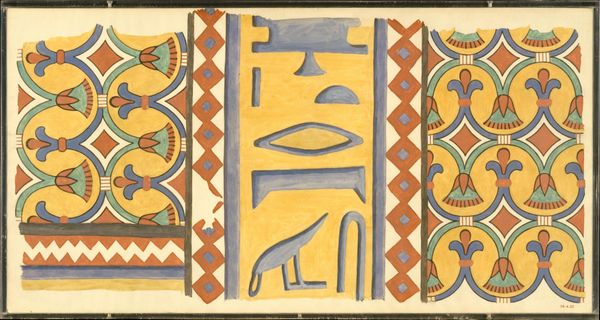
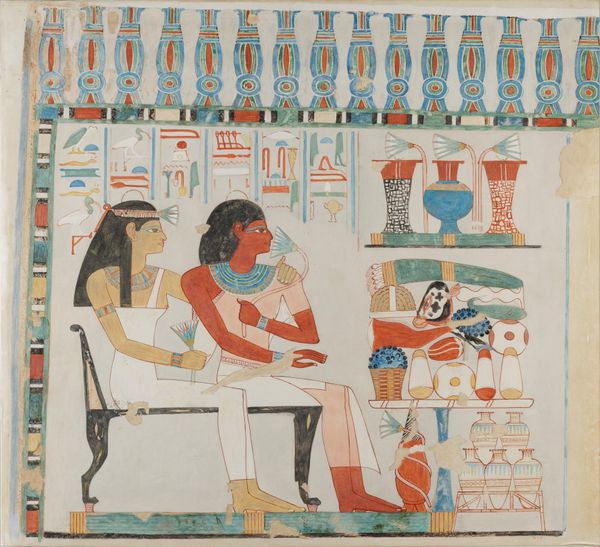
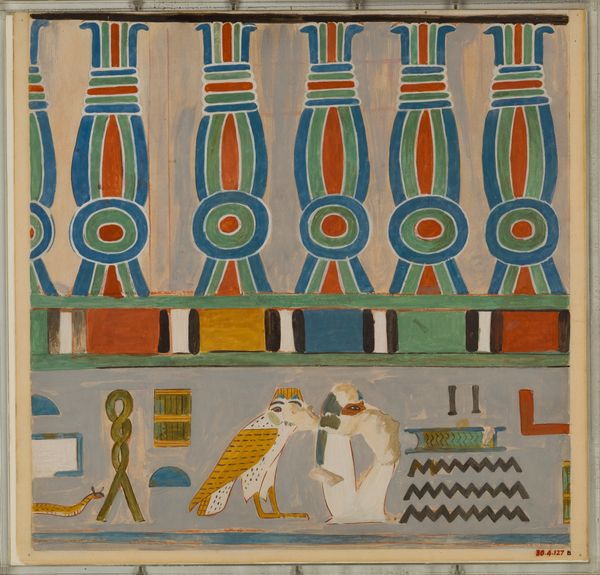
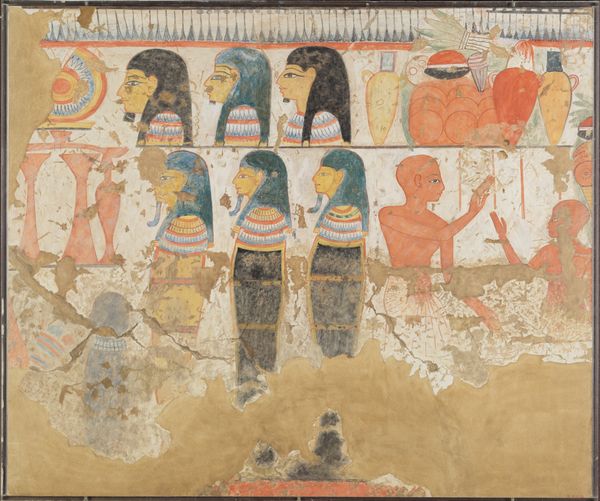
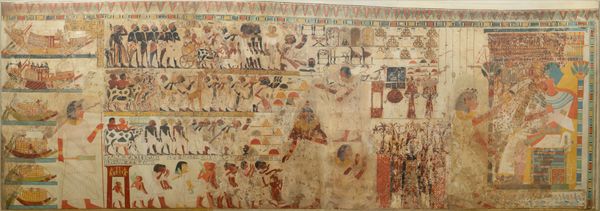
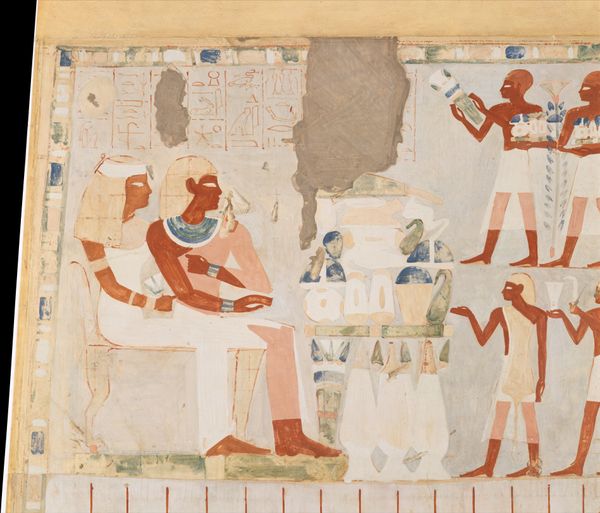
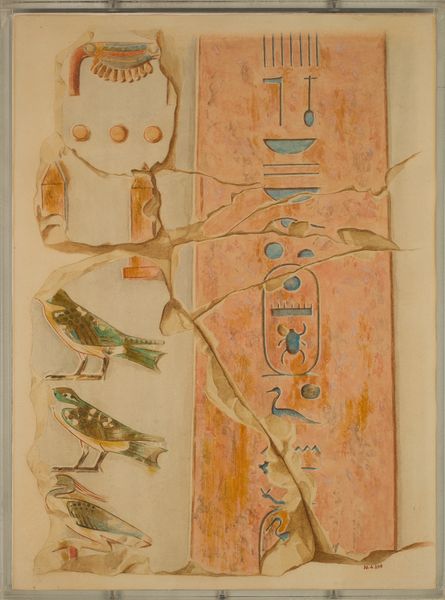
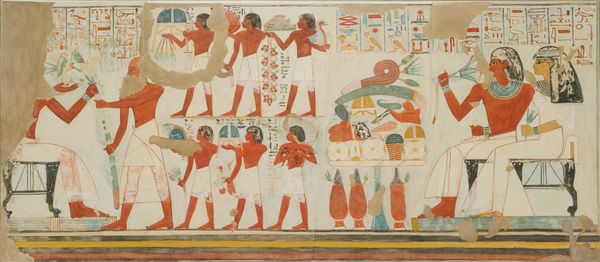
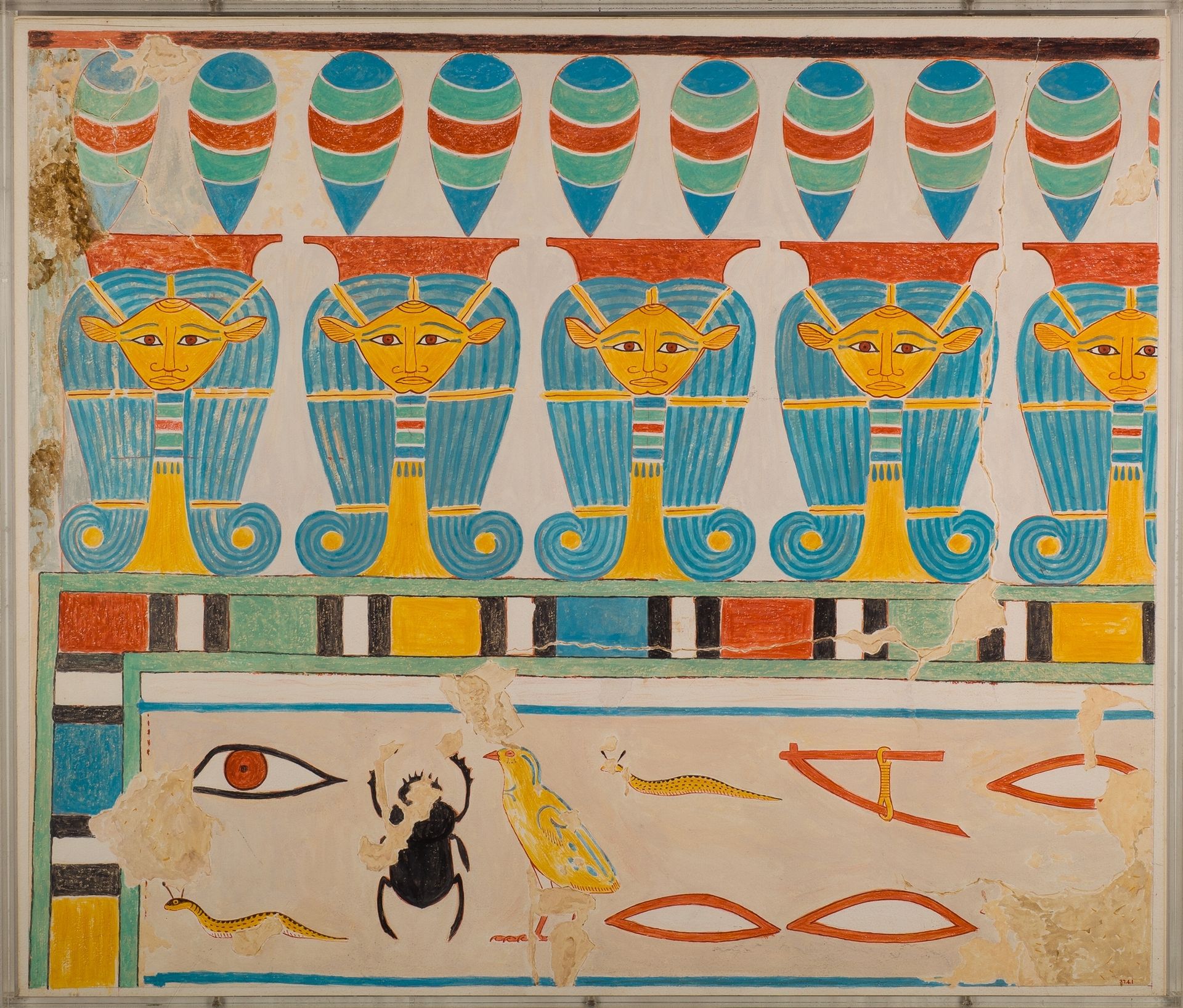
This is Nina de Garis Davies' painted restoration of the Hathor-Head Frieze in the Tomb of Senenmut, the original of which dates back thousands of years. Davies made this facsimile to preserve and share ancient Egyptian art, which was often inaccessible to the public. Davies' work as an artist was deeply entwined with the burgeoning field of Egyptology. Her meticulous renderings allowed scholars and the public alike to engage with the past. Hathor, a powerful goddess in the Egyptian pantheon, embodied motherhood, beauty, and music. Here, she is represented with dignity and grace. The vibrant colors and detailed iconography speak to a civilization that valued art as an integral part of life and death. Davies' restoration reminds us of how identity, history, and artistic expression intertwine across millennia. Her dedication preserved a fragment of the past, which is now available for us to contemplate the passage of time and the enduring power of art.
Painted Restoration of the Hathor-Head Frieze in the Tomb of Senenmut
1473 BC

Nina de Garis Davies
1881 - 1965
The Metropolitan Museum of Art
Metropolitan Museum of Art, New York, NYArtwork details
- Medium
- fresco, mural
- Dimensions
- facsimile: H. 50 × W. 58.7 cm (19 11/16 × 23 1/8 in.) scale: 1:1 framed: 51.8 × 60.6 cm (20 3/8 × 23 7/8 in.)
- Location
- Metropolitan Museum of Art, New York, NY
- Copyright
- Public Domain
Tags
Comments
Share your thoughts
About this artwork
This is Nina de Garis Davies' painted restoration of the Hathor-Head Frieze in the Tomb of Senenmut, the original of which dates back thousands of years. Davies made this facsimile to preserve and share ancient Egyptian art, which was often inaccessible to the public. Davies' work as an artist was deeply entwined with the burgeoning field of Egyptology. Her meticulous renderings allowed scholars and the public alike to engage with the past. Hathor, a powerful goddess in the Egyptian pantheon, embodied motherhood, beauty, and music. Here, she is represented with dignity and grace. The vibrant colors and detailed iconography speak to a civilization that valued art as an integral part of life and death. Davies' restoration reminds us of how identity, history, and artistic expression intertwine across millennia. Her dedication preserved a fragment of the past, which is now available for us to contemplate the passage of time and the enduring power of art.
Comments
Share your thoughts