About this artwork
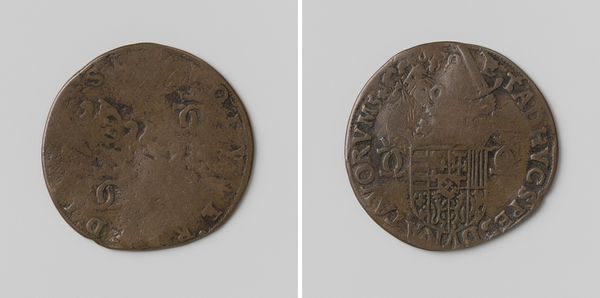
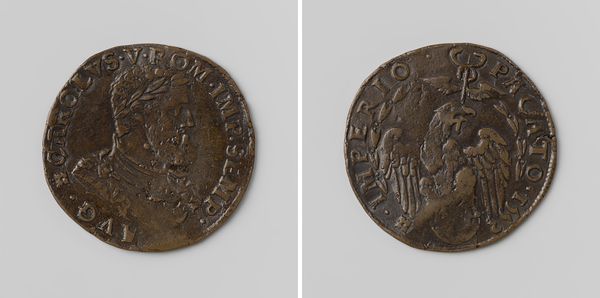
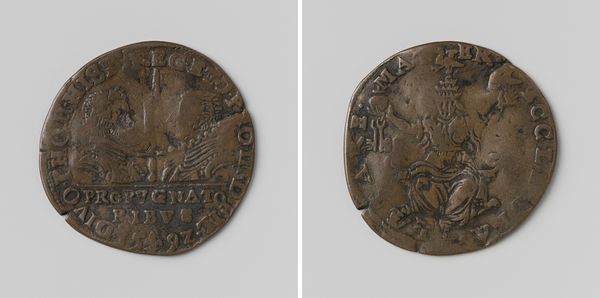
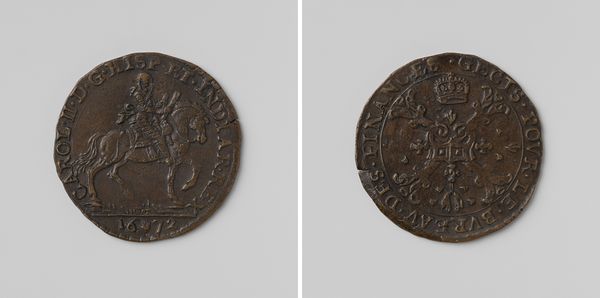
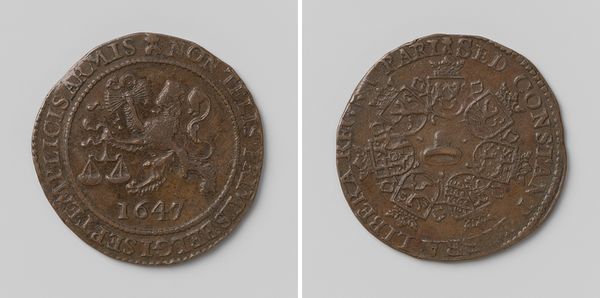
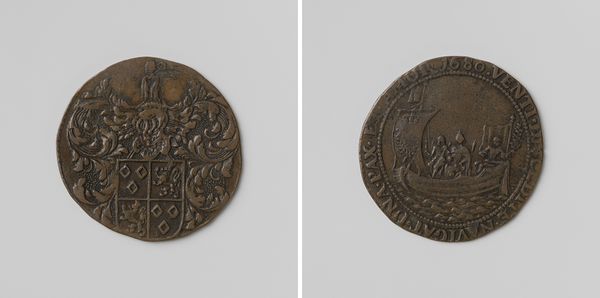
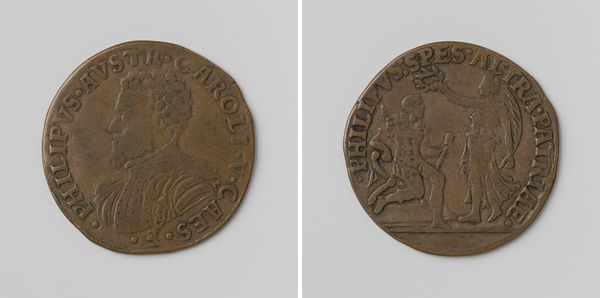
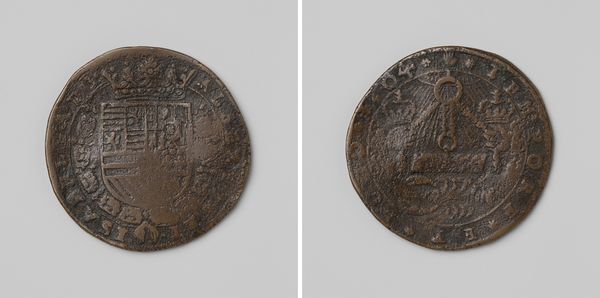
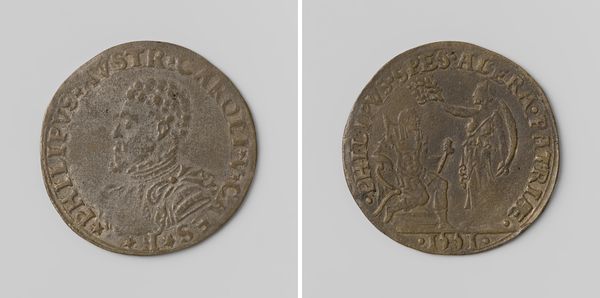
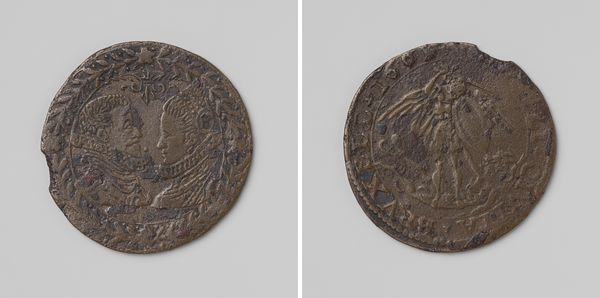
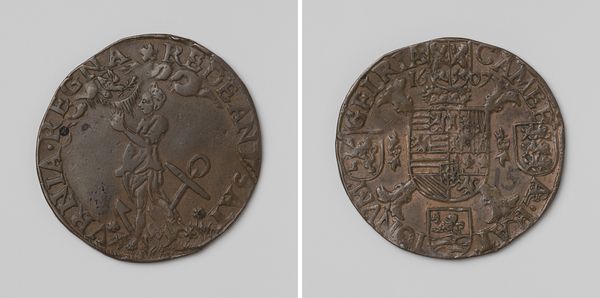
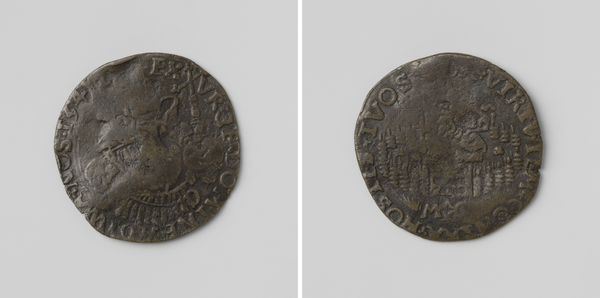
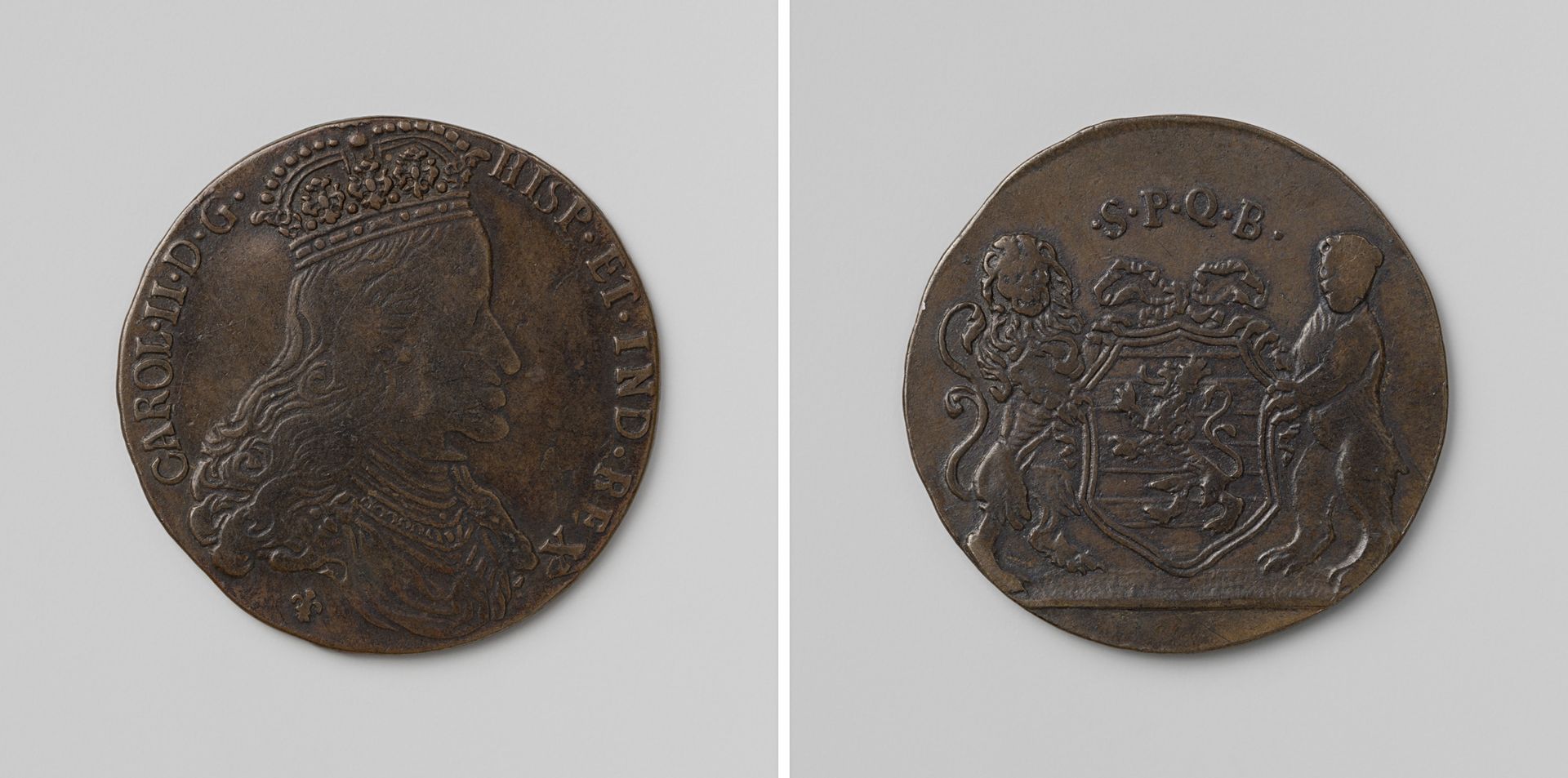
This is a bronze medal depicting Charles II, King of Spain, made by Philippe Roëttiers. It was commissioned by the city of Bruges. The act of striking a medal is itself interesting. The process involves die-making – the careful carving of a mirror image into hardened steel – and then the use of tremendous force to impress that image on the blank disc of bronze. This is a highly skilled tradition, which shares techniques with both jewelry and arms making. The material also plays a role. Bronze has connotations of permanence, and the act of stamping reinforces the sense of authority. The image on the medal depicts the King in profile and the coat of arms of Bruges, communicating the power of both parties. The relative crudeness of the relief speaks to the expense and labor involved in its making. Next time you encounter a medal like this, remember that it’s not just a pretty image, but also a testament to the social and political forces at play in its creation.
Karel II, koning van Spanje, rekenpenning geslagen op last van de stad Brugge
1696

Artwork details
- Medium
- carving, metal, intaglio, bronze, sculpture
- Dimensions
- diameter 3 cm, weight 62 gr
- Copyright
- Rijks Museum: Open Domain
Tags
carving
baroque
metal
intaglio
sculpture
bronze
sculpture
carved
history-painting
Comments
Be the first to share your thoughts about this work.
About this artwork
This is a bronze medal depicting Charles II, King of Spain, made by Philippe Roëttiers. It was commissioned by the city of Bruges. The act of striking a medal is itself interesting. The process involves die-making – the careful carving of a mirror image into hardened steel – and then the use of tremendous force to impress that image on the blank disc of bronze. This is a highly skilled tradition, which shares techniques with both jewelry and arms making. The material also plays a role. Bronze has connotations of permanence, and the act of stamping reinforces the sense of authority. The image on the medal depicts the King in profile and the coat of arms of Bruges, communicating the power of both parties. The relative crudeness of the relief speaks to the expense and labor involved in its making. Next time you encounter a medal like this, remember that it’s not just a pretty image, but also a testament to the social and political forces at play in its creation.
Comments
Be the first to share your thoughts about this work.