About this artwork
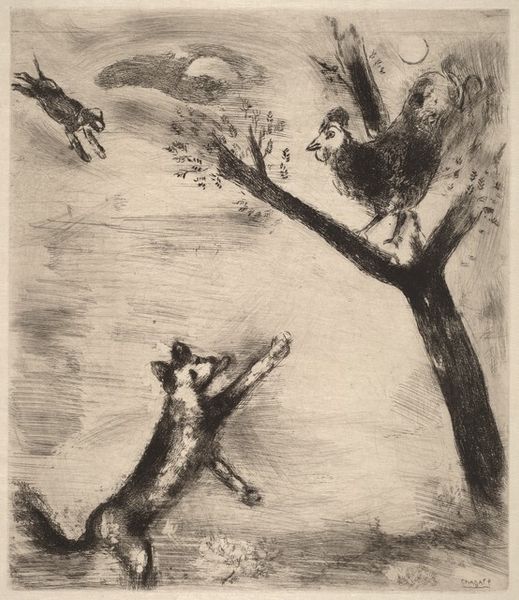
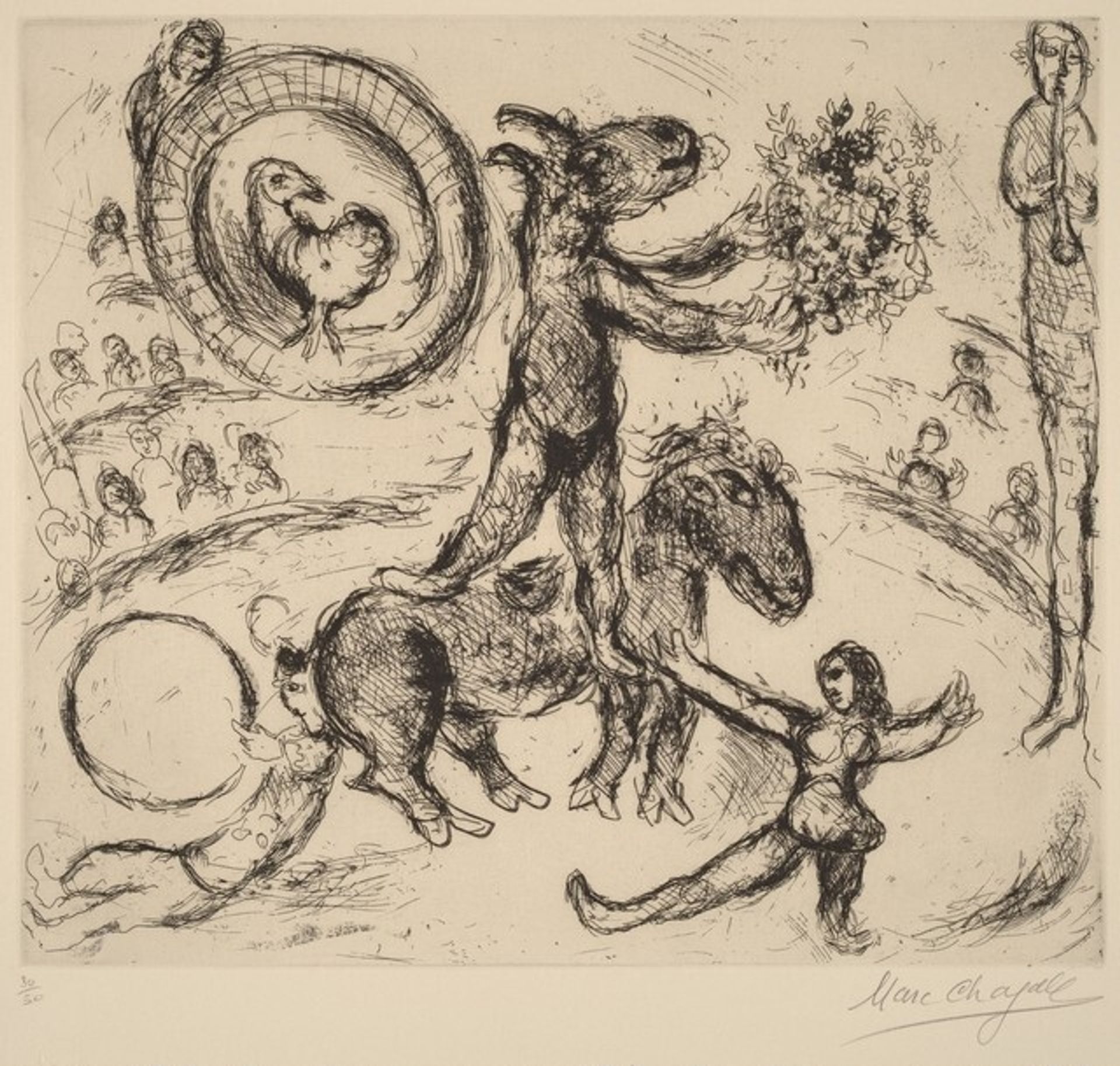
Marc Chagall created this black and white etching, “Donkey with Bouquet of Flowers,” as part of his exploration of universal themes through personal symbolism. Made in France, Chagall's work often draws on his Russian-Jewish heritage, blending folklore with modernist styles. The circus imagery, a recurring motif for Chagall, reflects his fascination with its blend of performance and raw emotion. Here the donkey becomes a symbol of humble labor elevated by the bouquet of flowers. The imagery evokes the deep well of Russian folk art as filtered through the lens of Parisian modernism. One could also think of the artist's self-conscious attempt to democratize art by depicting popular entertainment. To fully appreciate Chagall, we look at the history of modernism and the rise of popular culture. Analyzing his personal life, Russian folk traditions, and the Parisian art scene allows us to better grasp the social and cultural contexts that shaped this enchanting print.
Donkey with Bouquet of Flowers
1968


Artwork details
- Copyright
- National Gallery of Art: CC0 1.0
Comments
Share your thoughts
About this artwork
Marc Chagall created this black and white etching, “Donkey with Bouquet of Flowers,” as part of his exploration of universal themes through personal symbolism. Made in France, Chagall's work often draws on his Russian-Jewish heritage, blending folklore with modernist styles. The circus imagery, a recurring motif for Chagall, reflects his fascination with its blend of performance and raw emotion. Here the donkey becomes a symbol of humble labor elevated by the bouquet of flowers. The imagery evokes the deep well of Russian folk art as filtered through the lens of Parisian modernism. One could also think of the artist's self-conscious attempt to democratize art by depicting popular entertainment. To fully appreciate Chagall, we look at the history of modernism and the rise of popular culture. Analyzing his personal life, Russian folk traditions, and the Parisian art scene allows us to better grasp the social and cultural contexts that shaped this enchanting print.
Comments
Share your thoughts