About this artwork
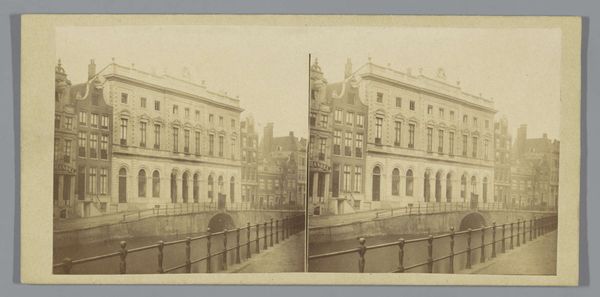
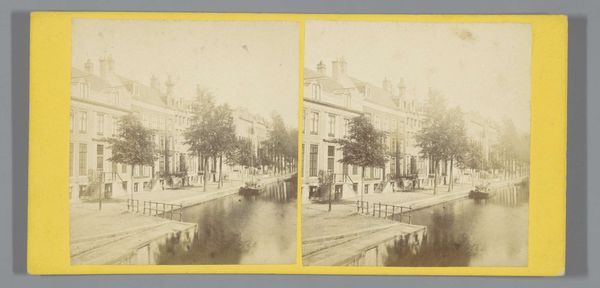
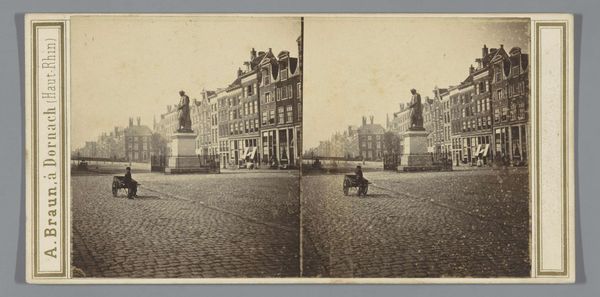
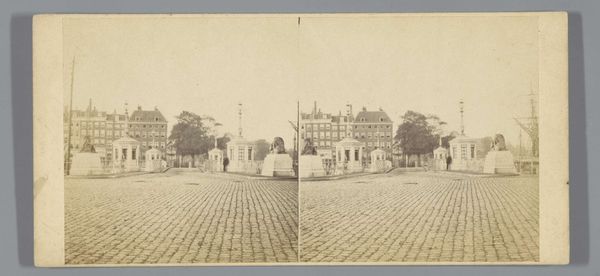
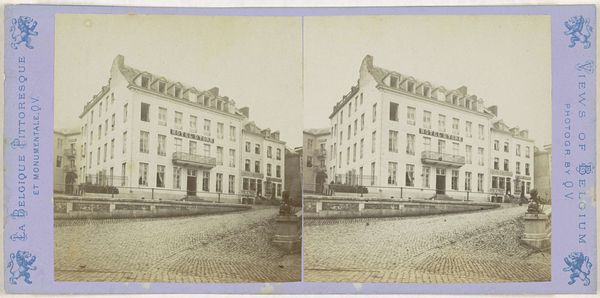
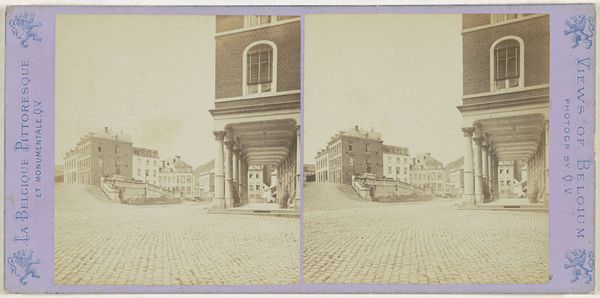
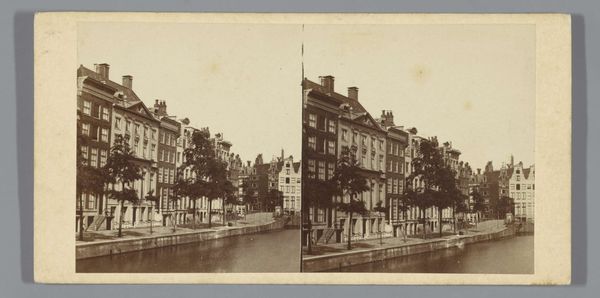
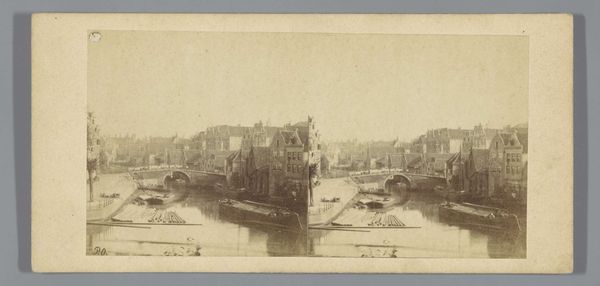
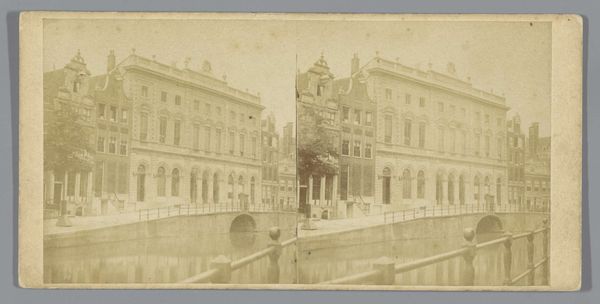
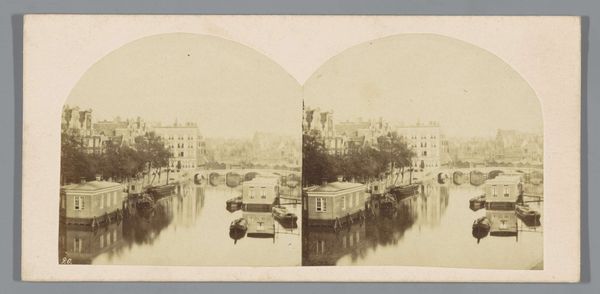
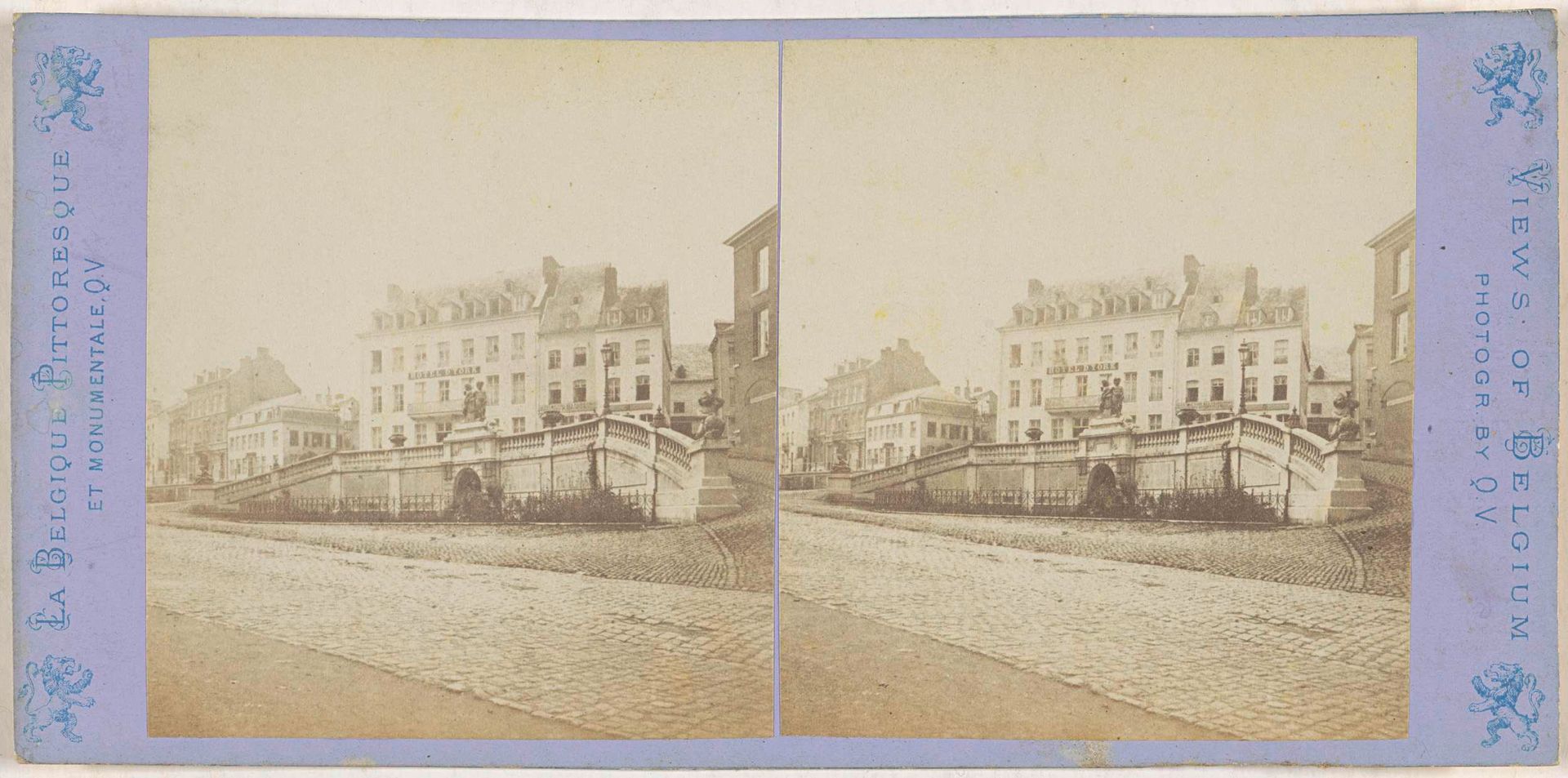
This stereoscopic photograph of the Cascade Monumentale and Hotel d’York in Spa was captured by Jules Hippolyte Quéval. This image would have been made with a specialized camera, designed to capture two nearly identical images simultaneously. When viewed through a stereoscope, the photograph creates an illusion of depth, making the scene appear three-dimensional. This technological advancement allowed people to experience faraway places without ever leaving home. The production of stereoscopic photographs like this one relied on the division of labor. From the skilled photographer and camera manufacturers to the factory workers producing photographic paper and chemicals, each played a role in its creation. Consider the photographer, who had to be skilled in operating the camera, composing the shot, and developing the images. The final photographic print is a direct result of their labor, embodying their artistic vision and technical skills. This photograph is not merely a visual record; it's a product of industrial processes that reflect the changing dynamics of labor, politics, and consumption in the 19th century.
Gezicht op de Cascade Monumentale en het Hotel d'York in Spa
1866 - 1870

Jules Hippolyte Quéval
1824Location
RijksmuseumArtwork details
- Medium
- print, photography
- Dimensions
- height 85 mm, width 175 mm
- Location
- Rijksmuseum
- Copyright
- Rijks Museum: Open Domain
Tags
Comments
Share your thoughts
About this artwork
This stereoscopic photograph of the Cascade Monumentale and Hotel d’York in Spa was captured by Jules Hippolyte Quéval. This image would have been made with a specialized camera, designed to capture two nearly identical images simultaneously. When viewed through a stereoscope, the photograph creates an illusion of depth, making the scene appear three-dimensional. This technological advancement allowed people to experience faraway places without ever leaving home. The production of stereoscopic photographs like this one relied on the division of labor. From the skilled photographer and camera manufacturers to the factory workers producing photographic paper and chemicals, each played a role in its creation. Consider the photographer, who had to be skilled in operating the camera, composing the shot, and developing the images. The final photographic print is a direct result of their labor, embodying their artistic vision and technical skills. This photograph is not merely a visual record; it's a product of industrial processes that reflect the changing dynamics of labor, politics, and consumption in the 19th century.
Comments
Share your thoughts