About this artwork
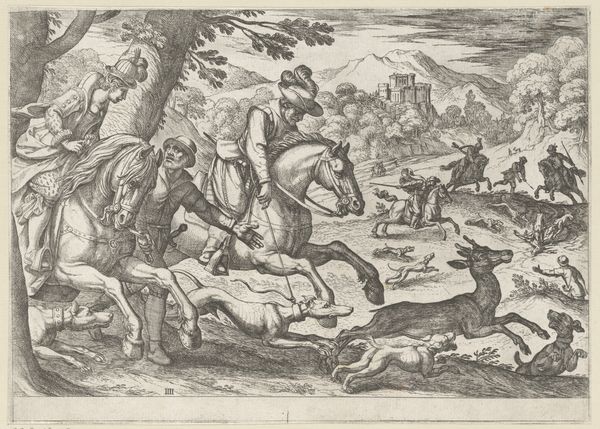
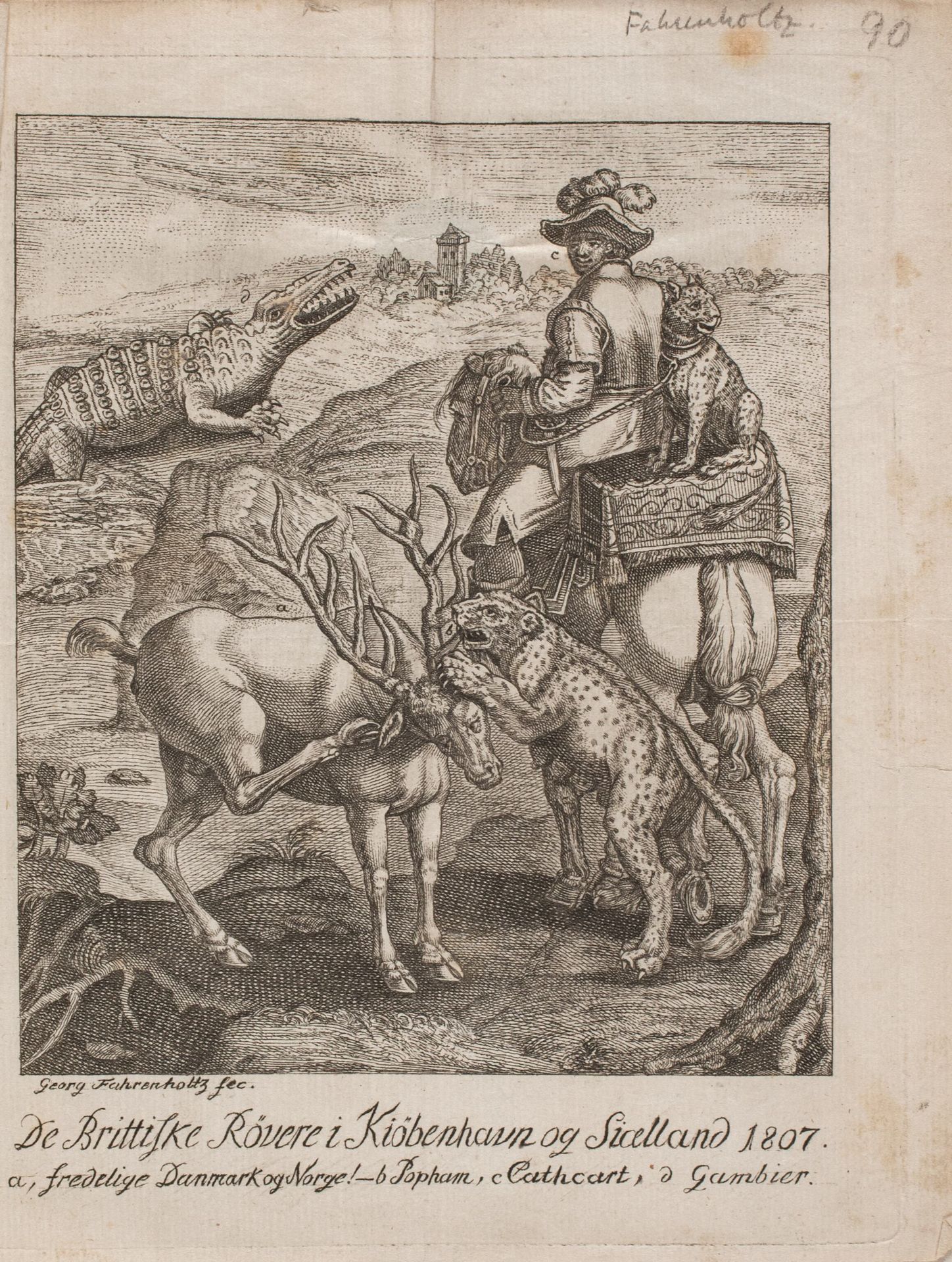
Georg Fahrenholtz created this print, "De Brittiske Rövere..." around 1807, a time when Europe was in upheaval due to the Napoleonic Wars. Look closely and you'll notice this isn't just a hunting scene. It's a political cartoon. Fahrenholtz uses animals to satirize the British bombardment of Copenhagen in 1807. The British are portrayed as predators attacking Denmark-Norway, symbolized by the deer. A crocodile lurks in the background, perhaps representing the ever-present threat of war. The hunter on horseback, accompanied by his dog, surveys the scene with a detached air, embodying the perceived indifference of those in power. The emotional impact of this piece is palpable: a sense of betrayal, of a small nation at the mercy of larger, more powerful forces. Fahrenholtz doesn't shy away from depicting the violence and injustice of the event, offering a scathing critique of British aggression. Ultimately, this print serves as a reminder of the human cost of conflict, and the way national identity can be forged in the face of adversity.
"De Brittiske Rövere..."
1808
Artwork details
- Medium
- print, etching, engraving
- Dimensions
- 194 mm (height) x 152 mm (width) (plademaal)
- Location
- SMK - Statens Museum for Kunst
Tags
Comments
Share your thoughts
About this artwork
Georg Fahrenholtz created this print, "De Brittiske Rövere..." around 1807, a time when Europe was in upheaval due to the Napoleonic Wars. Look closely and you'll notice this isn't just a hunting scene. It's a political cartoon. Fahrenholtz uses animals to satirize the British bombardment of Copenhagen in 1807. The British are portrayed as predators attacking Denmark-Norway, symbolized by the deer. A crocodile lurks in the background, perhaps representing the ever-present threat of war. The hunter on horseback, accompanied by his dog, surveys the scene with a detached air, embodying the perceived indifference of those in power. The emotional impact of this piece is palpable: a sense of betrayal, of a small nation at the mercy of larger, more powerful forces. Fahrenholtz doesn't shy away from depicting the violence and injustice of the event, offering a scathing critique of British aggression. Ultimately, this print serves as a reminder of the human cost of conflict, and the way national identity can be forged in the face of adversity.
Comments
Share your thoughts