About this artwork
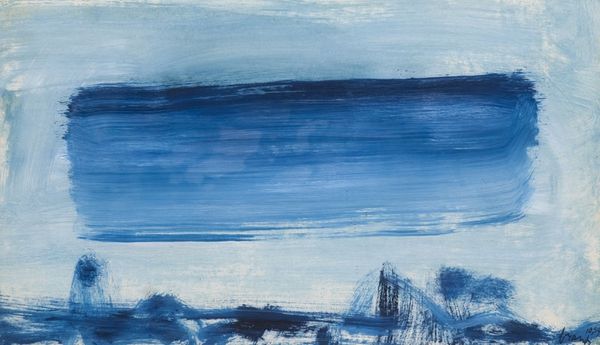
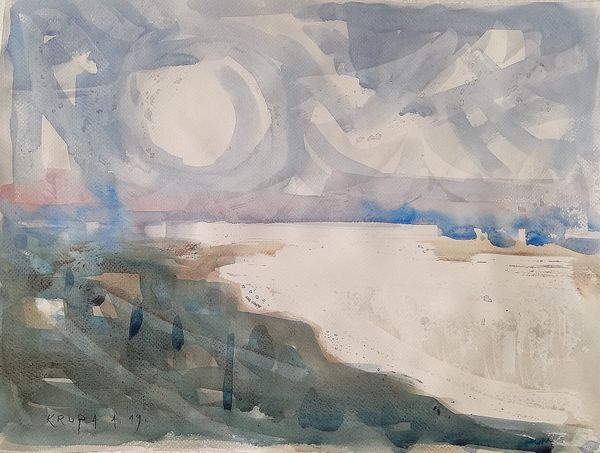
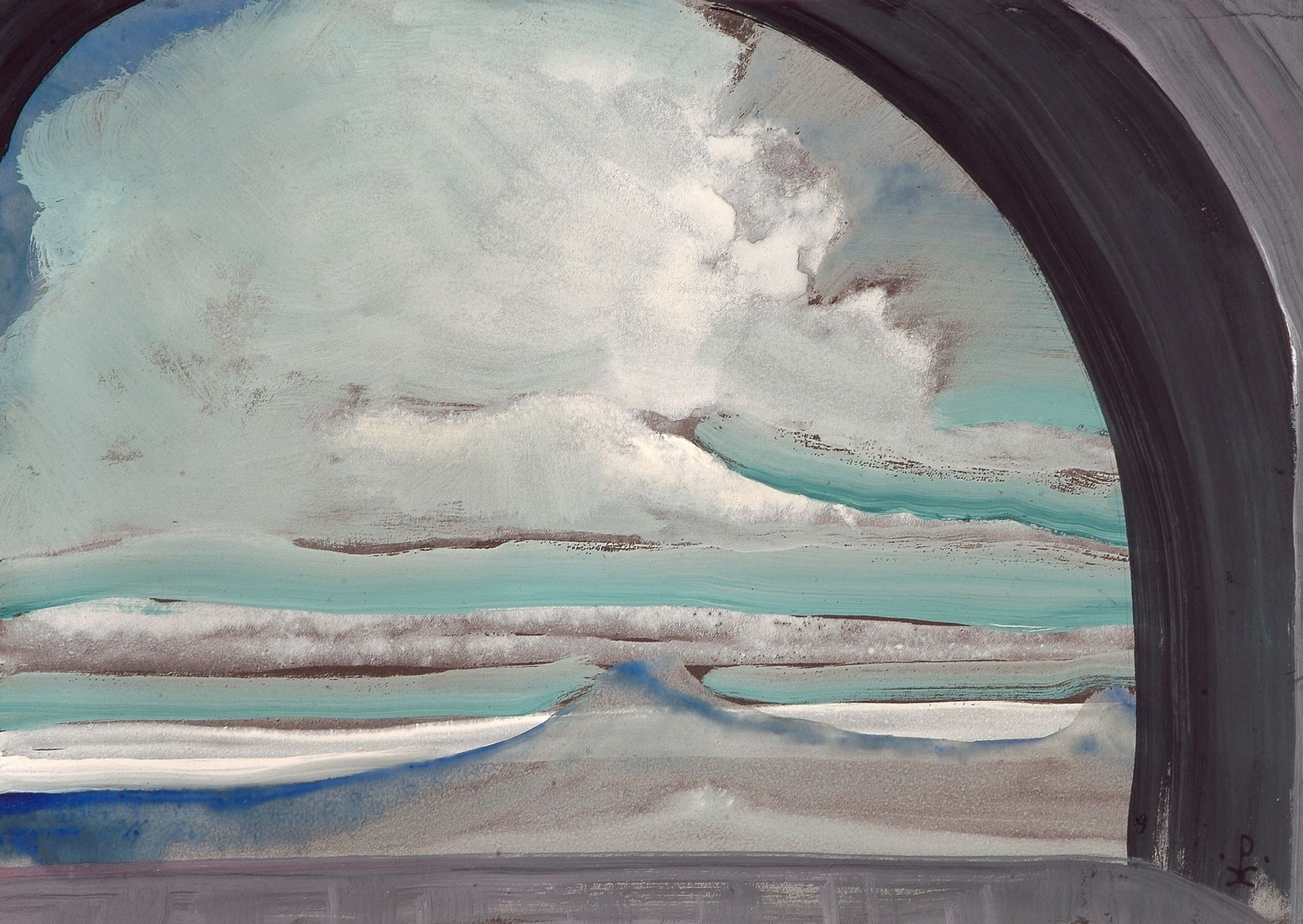
Nicholas Roerich made this painting, White Cloud, with what looks like thin paint, maybe tempera or gouache, and a clear sense of artmaking as a process of building up simple marks. The painting has this wonderful, almost naive quality, as if Roerich was less interested in rendering a scene and more in capturing a feeling. The texture is smooth, the colors muted – blues, grays, whites – creating a sense of calm and distance. There's a particular stroke of turquoise that cuts across the middle of the painting; it’s like a horizon line but also like a slash, a break in the clouds. Thinking about other artists, Agnes Martin comes to mind with her subtle color and horizontal lines. But where Martin is all about the grid, Roerich is looser, more intuitive. In the end, it's up to us to find our own meaning, to let the painting speak to our own experiences and emotions.
White cloud
1922

Nicholas Roerich
1874 - 1947Location
Nicholas Roerich Museum, New York City, NY, USArtwork details
- Location
- Nicholas Roerich Museum, New York City, NY, US
- Copyright
- Public domain
Comments
Share your thoughts
About this artwork
Nicholas Roerich made this painting, White Cloud, with what looks like thin paint, maybe tempera or gouache, and a clear sense of artmaking as a process of building up simple marks. The painting has this wonderful, almost naive quality, as if Roerich was less interested in rendering a scene and more in capturing a feeling. The texture is smooth, the colors muted – blues, grays, whites – creating a sense of calm and distance. There's a particular stroke of turquoise that cuts across the middle of the painting; it’s like a horizon line but also like a slash, a break in the clouds. Thinking about other artists, Agnes Martin comes to mind with her subtle color and horizontal lines. But where Martin is all about the grid, Roerich is looser, more intuitive. In the end, it's up to us to find our own meaning, to let the painting speak to our own experiences and emotions.
Comments
Share your thoughts