About this artwork
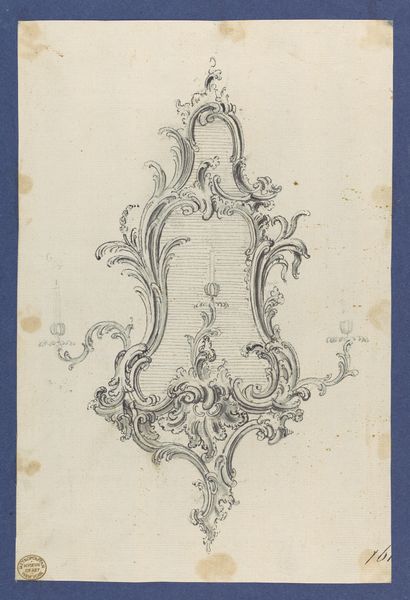
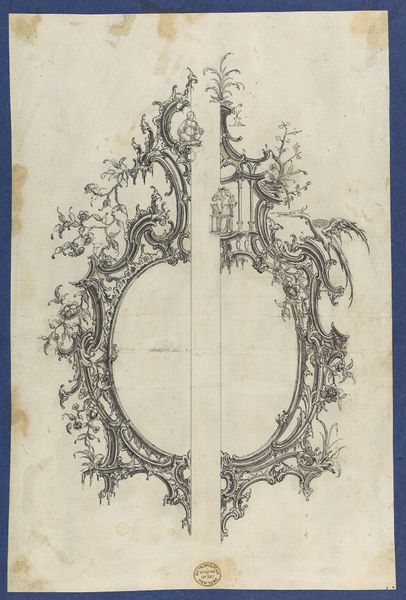
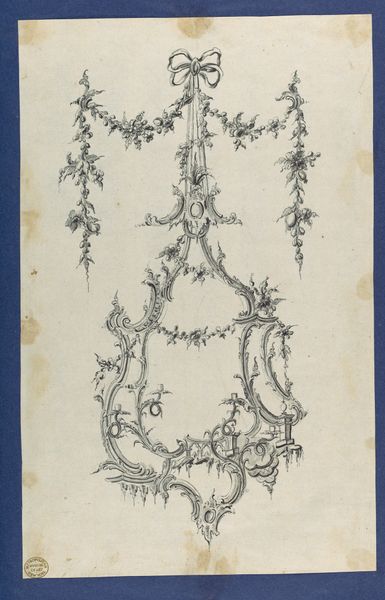
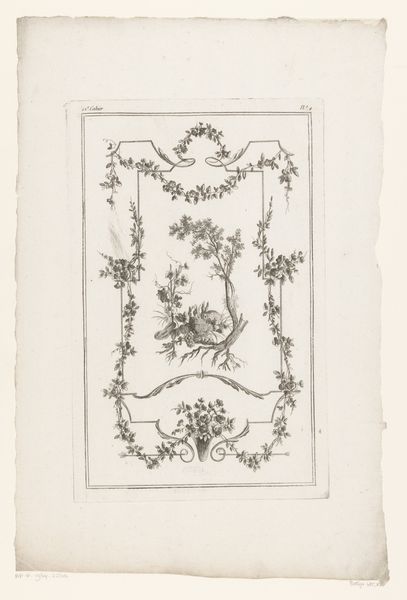
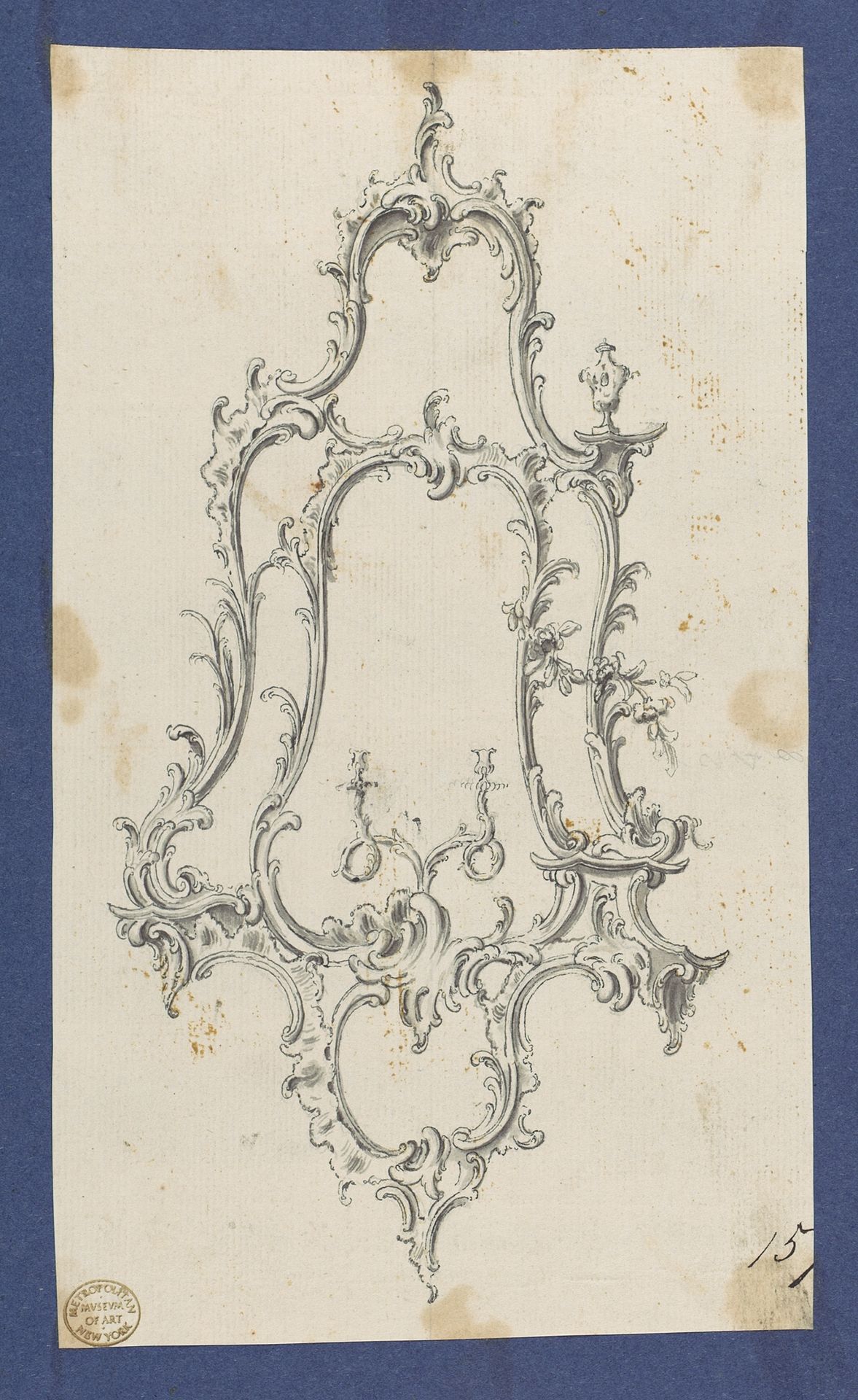
Here we see a drawing by Thomas Chippendale, a mirror with sconces, a design rendered with ink on paper. The dominant visual symbols are the swirling, organic motifs which speak to the Rococo style, a language of curves and flourishes that celebrated opulence and movement. These forms were not merely decorative; they evoked the natural world, aiming to bring life and vitality into interior spaces. These asymmetrical curves carry echoes of ancient acanthus leaves, reborn in new contexts. Consider how this language of ornament, found in furniture design, shares kinship with similar exuberance in Baroque architecture, or even the illuminated manuscripts of the medieval period. The collective memory of these forms is powerful. They resurface across centuries, each time filtered through the sensibilities of a new era. The mirror, a symbol of self-reflection, combined with the light from the sconces, speaks to our deepest desires for beauty and illumination, a cyclical progression, as such it resurfaces, evolves, and takes on new meanings in different historical contexts.
Mirror with Sconces, in Chippendale Drawings, Vol. I
1748 - 1758


Artwork details
- Medium
- drawing, print, pencil, engraving
- Dimensions
- sheet: 8 7/16 x 4 15/16 in. (21.4 x 12.5 cm)
- Location
- Metropolitan Museum of Art, New York, NY
- Copyright
- Public Domain
Tags
Comments
Share your thoughts
About this artwork
Here we see a drawing by Thomas Chippendale, a mirror with sconces, a design rendered with ink on paper. The dominant visual symbols are the swirling, organic motifs which speak to the Rococo style, a language of curves and flourishes that celebrated opulence and movement. These forms were not merely decorative; they evoked the natural world, aiming to bring life and vitality into interior spaces. These asymmetrical curves carry echoes of ancient acanthus leaves, reborn in new contexts. Consider how this language of ornament, found in furniture design, shares kinship with similar exuberance in Baroque architecture, or even the illuminated manuscripts of the medieval period. The collective memory of these forms is powerful. They resurface across centuries, each time filtered through the sensibilities of a new era. The mirror, a symbol of self-reflection, combined with the light from the sconces, speaks to our deepest desires for beauty and illumination, a cyclical progression, as such it resurfaces, evolves, and takes on new meanings in different historical contexts.
Comments
Share your thoughts