About this artwork
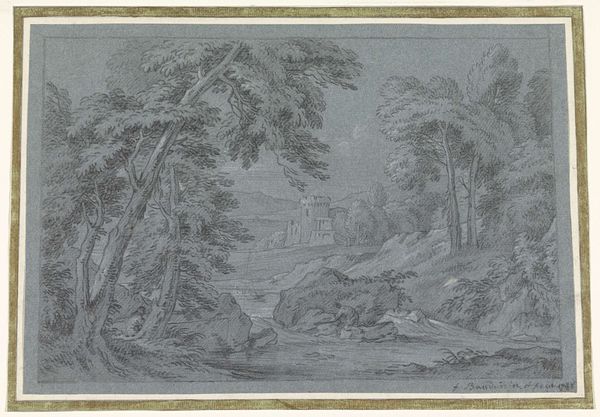
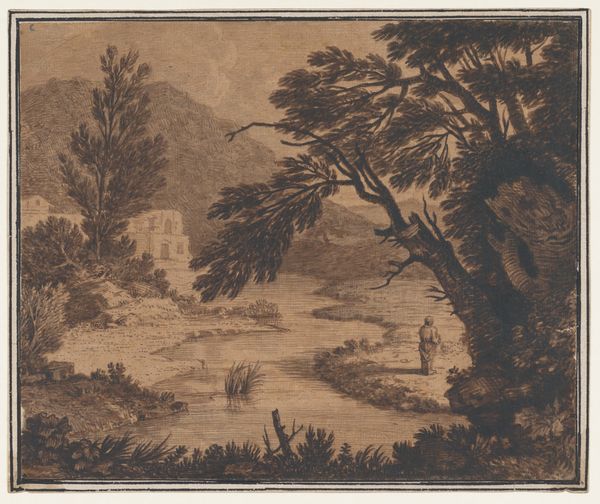
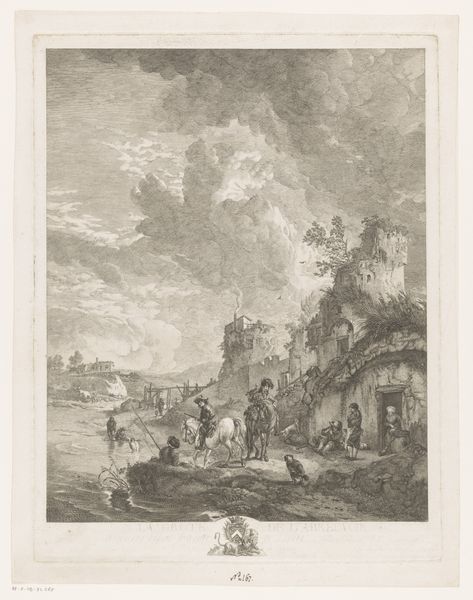
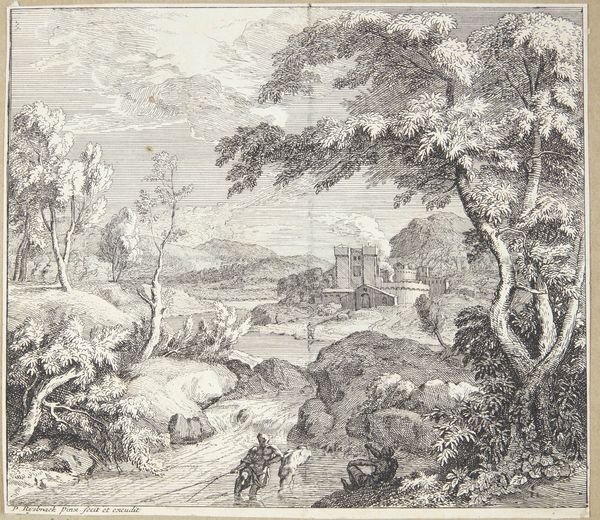
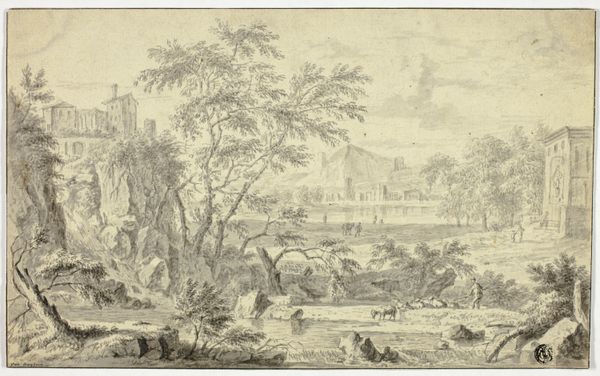
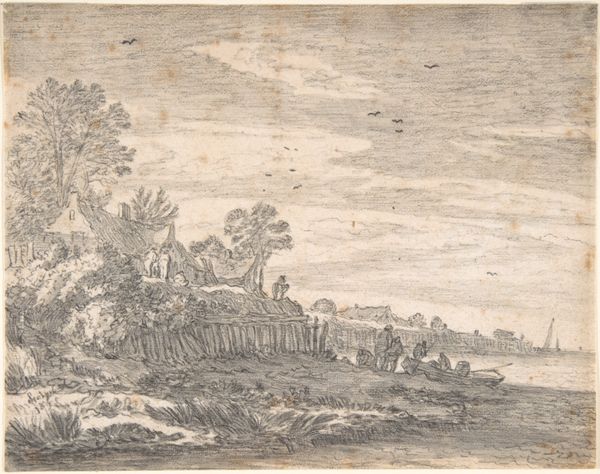
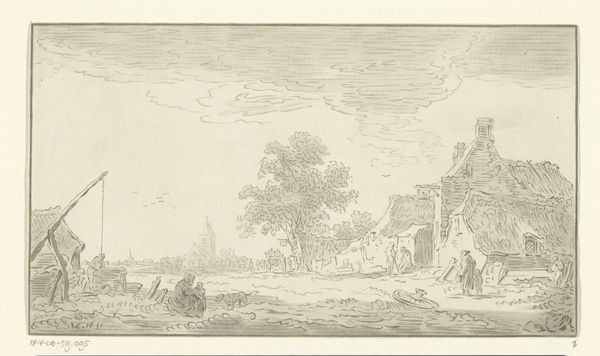
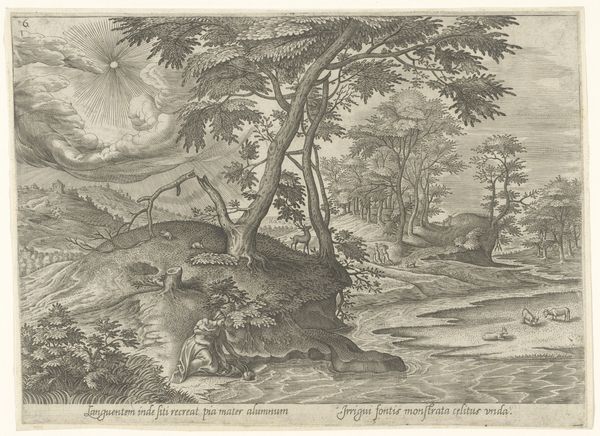
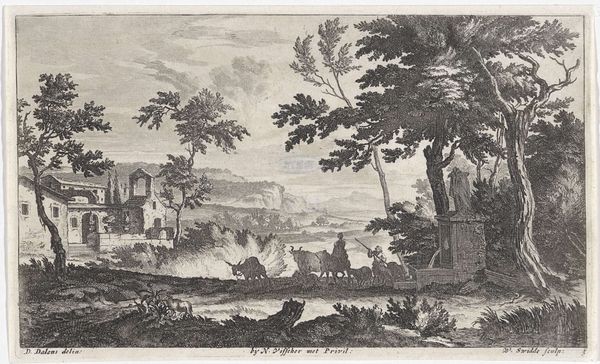
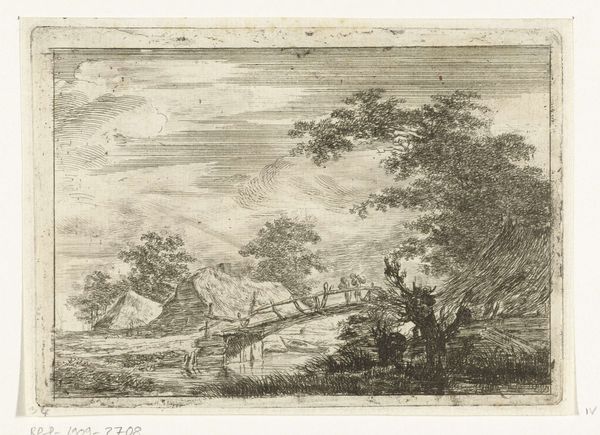
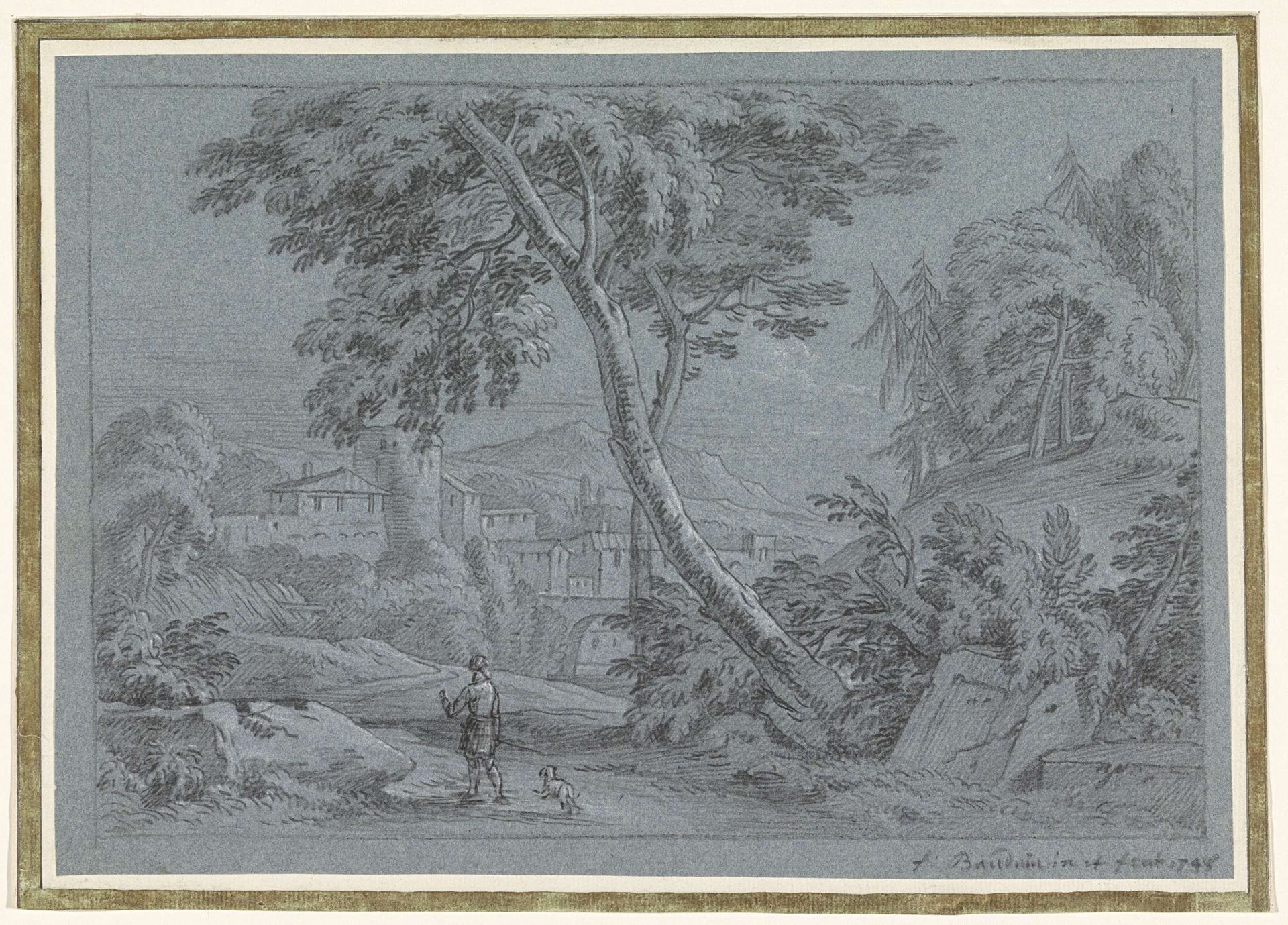
Editor: This etching, "Landscape with Wanderer and Dog" by Frans Boudewijns, created in 1748, presents a muted yet intricate scene. I find the quietness of the image quite striking, especially the depiction of the solitary figure. What do you see in this piece? Curator: This seemingly simple landscape drawing serves as a powerful document reflecting the era’s social stratification. Consider the wanderer: is he merely enjoying nature, or is his journey dictated by economic necessity, seeking work? How does the inclusion of the dog complicate the image? Does it represent companionship, labor, or perhaps even a symbol of privilege afforded to some but not others within the landscape itself? Editor: That's a perspective I hadn’t considered. I was only thinking about the dog as a loyal pet. The “privilege afforded to some” that you mentioned makes me wonder about land ownership and access during that time. Curator: Exactly. Who had the right to wander freely through these spaces? Landscape art often presents a romanticized view of nature, but we must also interrogate what is absent. Are the struggles of rural communities, the impact of feudal systems, or the enclosure movements acknowledged in this serene depiction? The deliberate exclusion or inclusion of such elements served to support the status quo, creating a particular ideology. Editor: It’s like the landscape becomes a stage, where some stories are told, and others are actively silenced. This definitely offers a deeper understanding of landscape art beyond just pretty scenery. Curator: Precisely! By critically examining the social and historical context, we begin to understand art as an active agent within the complex web of power relations. It is not a neutral observer, but rather an active participant in the construction of ideologies. Editor: I will definitely view art with a different, more critical, lens now. Thanks!

Artwork details
- Medium
- drawing, etching, engraving
- Dimensions
- height 198 mm, width 281 mm
- Copyright
- Rijks Museum: Open Domain
Tags
Comments
Share your thoughts
About this artwork
Editor: This etching, "Landscape with Wanderer and Dog" by Frans Boudewijns, created in 1748, presents a muted yet intricate scene. I find the quietness of the image quite striking, especially the depiction of the solitary figure. What do you see in this piece? Curator: This seemingly simple landscape drawing serves as a powerful document reflecting the era’s social stratification. Consider the wanderer: is he merely enjoying nature, or is his journey dictated by economic necessity, seeking work? How does the inclusion of the dog complicate the image? Does it represent companionship, labor, or perhaps even a symbol of privilege afforded to some but not others within the landscape itself? Editor: That's a perspective I hadn’t considered. I was only thinking about the dog as a loyal pet. The “privilege afforded to some” that you mentioned makes me wonder about land ownership and access during that time. Curator: Exactly. Who had the right to wander freely through these spaces? Landscape art often presents a romanticized view of nature, but we must also interrogate what is absent. Are the struggles of rural communities, the impact of feudal systems, or the enclosure movements acknowledged in this serene depiction? The deliberate exclusion or inclusion of such elements served to support the status quo, creating a particular ideology. Editor: It’s like the landscape becomes a stage, where some stories are told, and others are actively silenced. This definitely offers a deeper understanding of landscape art beyond just pretty scenery. Curator: Precisely! By critically examining the social and historical context, we begin to understand art as an active agent within the complex web of power relations. It is not a neutral observer, but rather an active participant in the construction of ideologies. Editor: I will definitely view art with a different, more critical, lens now. Thanks!
Comments
Share your thoughts