1969
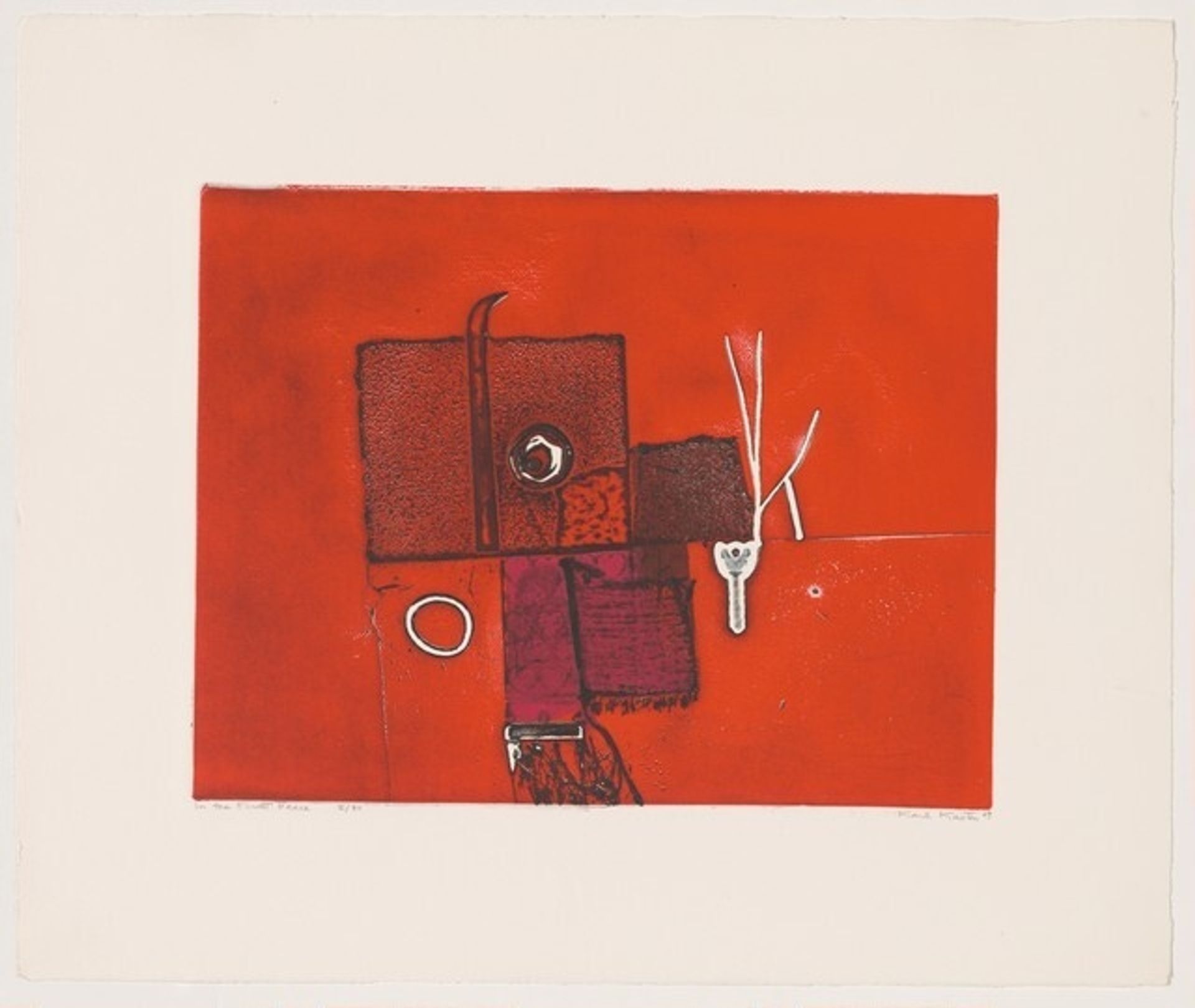
In the First Place


Listen to curator's interpretation
Curatorial notes
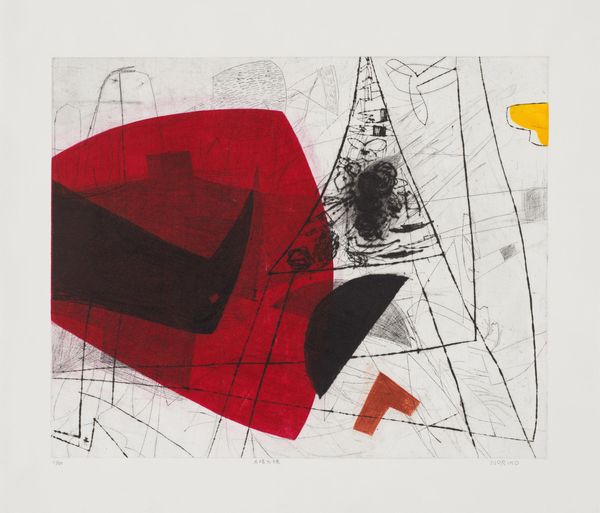
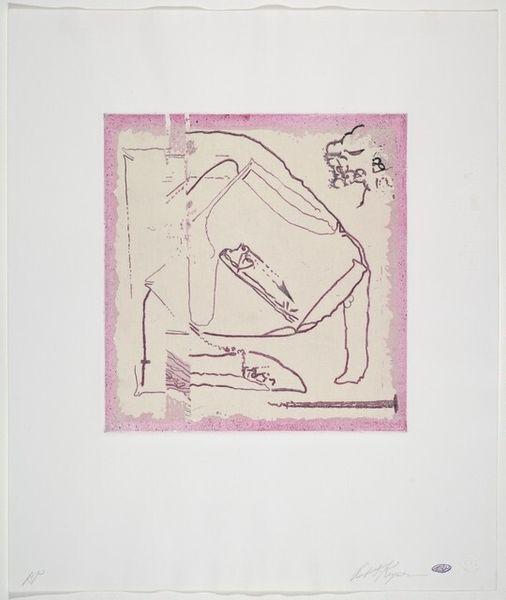
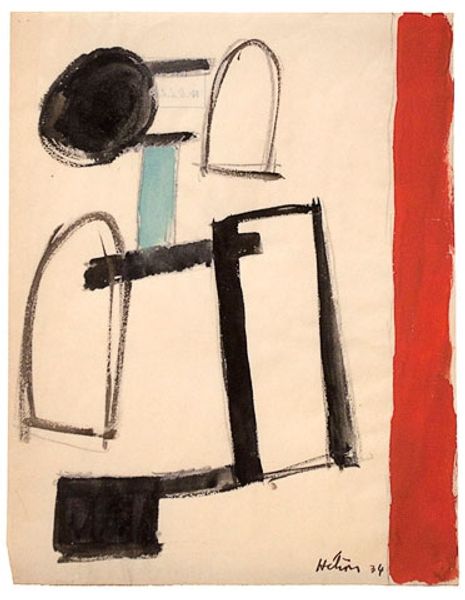
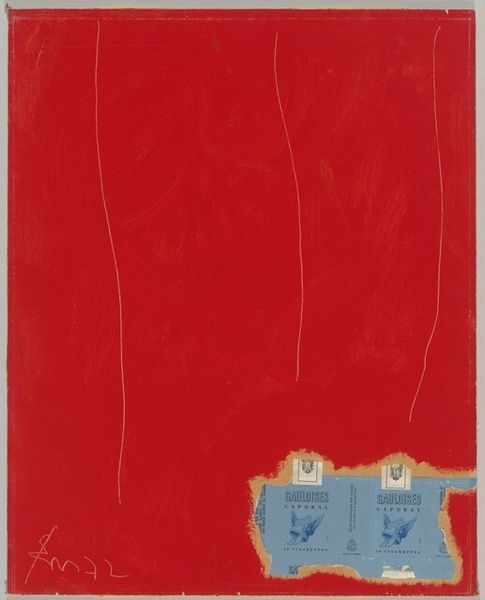
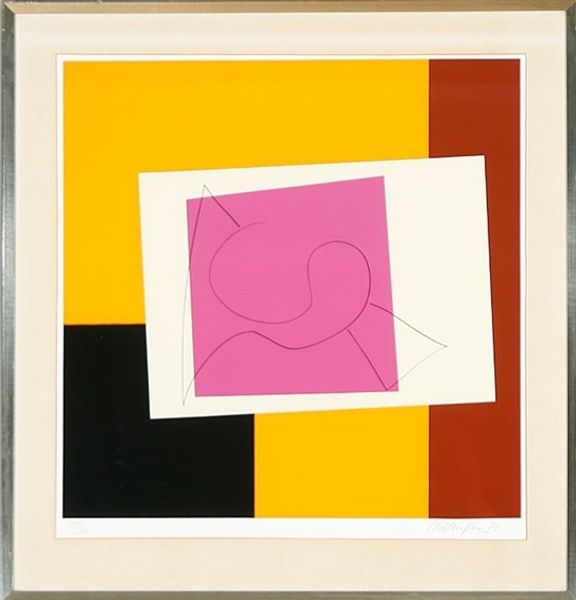
Editor: Here we have Karl Kasten's "In the First Place," a collage and print from 1969. It has an interesting tension; the composition feels very geometric, but the textures soften that rigidity. How do you interpret this work, considering its historical context? Curator: Considering the artwork's creation in 1969, we can explore its resonance within the socio-political landscape of the time. The abstract geometric forms might symbolize a deconstruction of traditional societal structures, a visual representation of the era's questioning of established norms. What role might the juxtaposition of the hard-edged shapes and the organic textures play in this conversation? Editor: That's a good point; the contrast does seem deliberate. It’s as if the artist is acknowledging the push and pull between order and chaos. What’s fascinating to me is that the Pop-Art elements seems at odds with the overall feeling of this linocut. It is not kitschy or mainstream. It’s almost subversive. Curator: Precisely. We can examine Kasten's piece through the lens of power dynamics, thinking about the linocut’s symbolic importance. Kasten might be subverting our expectations, critiquing the co-option of art for political ends and pushing us to reconsider what art can achieve as a tool of empowerment. Editor: I didn’t initially see it that way, but thinking about the era and the way abstraction can be a form of protest definitely changes my perspective. I appreciate how you situated this work within such a broader, yet very insightful, framework. Curator: Art serves as a visual dialogue that enables and enhances one’s view, not only for individual introspection but a communal call for intersectional cognizance and mobilization for those who would otherwise be voiceless. That dialogue continues today.