About this artwork
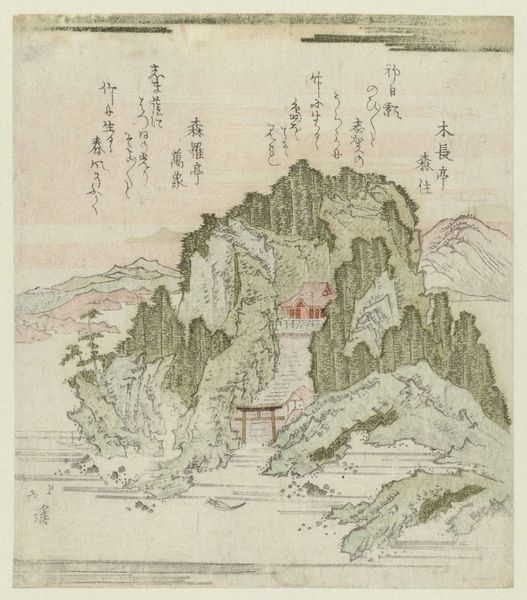
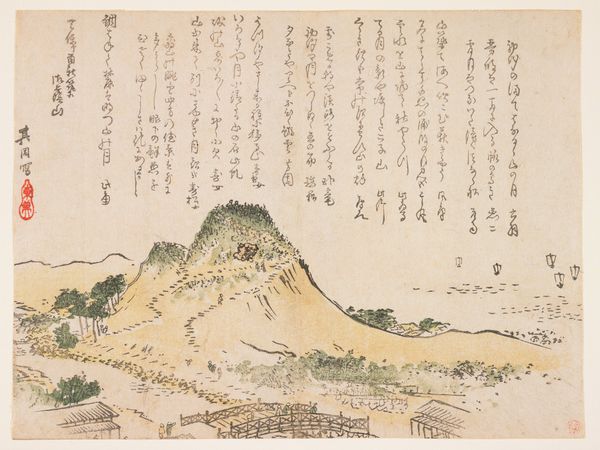
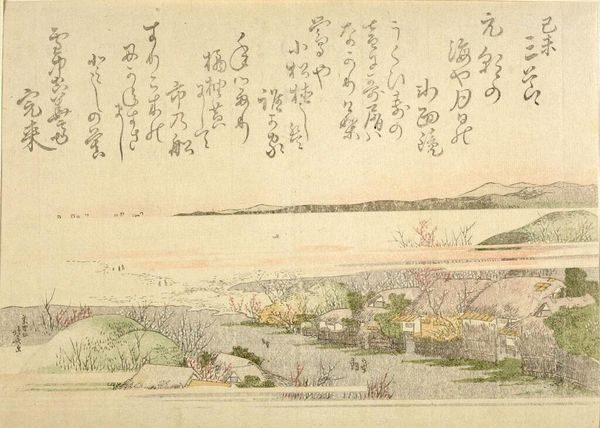
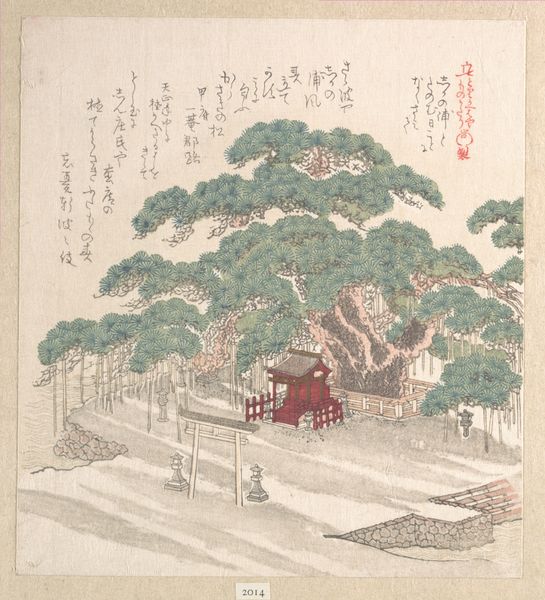
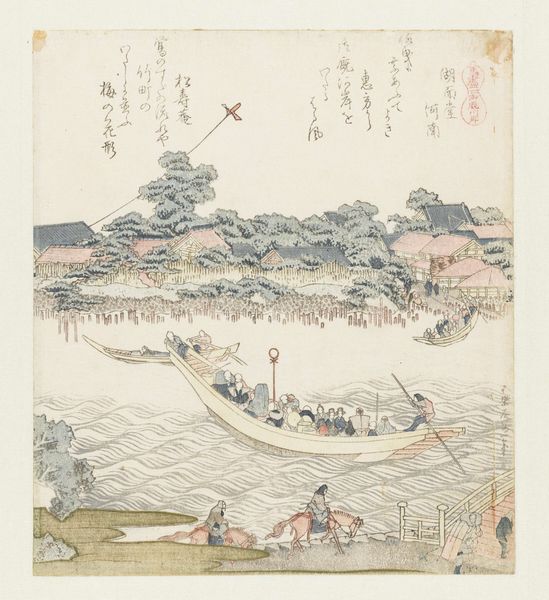
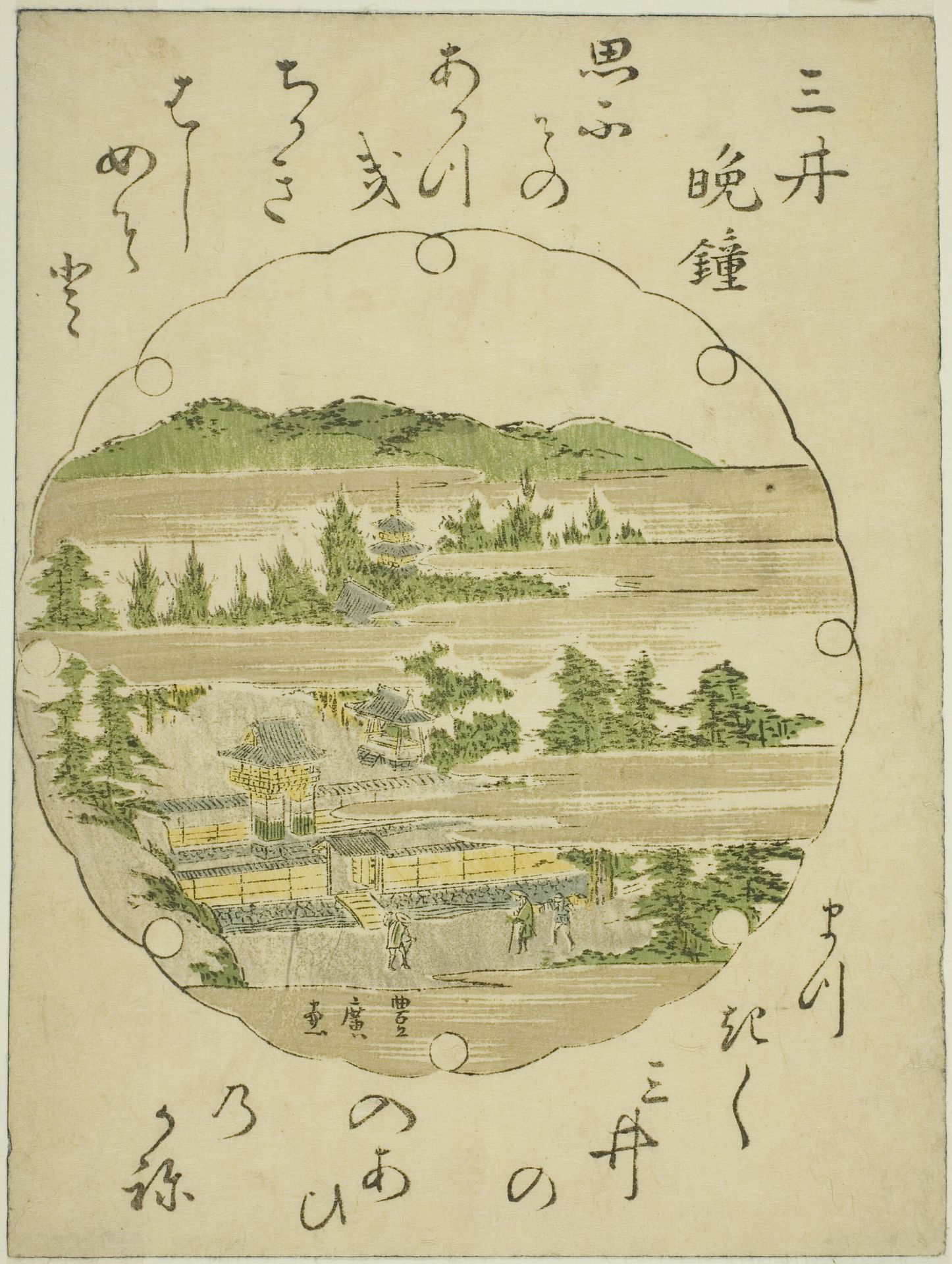
Utagawa Toyohiro created this woodblock print, "Evening Bell at Mii Temple," as part of his series "Eight Views of Omi" in the late 18th or early 19th century. During this Edo period, Japan was experiencing economic growth and cultural flourishing, yet society was highly stratified. These prints, known as ukiyo-e, were popular among the merchant class, offering them glimpses into landscapes and entertainment that were otherwise out of reach. Here, Toyohiro captures a serene temple scene, framed by a delicate, decorative border and calligraphy which provides an additional layer of meaning and aesthetic appeal. The figures walking along the temple grounds seem to be commoners, going about their daily lives, which reflects a connection between the spiritual and the everyday. The artwork uses a traditional representation to also develop alternative narratives. "Eight Views" prints often evoked nostalgia for an idealized past, and offered viewers a form of escapism but also became symbols of cultural identity during times of social change.
Evening Bell at Mii Temple (Mii no bansho), from an untitled series of Eight Views of Omi
n.d.


Artwork details
- Medium
- tempera, print, woodblock-print
- Dimensions
- 8 15/16 × 6 3/4 in.
- Location
- The Art Institute of Chicago
- Copyright
- Public Domain
Tags
Comments
Share your thoughts
About this artwork
Utagawa Toyohiro created this woodblock print, "Evening Bell at Mii Temple," as part of his series "Eight Views of Omi" in the late 18th or early 19th century. During this Edo period, Japan was experiencing economic growth and cultural flourishing, yet society was highly stratified. These prints, known as ukiyo-e, were popular among the merchant class, offering them glimpses into landscapes and entertainment that were otherwise out of reach. Here, Toyohiro captures a serene temple scene, framed by a delicate, decorative border and calligraphy which provides an additional layer of meaning and aesthetic appeal. The figures walking along the temple grounds seem to be commoners, going about their daily lives, which reflects a connection between the spiritual and the everyday. The artwork uses a traditional representation to also develop alternative narratives. "Eight Views" prints often evoked nostalgia for an idealized past, and offered viewers a form of escapism but also became symbols of cultural identity during times of social change.
Comments
Share your thoughts