About this artwork
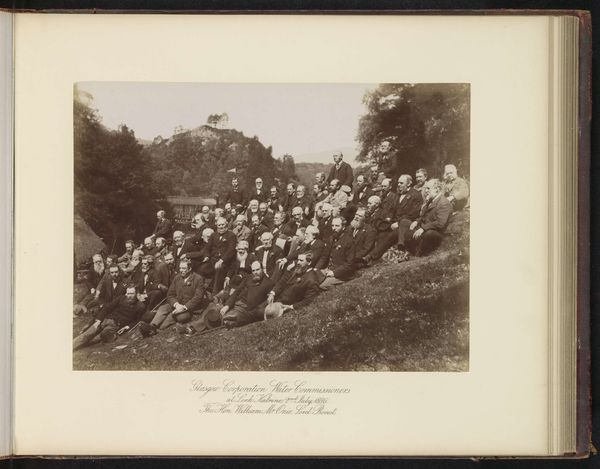
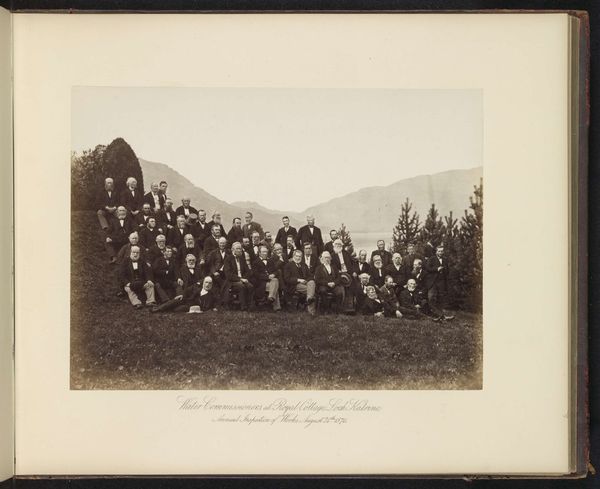
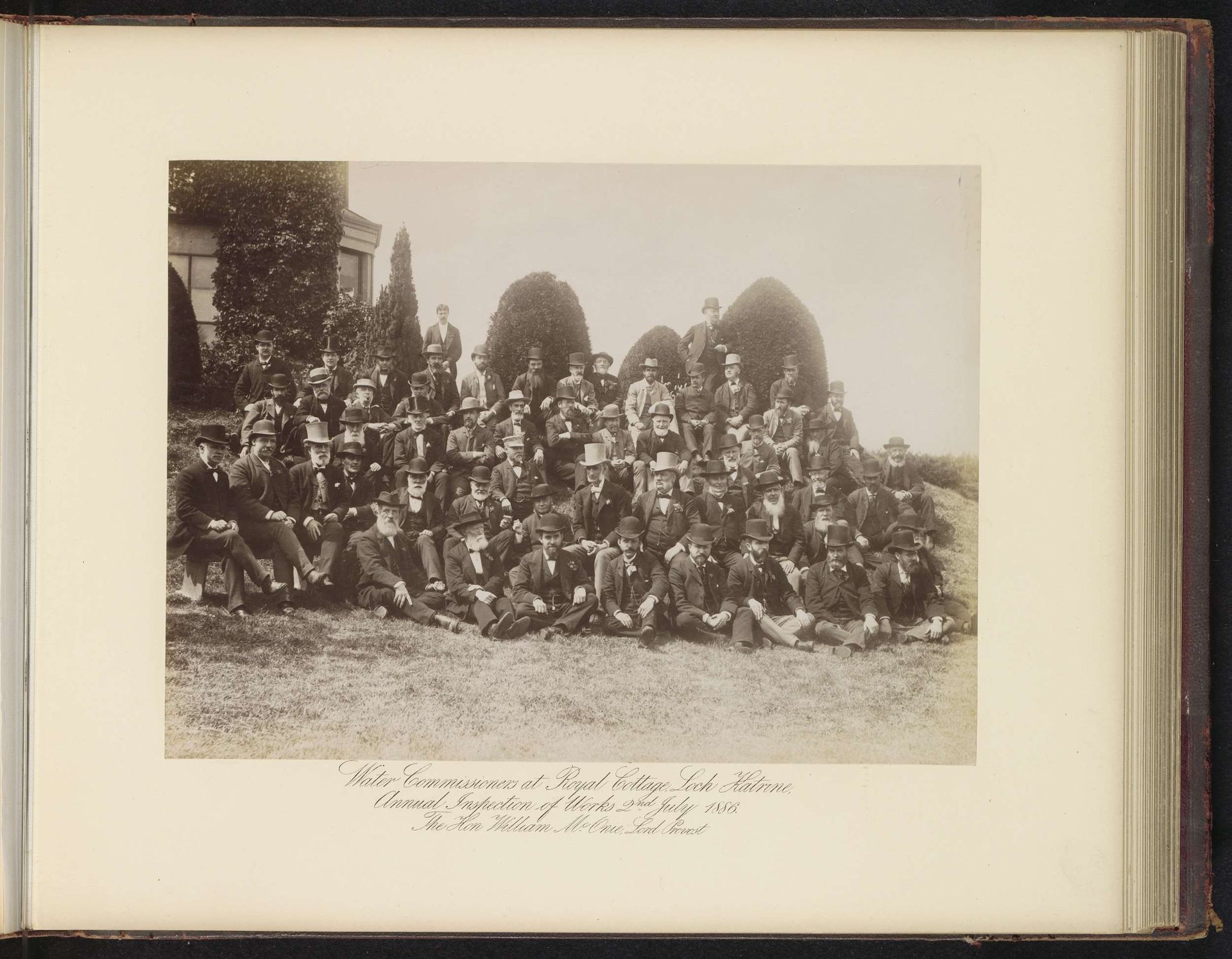
This photograph by T. & R. Annan & Sons, taken on July 2nd, 1886, captures the Water Commissioners at Royal Cottage, Loch Katrine. The arrangement of the men is striking. We see the uniform attire of suits and hats, a symbol of collective identity and purpose. Consider how this formation echoes earlier depictions of gatherings and councils throughout history. There is a natural hierarchy, a pyramid form with the men in the back standing, a compositional structure seen in classical and religious paintings representing authority and order. Think of the Last Supper, where the arrangement of figures conveys both unity and individual reactions. The collective portrait has ancient roots, appearing in various forms across cultures. It is not a static image, but a recurring motif. This image taps into a deep-seated desire for group identity and collective memory, echoing the emotional resonance found in historic depictions of power and community. The photograph, with its subtle echoes of past assemblies, becomes a powerful force, engaging viewers on a subconscious level. The cyclical progression of the imagery resurfaces here, evolved, and takes on new meaning in this historical context.
Water Commissioners at Royal Cottage, Loch Katrine, annual inspection of works 2nd July, 1886. The Hon. William McOnie, Lord Provost
Possibly 1886 - 1887

Artwork details
- Medium
- photography
- Dimensions
- height 207 mm, width 279 mm
- Copyright
- Rijks Museum: Open Domain
Tags
portrait
photography
group-portraits
Comments
Be the first to share your thoughts about this work.
About this artwork
This photograph by T. & R. Annan & Sons, taken on July 2nd, 1886, captures the Water Commissioners at Royal Cottage, Loch Katrine. The arrangement of the men is striking. We see the uniform attire of suits and hats, a symbol of collective identity and purpose. Consider how this formation echoes earlier depictions of gatherings and councils throughout history. There is a natural hierarchy, a pyramid form with the men in the back standing, a compositional structure seen in classical and religious paintings representing authority and order. Think of the Last Supper, where the arrangement of figures conveys both unity and individual reactions. The collective portrait has ancient roots, appearing in various forms across cultures. It is not a static image, but a recurring motif. This image taps into a deep-seated desire for group identity and collective memory, echoing the emotional resonance found in historic depictions of power and community. The photograph, with its subtle echoes of past assemblies, becomes a powerful force, engaging viewers on a subconscious level. The cyclical progression of the imagery resurfaces here, evolved, and takes on new meaning in this historical context.
Comments
Be the first to share your thoughts about this work.