About this artwork
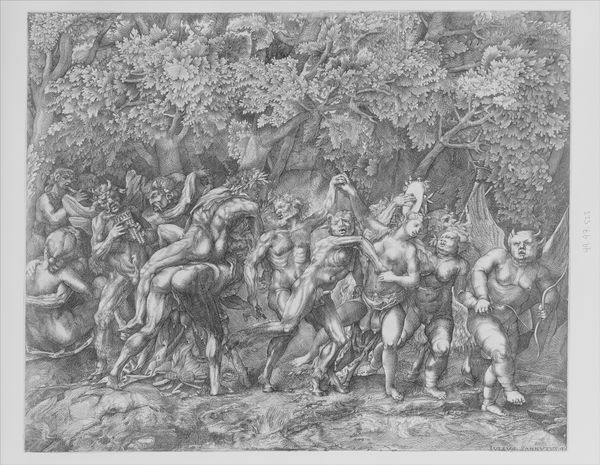
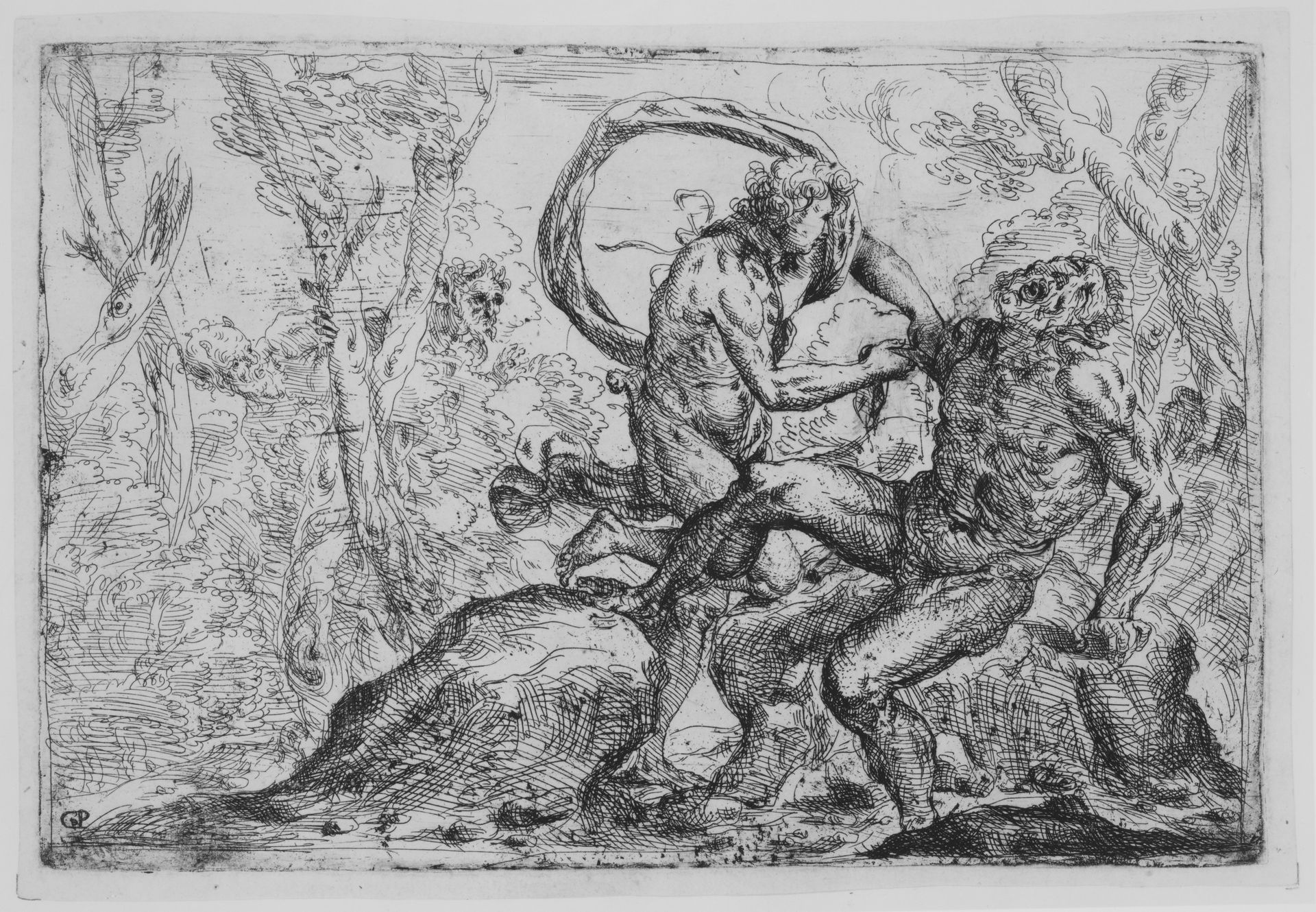
This print by Giovanni Pietro Possenti depicts the grisly flaying of Marsyas. In Greek mythology, Marsyas, a satyr, dared to challenge Apollo to a musical contest, and for his hubris, he was punished in a most gruesome manner. The image presents a potent mix of classical myth and raw, visceral emotion. Flaying, as a motif, appears across cultures, often symbolizing purification or transformation through suffering. Think of Saint Bartholomew, frequently depicted holding his flayed skin, a testament to faith and martyrdom. This act speaks to a deep-seated human fascination with pain, sacrifice, and the boundaries of the body. Here, the flaying of Marsyas is not merely a depiction of violence but a mirror reflecting humanity's complex relationship with suffering. The scene's emotional power resides in its stark portrayal of vulnerability and torment, echoing through art history and engaging our subconscious on a primal level. The image reminds us of the non-linear progression of symbols, forever evolving, resurfacing, and reflecting our deepest fears and fascinations.
The Flaying of Marsyas
1750 - 1775

Giovanni Pietro Possenti
1618 - 1659
The Metropolitan Museum of Art
Metropolitan Museum of Art, New York, NYArtwork details
- Location
- Metropolitan Museum of Art, New York, NY
- Copyright
- Public Domain
Comments
Share your thoughts
About this artwork
This print by Giovanni Pietro Possenti depicts the grisly flaying of Marsyas. In Greek mythology, Marsyas, a satyr, dared to challenge Apollo to a musical contest, and for his hubris, he was punished in a most gruesome manner. The image presents a potent mix of classical myth and raw, visceral emotion. Flaying, as a motif, appears across cultures, often symbolizing purification or transformation through suffering. Think of Saint Bartholomew, frequently depicted holding his flayed skin, a testament to faith and martyrdom. This act speaks to a deep-seated human fascination with pain, sacrifice, and the boundaries of the body. Here, the flaying of Marsyas is not merely a depiction of violence but a mirror reflecting humanity's complex relationship with suffering. The scene's emotional power resides in its stark portrayal of vulnerability and torment, echoing through art history and engaging our subconscious on a primal level. The image reminds us of the non-linear progression of symbols, forever evolving, resurfacing, and reflecting our deepest fears and fascinations.
Comments
Share your thoughts