About this artwork
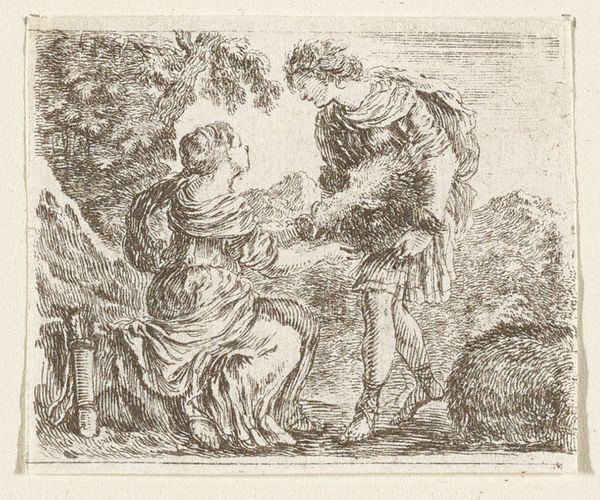
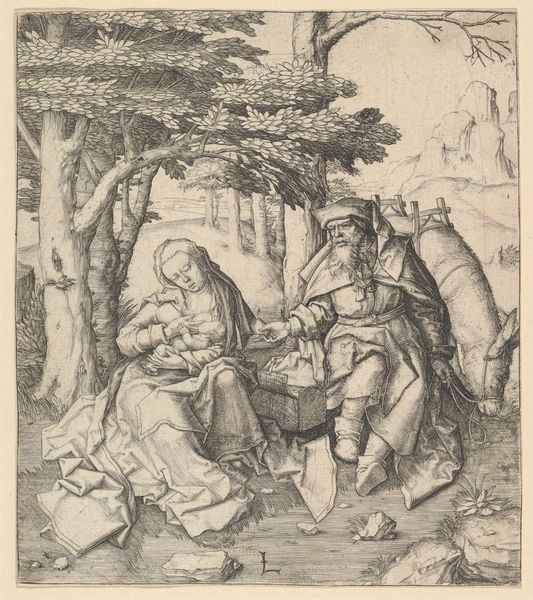
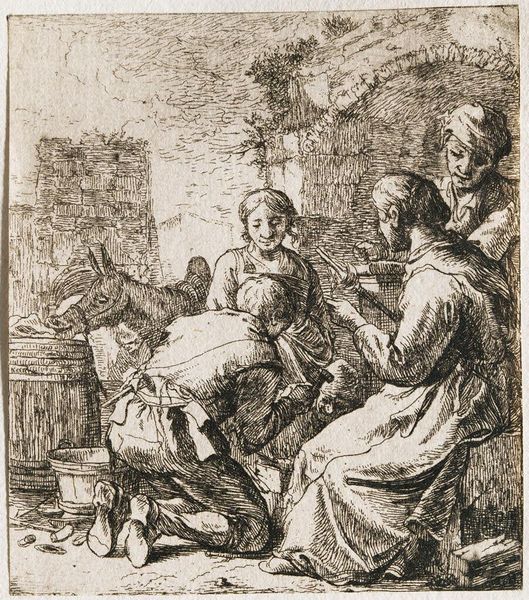
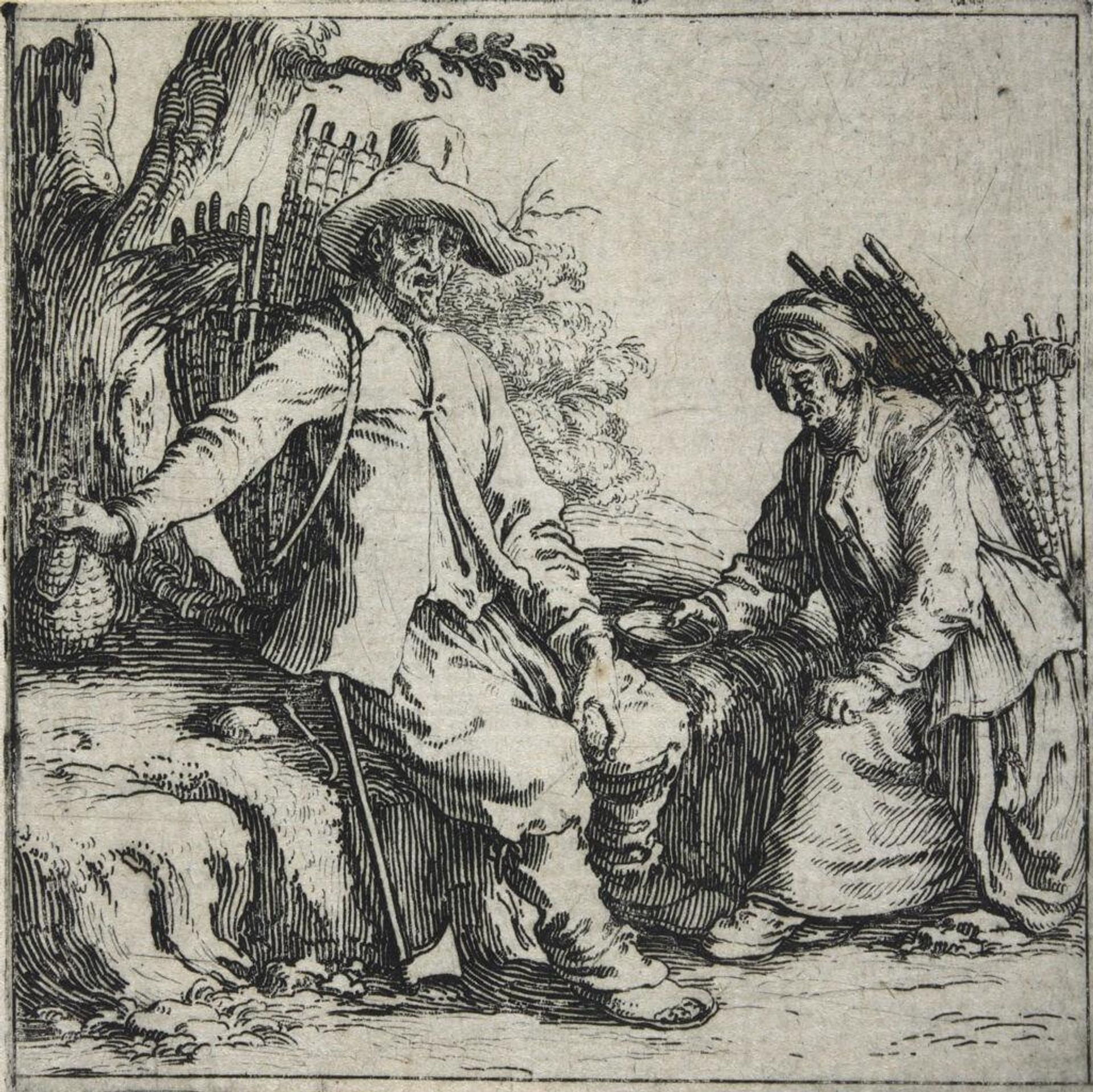
Editor: This is Jacques Callot’s "Peasant and His Wife Resting," an etching made sometime before 1635. I’m struck by how the artist uses such delicate lines to create a sense of weariness. What symbols do you notice in this image? Curator: The satchel, the walking stick, even the way the wife kneels, these are all emblems of a hard-working life. The small scale amplifies the intimacy and perhaps the fragility of their existence. What emotional resonance do these objects evoke for you? Editor: I think they represent the burdens that weigh on the figures, but also their resilience in carrying them. Curator: Precisely. Callot uses these motifs to tap into a shared cultural memory of rural life, where labor and rest are inextricably linked. It’s a powerful commentary, isn’t it? Editor: Definitely. I hadn’t considered how symbolic everyday objects could be.
Peasant and His Wife Resting
c. 17th century


Artwork details
- Dimensions
- 8.6 x 8.7 cm (3 3/8 x 3 7/16 in.)
- Location
- Harvard Art Museums
- Copyright
- CC0 1.0
Comments
Share your thoughts
About this artwork
Editor: This is Jacques Callot’s "Peasant and His Wife Resting," an etching made sometime before 1635. I’m struck by how the artist uses such delicate lines to create a sense of weariness. What symbols do you notice in this image? Curator: The satchel, the walking stick, even the way the wife kneels, these are all emblems of a hard-working life. The small scale amplifies the intimacy and perhaps the fragility of their existence. What emotional resonance do these objects evoke for you? Editor: I think they represent the burdens that weigh on the figures, but also their resilience in carrying them. Curator: Precisely. Callot uses these motifs to tap into a shared cultural memory of rural life, where labor and rest are inextricably linked. It’s a powerful commentary, isn’t it? Editor: Definitely. I hadn’t considered how symbolic everyday objects could be.
Comments
Share your thoughts