About this artwork
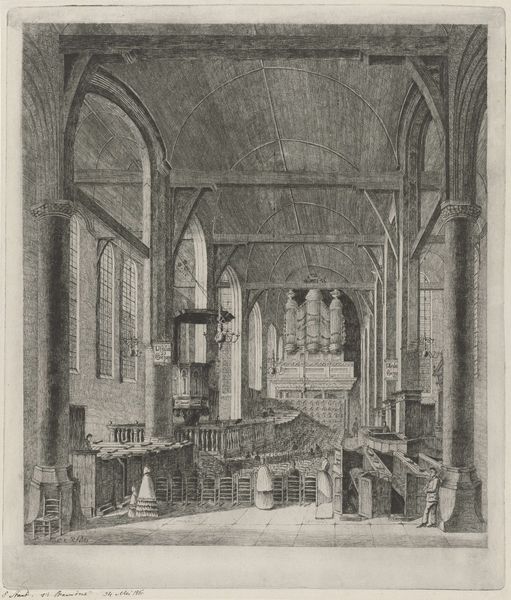
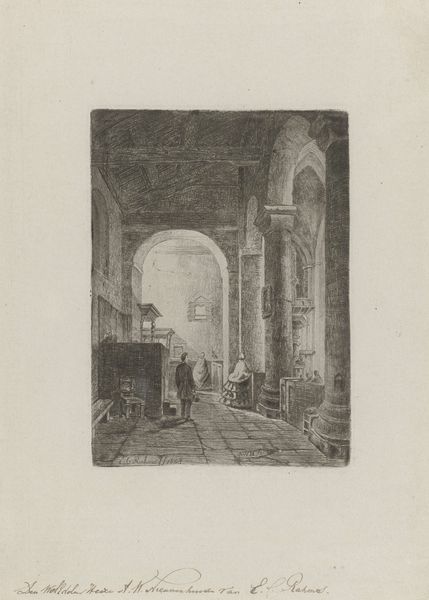
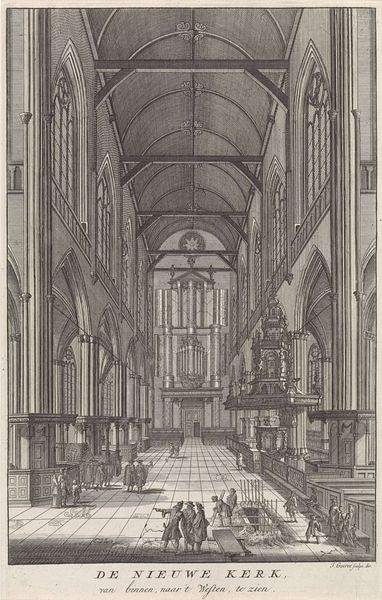
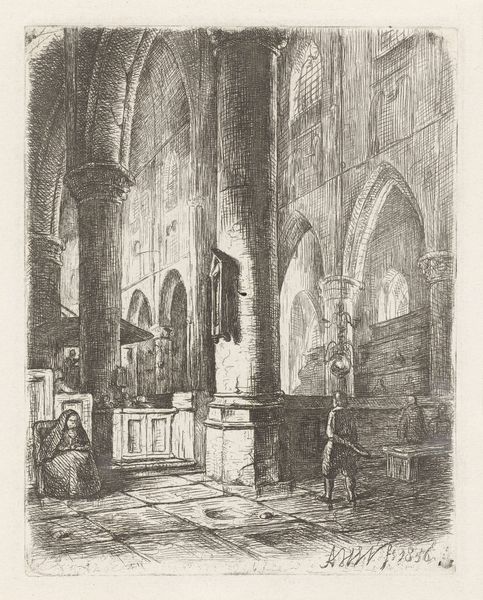
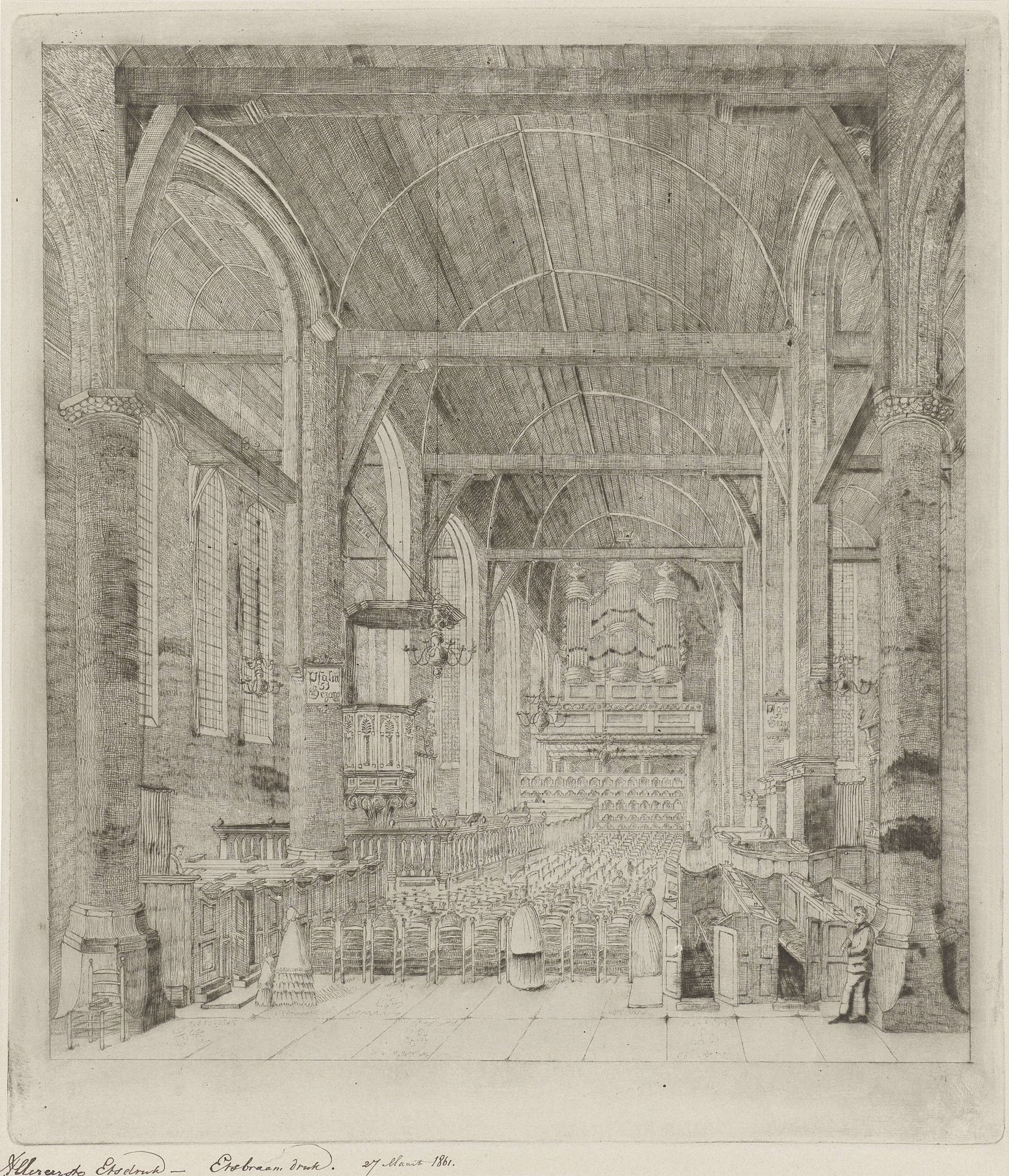
Eberhard Cornelis Rahms made this church interior in 1861, using etching. Look closely at the image and you'll see a dense accumulation of finely scratched lines. This is how the etcher creates an image, not by directly cutting into the metal plate, but by using acid to do the work. The etcher covers the plate in a waxy ground, draws through it with a needle, and then bathes the plate in acid. The longer the plate sits in the acid, the deeper the lines get etched. There is something work-like about the controlled regularity of these marks, which mimics the parallel rows of chairs in the church itself. Rahms has used the print medium to convey a sense of industriousness, and to give permanence to this scene. You can clearly see the architecture of the church, and with it the cultural values that helped create this image. By thinking about the making, we come to appreciate how much care and labor went into both the building and its etched representation.

Artwork details
- Medium
- drawing, print, etching, paper, ink
- Dimensions
- height 323 mm, width 283 mm
- Copyright
- Rijks Museum: Open Domain
Tags
drawing
medieval
etching
landscape
perspective
paper
ink
genre-painting
realism
Comments
Be the first to share your thoughts about this work.
About this artwork
Eberhard Cornelis Rahms made this church interior in 1861, using etching. Look closely at the image and you'll see a dense accumulation of finely scratched lines. This is how the etcher creates an image, not by directly cutting into the metal plate, but by using acid to do the work. The etcher covers the plate in a waxy ground, draws through it with a needle, and then bathes the plate in acid. The longer the plate sits in the acid, the deeper the lines get etched. There is something work-like about the controlled regularity of these marks, which mimics the parallel rows of chairs in the church itself. Rahms has used the print medium to convey a sense of industriousness, and to give permanence to this scene. You can clearly see the architecture of the church, and with it the cultural values that helped create this image. By thinking about the making, we come to appreciate how much care and labor went into both the building and its etched representation.
Comments
Be the first to share your thoughts about this work.