About this artwork
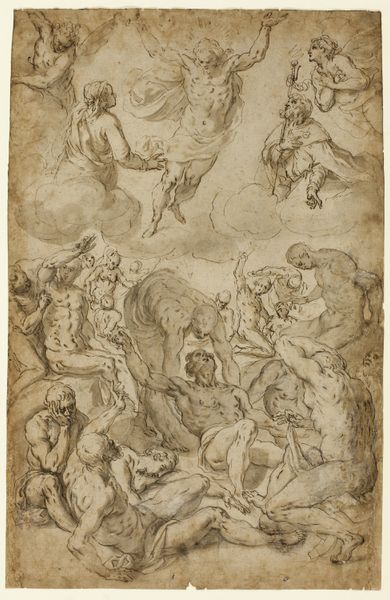
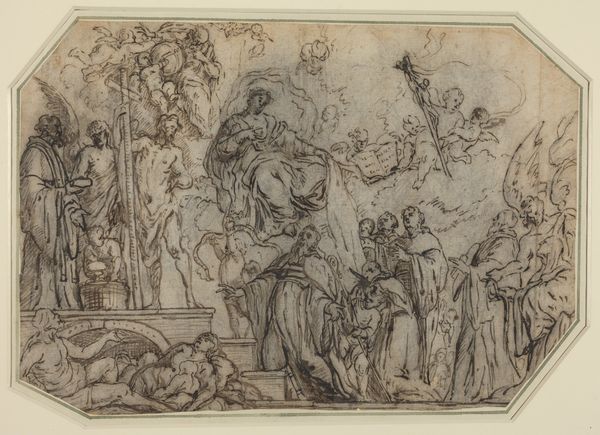
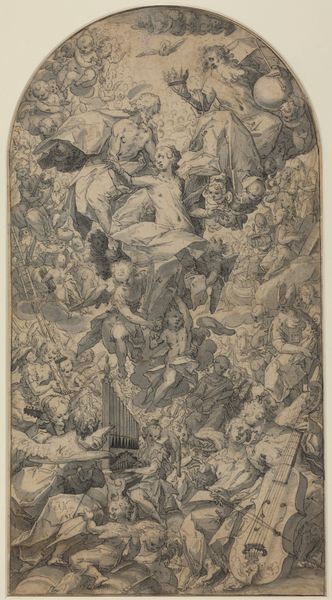
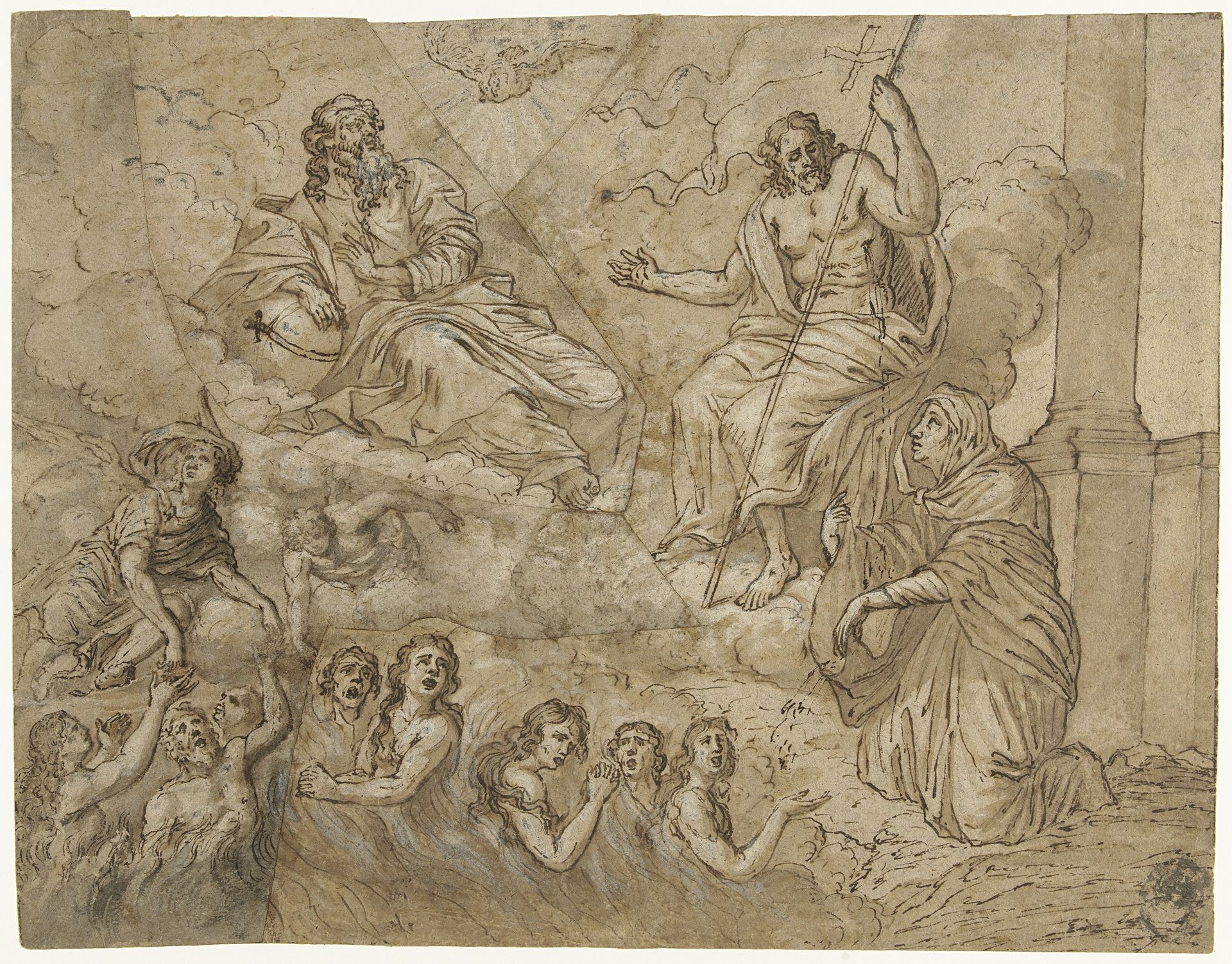
Editor: Here we have Cornelis Schut's drawing, "Maria as intercessor for souls in purgatory, before the Holy Trinity," created sometime between 1607 and 1655, using ink. I am struck by the almost ethereal quality of the figures emerging from the swirling depths, though it definitely depicts suffering. How would you interpret a piece like this, with all these historical religious symbols represented so visibly? Curator: Ah, yes, it feels like a dream dredged up from the collective unconscious. Cornelis Schut truly captured the essence of Baroque drama, didn't he? This piece...it's not just about purgatory; it is a mirror reflecting humanity's enduring dance with faith and redemption. See how Mary, with that subtle urgency in her gesture, pleads before the Holy Trinity? There’s such vulnerability painted there. And those souls reaching, yearning... What do you make of that composition? Editor: Well, the symmetry is quite striking, especially the triangle formed by the Holy Trinity looking down upon Mary and the suffering souls. But it seems, unsettlingly, to suggest that intervention from above is so very *remote.* Curator: Indeed, the remoteness is essential, I feel. Do you not sense the theatrical staging here? That precise diagonal emphasis seems, somehow, to be cutting humanity off from direct help from God! As if we *need* Mary to go ask for us! But, by having it only in monochrome, Schut manages to bring us much more close to that intimate connection to faith that only prayer or images may provoke. It begs the question, how do we find solace and connection amidst suffering and doubt? Editor: That's beautifully put. I came here today feeling as though old art such as this was a remote window into the past. It makes one wonder about our current anxieties reflected in contemporary art too... I shall ponder more about what *we* are so anxious about nowadays, maybe nothing has changed... Thank you so much! Curator: It was a true pleasure, I feel blessed! May this work's quiet sorrow continue to stir our own souls for years to come.
Maria als voorspraak voor zielen in het vagevuur, bij de heilige Drieëenheid
1607 - 1655

Cornelis Schut
1597 - 1655Location
RijksmuseumArtwork details
- Medium
- drawing, ink
- Dimensions
- height 240 mm, width 310 mm
- Location
- Rijksmuseum
- Copyright
- Rijks Museum: Open Domain
Tags
Comments
Share your thoughts
About this artwork
Editor: Here we have Cornelis Schut's drawing, "Maria as intercessor for souls in purgatory, before the Holy Trinity," created sometime between 1607 and 1655, using ink. I am struck by the almost ethereal quality of the figures emerging from the swirling depths, though it definitely depicts suffering. How would you interpret a piece like this, with all these historical religious symbols represented so visibly? Curator: Ah, yes, it feels like a dream dredged up from the collective unconscious. Cornelis Schut truly captured the essence of Baroque drama, didn't he? This piece...it's not just about purgatory; it is a mirror reflecting humanity's enduring dance with faith and redemption. See how Mary, with that subtle urgency in her gesture, pleads before the Holy Trinity? There’s such vulnerability painted there. And those souls reaching, yearning... What do you make of that composition? Editor: Well, the symmetry is quite striking, especially the triangle formed by the Holy Trinity looking down upon Mary and the suffering souls. But it seems, unsettlingly, to suggest that intervention from above is so very *remote.* Curator: Indeed, the remoteness is essential, I feel. Do you not sense the theatrical staging here? That precise diagonal emphasis seems, somehow, to be cutting humanity off from direct help from God! As if we *need* Mary to go ask for us! But, by having it only in monochrome, Schut manages to bring us much more close to that intimate connection to faith that only prayer or images may provoke. It begs the question, how do we find solace and connection amidst suffering and doubt? Editor: That's beautifully put. I came here today feeling as though old art such as this was a remote window into the past. It makes one wonder about our current anxieties reflected in contemporary art too... I shall ponder more about what *we* are so anxious about nowadays, maybe nothing has changed... Thank you so much! Curator: It was a true pleasure, I feel blessed! May this work's quiet sorrow continue to stir our own souls for years to come.
Comments
Share your thoughts