About this artwork
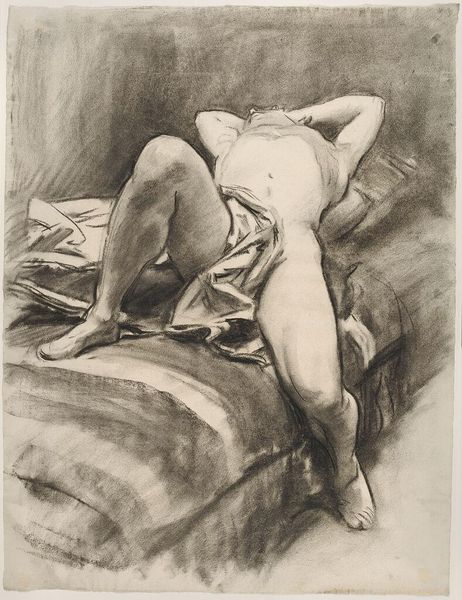
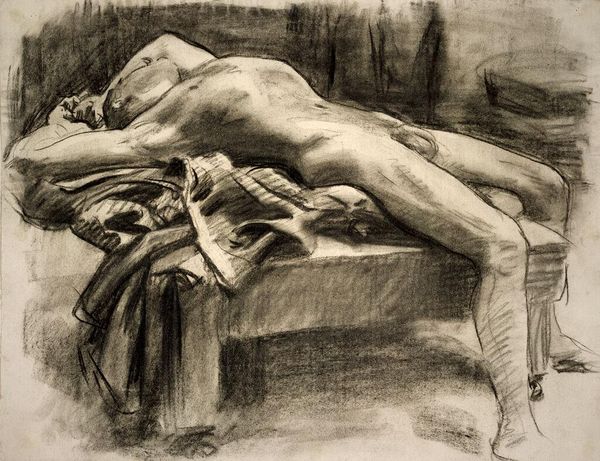
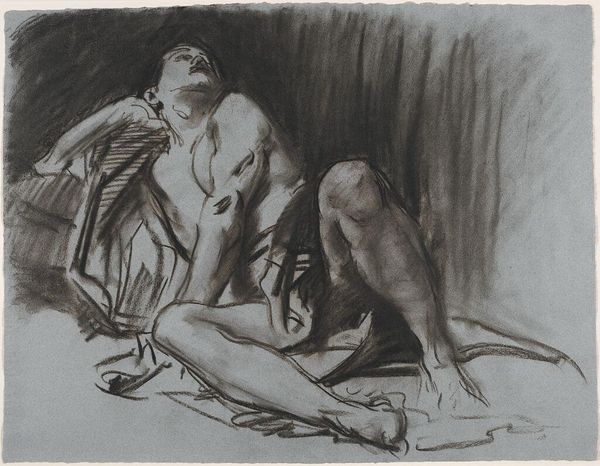
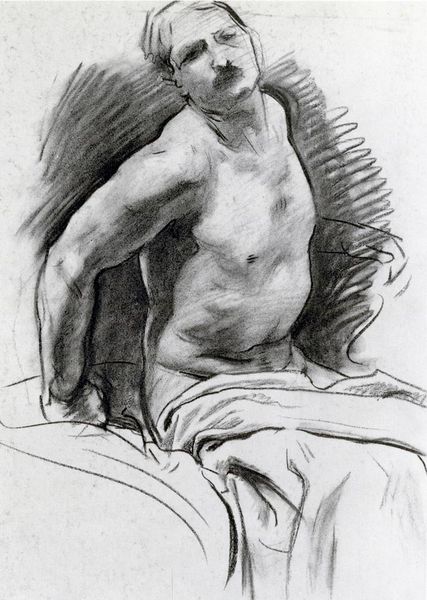
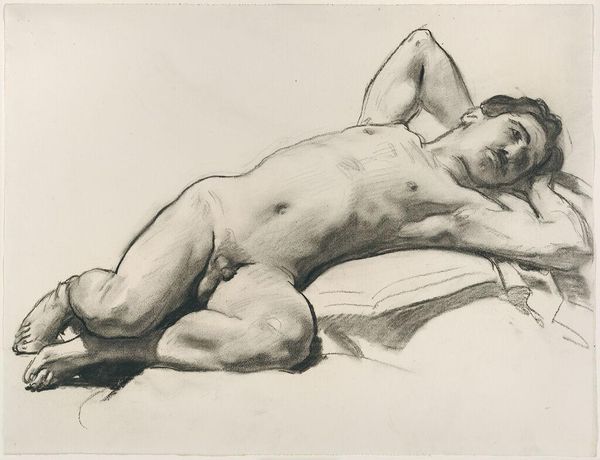
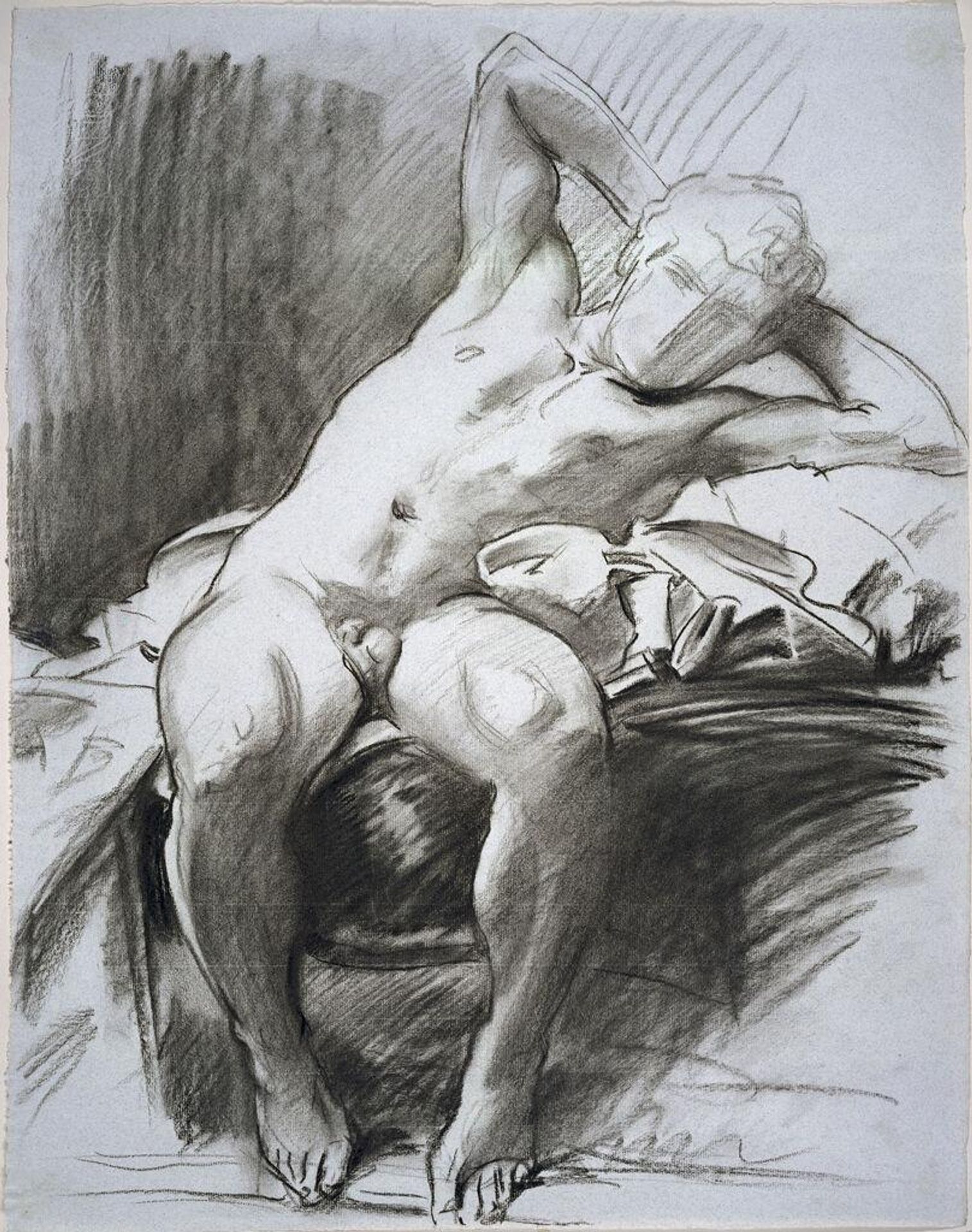
Editor: This is John Singer Sargent's "Male Nude Reclining," a charcoal drawing. It feels very academic, almost like a classical sculpture study. What's your take on this work? Curator: Well, it's certainly evocative of the academic tradition. Sargent was working within a very specific socio-political framework. How do you think institutions like the École des Beaux-Arts shaped what was considered acceptable, or even desirable, in art at the time? Editor: I guess they set the standard for skill and subject matter. This pose looks very deliberate, like he’s showing off his knowledge. Curator: Precisely. The male nude, while seemingly apolitical, served as a demonstration of artistic and cultural power, reaffirming classical ideals and societal norms. It becomes a political act. Editor: That makes sense. I hadn't thought about it that way. Curator: It prompts us to consider the public role of such images and how power dynamics subtly influence our perceptions. Editor: I see how the image is about so much more than just the figure itself. Thanks.
Male Nude Reclining; verso: Study of a Male Nude c. 1890 - 1915


Artwork details
- Dimensions
- actual: 61.8 x 48.5 cm (24 5/16 x 19 1/8 in.)
- Location
- Harvard Art Museums
- Copyright
- CC0 1.0
Comments
No comments
About this artwork
Editor: This is John Singer Sargent's "Male Nude Reclining," a charcoal drawing. It feels very academic, almost like a classical sculpture study. What's your take on this work? Curator: Well, it's certainly evocative of the academic tradition. Sargent was working within a very specific socio-political framework. How do you think institutions like the École des Beaux-Arts shaped what was considered acceptable, or even desirable, in art at the time? Editor: I guess they set the standard for skill and subject matter. This pose looks very deliberate, like he’s showing off his knowledge. Curator: Precisely. The male nude, while seemingly apolitical, served as a demonstration of artistic and cultural power, reaffirming classical ideals and societal norms. It becomes a political act. Editor: That makes sense. I hadn't thought about it that way. Curator: It prompts us to consider the public role of such images and how power dynamics subtly influence our perceptions. Editor: I see how the image is about so much more than just the figure itself. Thanks.
Comments
No comments