

About this artwork
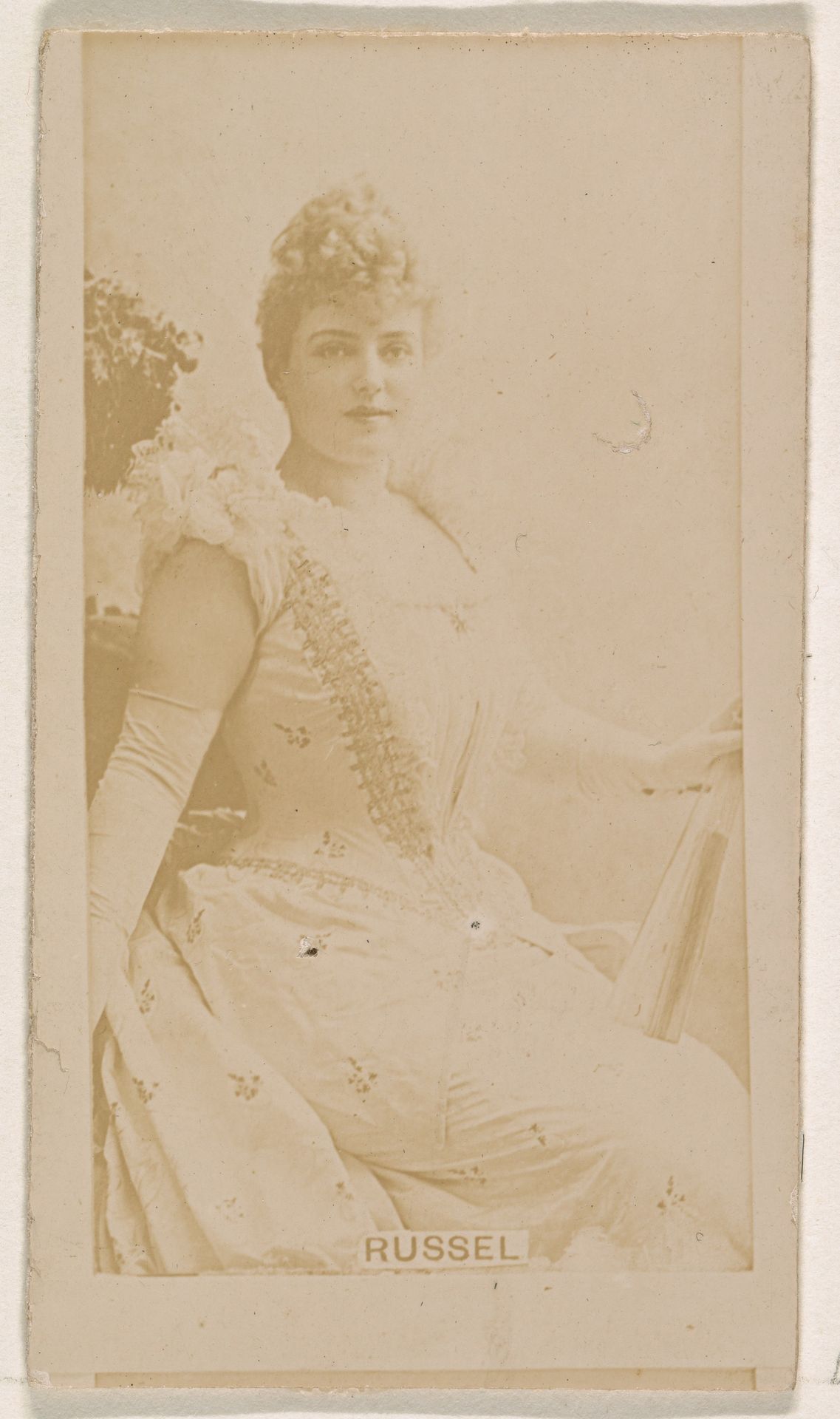
This card featuring an actress named Russel was created by the Kinney Brothers Tobacco Company as a promotional item for Sweet Caporal Cigarettes in the late 19th century. These cards, small and easily collected, offer us a glimpse into the social and cultural values of the Gilded Age in the United States. The image creates meaning through visual codes. Russel is presented as a vision of feminine beauty, with her elaborate gown, delicate gloves, and carefully styled hair. Her refined appearance is reinforced by the suggestion of a privileged lifestyle, sitting amongst flowers. This careful construction of image reflects the period’s obsession with fame, celebrity and the idealized image. The distribution of these cards also speaks to the increasing commercialization of leisure and entertainment. Such commercial images often reflected and reinforced existing social norms. By studying these cards, along with related advertisements, theatrical ephemera, and social histories, we can gain a richer understanding of the complex interplay between art, commerce, and society in turn-of-the-century America.
Russell, from the Actresses series (N245) issued by Kinney Brothers to promote Sweet Caporal Cigarettes
1890

Kinney Brothers Tobacco Company
1869 - 2011
The Metropolitan Museum of Art
Metropolitan Museum of Art, New York, NYArtwork details
- Medium
- drawing, print, photography
- Dimensions
- Sheet: 2 1/2 × 1 7/16 in. (6.4 × 3.7 cm)
- Location
- Metropolitan Museum of Art, New York, NY
- Copyright
- Public Domain
Tags
portrait
drawing
pictorialism
photography
Comments
Be the first to share your thoughts about this work.
About this artwork
This card featuring an actress named Russel was created by the Kinney Brothers Tobacco Company as a promotional item for Sweet Caporal Cigarettes in the late 19th century. These cards, small and easily collected, offer us a glimpse into the social and cultural values of the Gilded Age in the United States. The image creates meaning through visual codes. Russel is presented as a vision of feminine beauty, with her elaborate gown, delicate gloves, and carefully styled hair. Her refined appearance is reinforced by the suggestion of a privileged lifestyle, sitting amongst flowers. This careful construction of image reflects the period’s obsession with fame, celebrity and the idealized image. The distribution of these cards also speaks to the increasing commercialization of leisure and entertainment. Such commercial images often reflected and reinforced existing social norms. By studying these cards, along with related advertisements, theatrical ephemera, and social histories, we can gain a richer understanding of the complex interplay between art, commerce, and society in turn-of-the-century America.
Comments
Be the first to share your thoughts about this work.