c. 1800
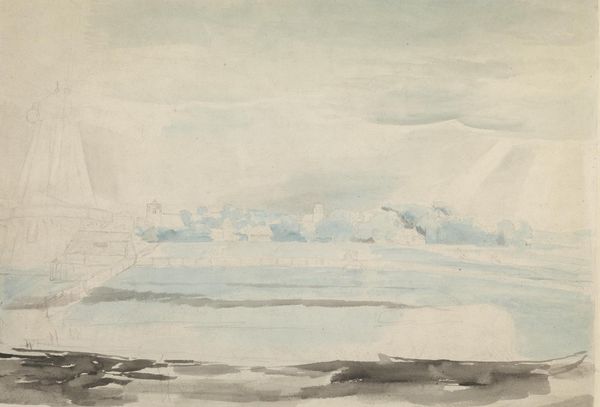
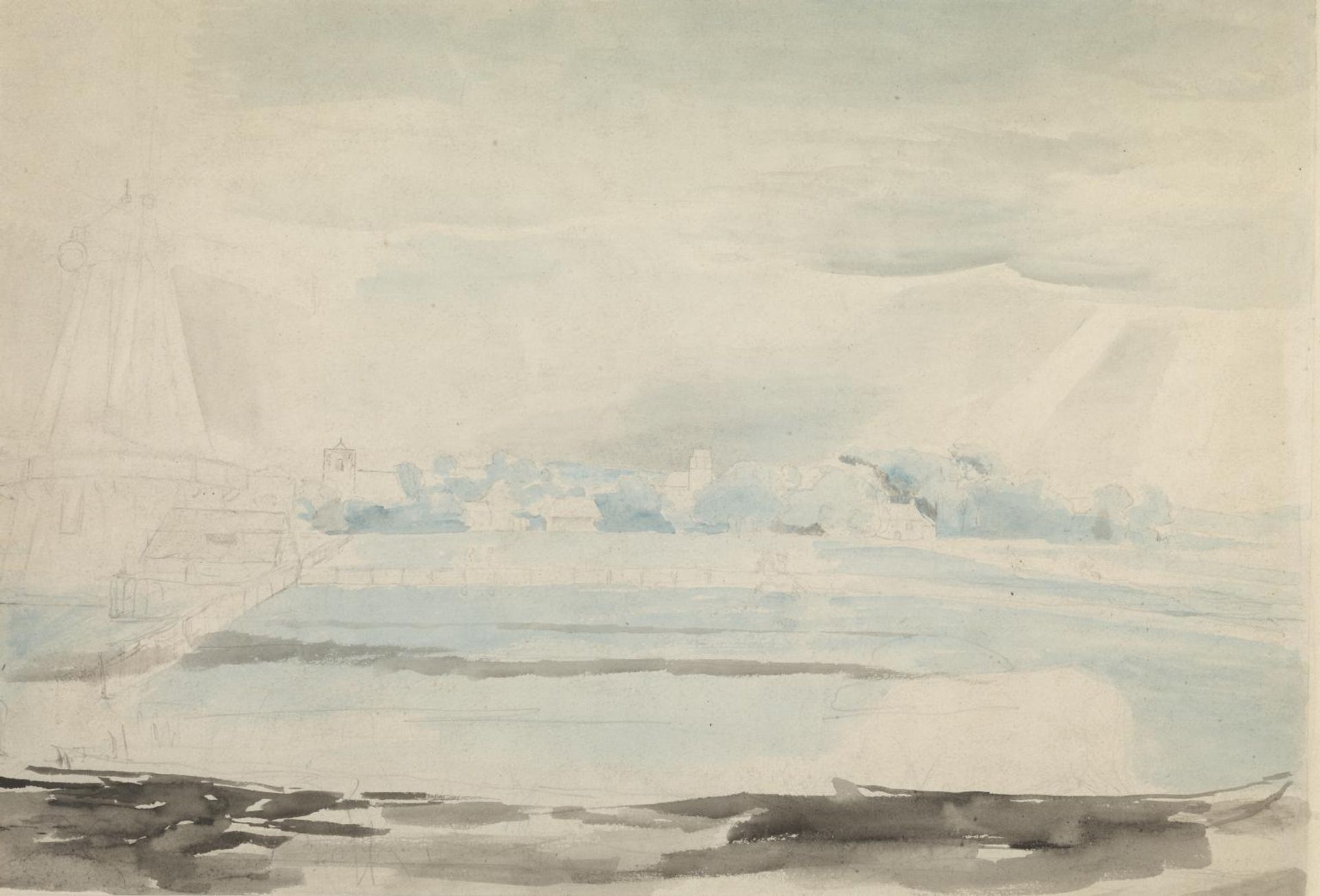
Landscape near Felpham


Listen to curator's interpretation
Curatorial notes
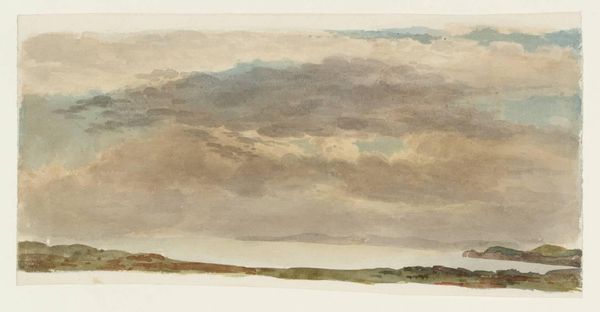
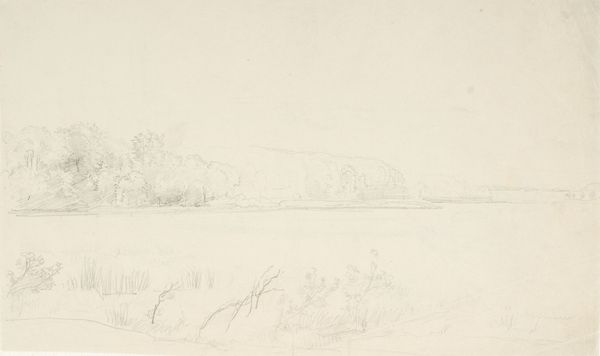
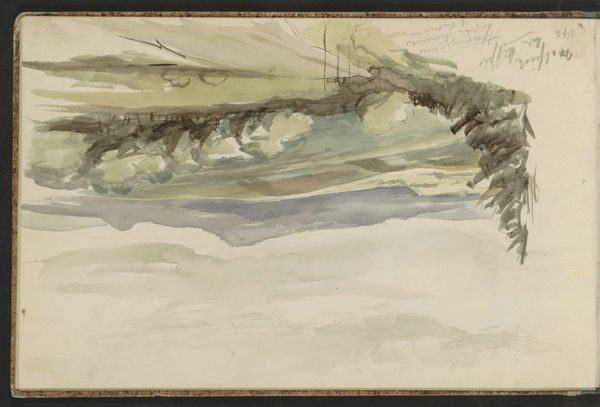
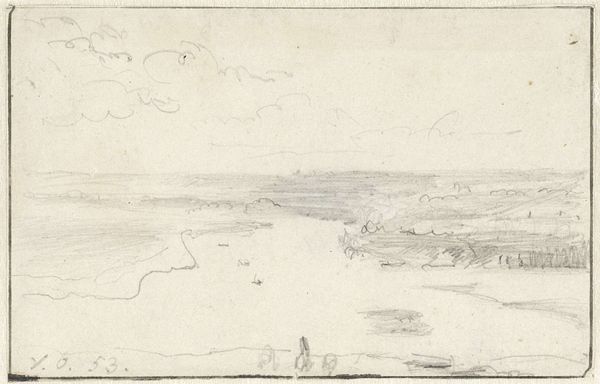
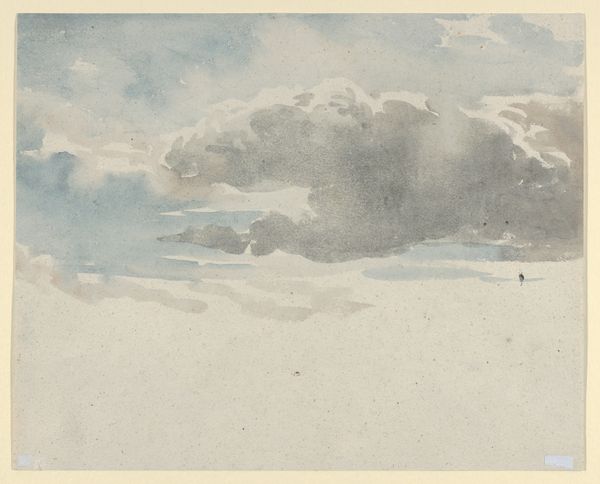
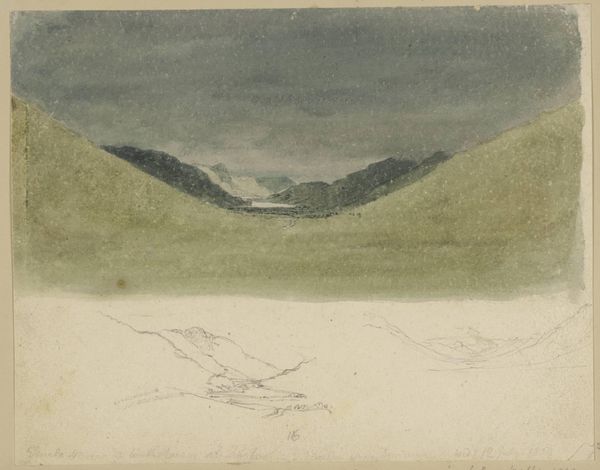
Curator: This is William Blake's "Landscape near Felpham," part of the Tate collection. The piece shows a coastal view rendered in delicate watercolor. Editor: It feels unfinished, spectral almost. The washes of blue and grey create a moody atmosphere, but the barely-there depiction of what could be buildings or a boat adds to the ethereal quality. Curator: Blake lived in Felpham for a time, and this landscape might reflect his complex relationship with nature and the sublime. Felpham represented a period of intense artistic exploration and spiritual questioning for him, impacting his later work. Editor: I wonder how much his personal experiences shaped his perspective. Was this coastal scene a sanctuary or a source of existential contemplation during that time? The lack of vibrant colors almost conveys a muted sense of hope or perhaps resignation. Curator: Exactly. Felpham was a rural area in the early 1800s, but we must understand its historical context in relation to the Napoleonic Wars. Blake's radical views clashed with the political climate, and he was even tried for sedition. Editor: That context is crucial. It reframes the image; this isn't just a landscape, it's a product of a specific time and socio-political struggle. It encourages us to consider individual identity and social commentary. Curator: Absolutely. It makes one wonder how Blake viewed notions of selfhood and his place within that tumultuous period. Editor: A landscape pregnant with meaning, then.