About this artwork
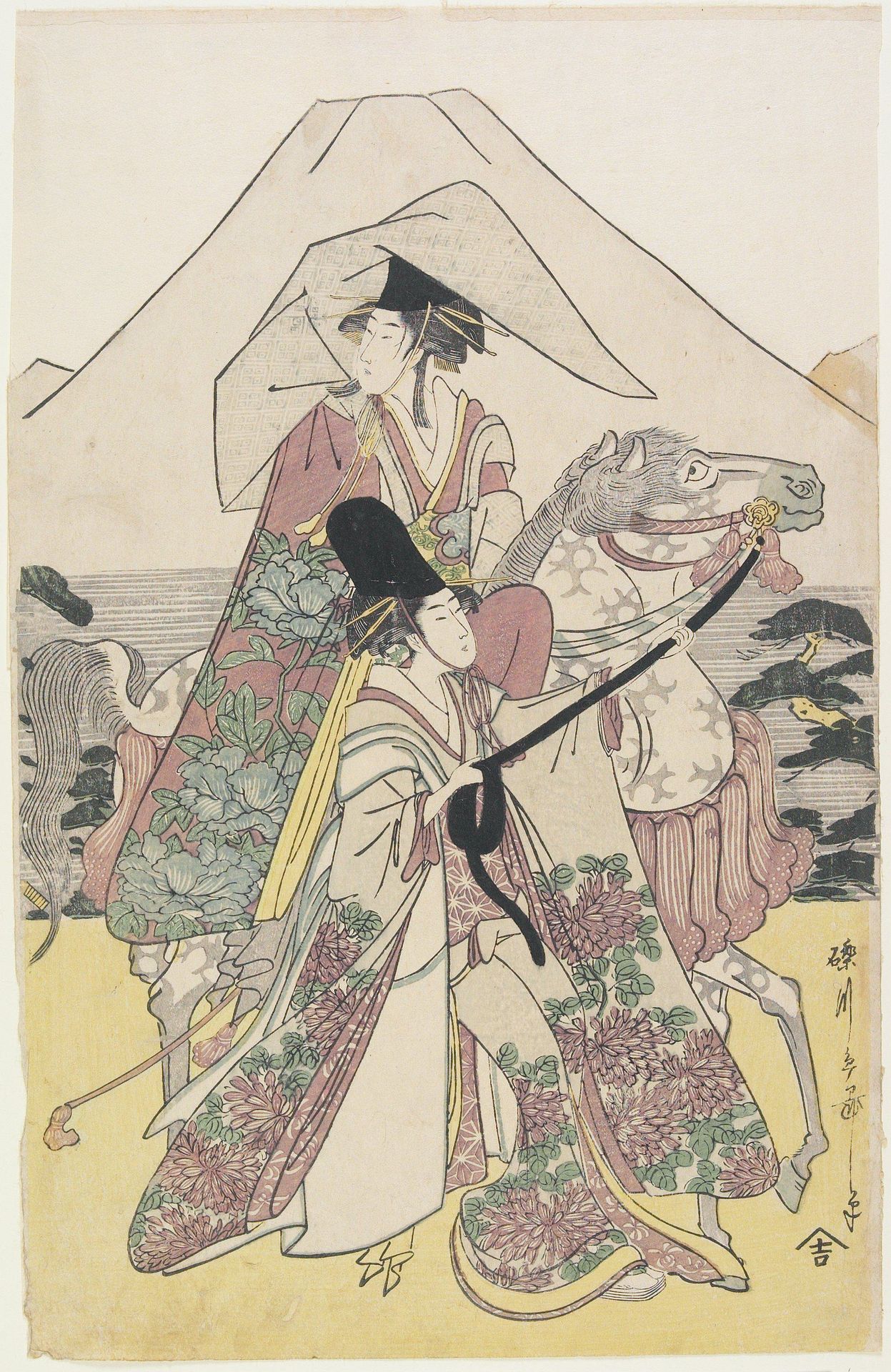
Eiri produced this woodblock print depicting two women on horseback at the foot of Mount Fuji sometime around 1800. It’s a fascinating image, and one that prompts us to consider the social dynamics of late 18th-century Japan. Woodblock prints like this were a popular art form, widely circulated and consumed by a broad audience. The image of women traveling challenges conventional depictions of women in domestic settings, suggesting a degree of social mobility and freedom. The prominent inclusion of Mount Fuji—a symbol of national identity and spiritual significance—adds another layer of meaning, framing the women's journey within a broader cultural landscape. To fully understand this work, we can turn to historical records, literature, and other visual sources from the period. These resources can provide insight into the lives of women, travel practices, and the cultural significance of Mount Fuji in Japanese society. Ultimately, it’s through this kind of contextual research that we can gain a richer appreciation of the print and its place in history.
(Two Women Traveling by Horse on the Foot of Mt. Fuji)
c. 1790s


Artwork details
- Medium
- print, ink, woodblock-print
- Dimensions
- 15 5/8 × 10 in. (39.7 × 25.4 cm) (image, sheet, vertical ōban)
- Location
- Minneapolis Institute of Art
- Copyright
- Public Domain
Tags
asian-art
landscape
ukiyo-e
figuration
ink
woodblock-print
genre-painting
Comments
Be the first to share your thoughts about this work.
About this artwork
Eiri produced this woodblock print depicting two women on horseback at the foot of Mount Fuji sometime around 1800. It’s a fascinating image, and one that prompts us to consider the social dynamics of late 18th-century Japan. Woodblock prints like this were a popular art form, widely circulated and consumed by a broad audience. The image of women traveling challenges conventional depictions of women in domestic settings, suggesting a degree of social mobility and freedom. The prominent inclusion of Mount Fuji—a symbol of national identity and spiritual significance—adds another layer of meaning, framing the women's journey within a broader cultural landscape. To fully understand this work, we can turn to historical records, literature, and other visual sources from the period. These resources can provide insight into the lives of women, travel practices, and the cultural significance of Mount Fuji in Japanese society. Ultimately, it’s through this kind of contextual research that we can gain a richer appreciation of the print and its place in history.
Comments
Be the first to share your thoughts about this work.