c. 17th century
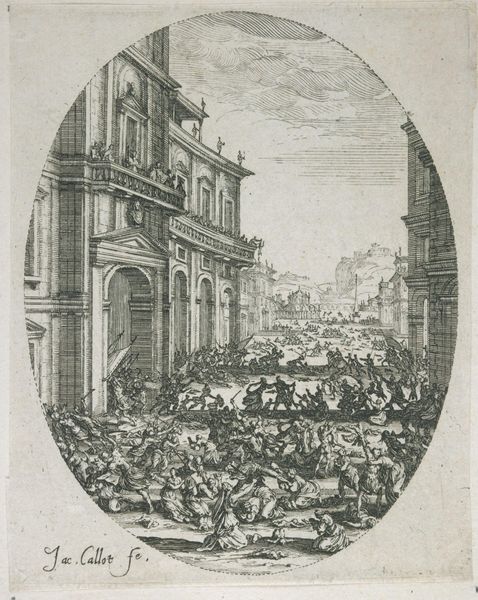
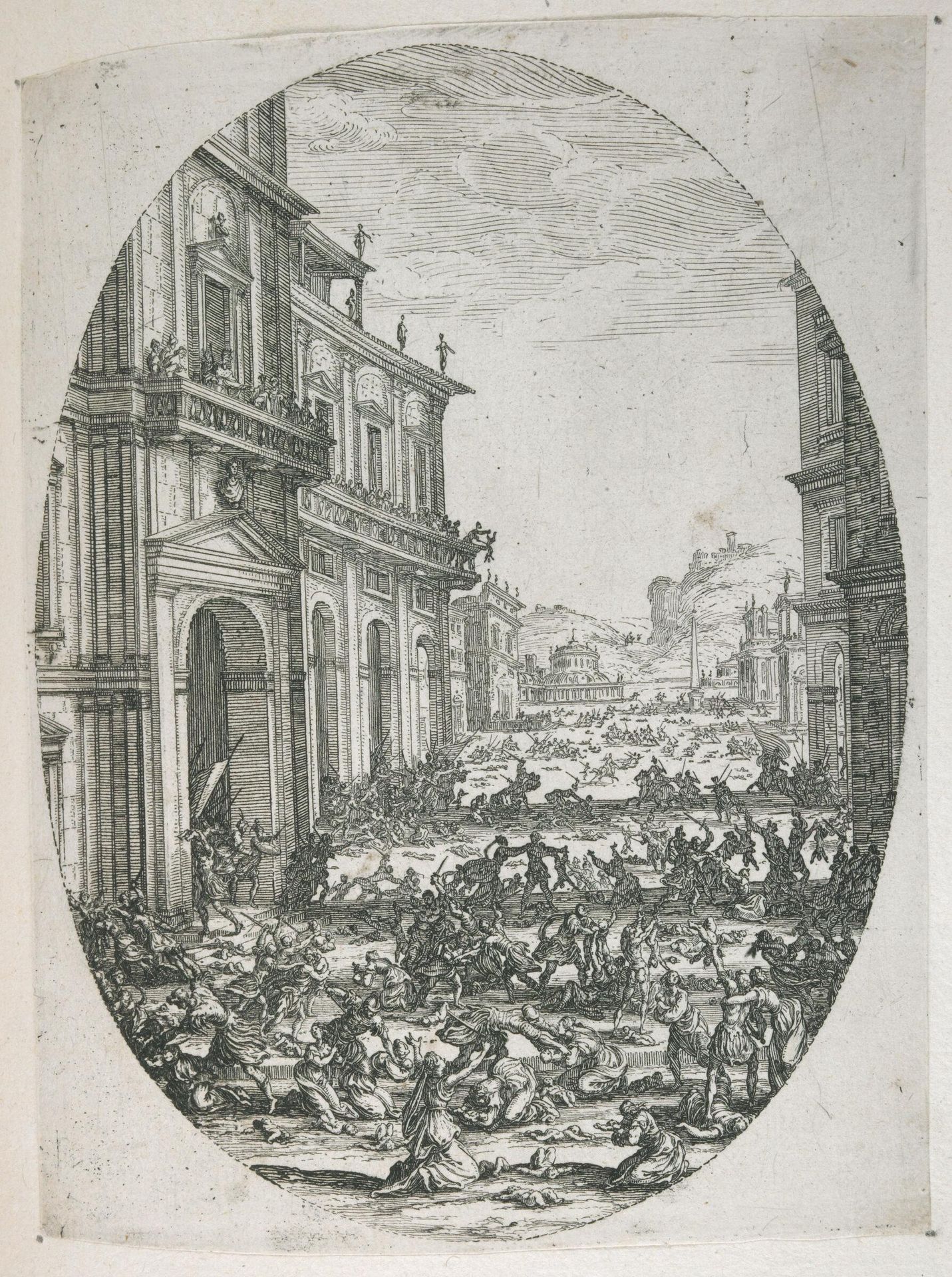
Massacre of the Innocents (first version)


Listen to curator's interpretation
Curatorial notes
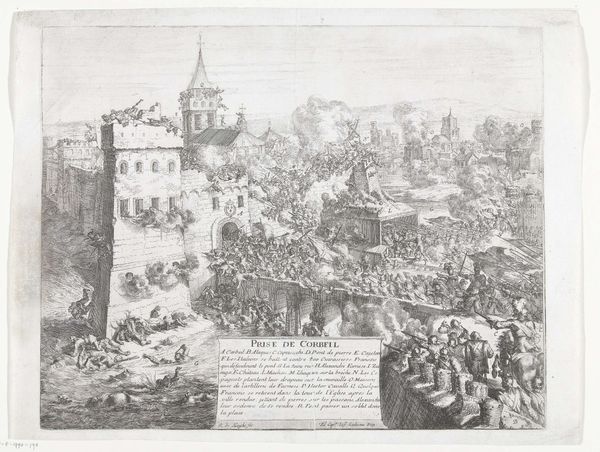
Curator: Here we see Jacques Callot's etching, "Massacre of the Innocents (first version)," residing at the Harvard Art Museums. Editor: It's overwhelmingly chaotic; the scale feels off. Such violence meticulously rendered on such a small plate. Curator: Callot was a master printmaker. Note how he uses line and perspective to create a sense of depth, almost theatrical staging of the biblical story. The buildings frame the carnage. Editor: All that detail! It's unsettling to consider the labor that went into depicting such brutality. What was the print intended for? Who consumed these images, and to what end? Curator: Callot's prints circulated widely. They served both as records of contemporary events and as vehicles for political commentary. Remember, this event has strong religious and political implications. Editor: Seeing the material effort makes the atrocity more tangible, less abstract. Even though it is small, the impact is profound. Curator: Indeed, the work allows us to consider the interplay between artistic skill, historical context, and the enduring power of imagery. Editor: Yes, and how Callot’s mastery of process forces us to grapple with the uncomfortable realities of power, labor, and violence.