About this artwork
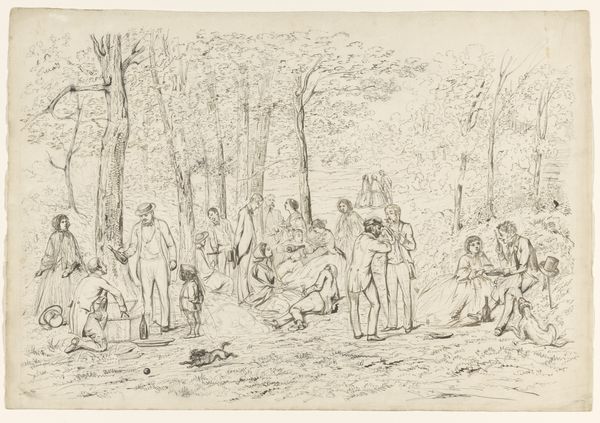
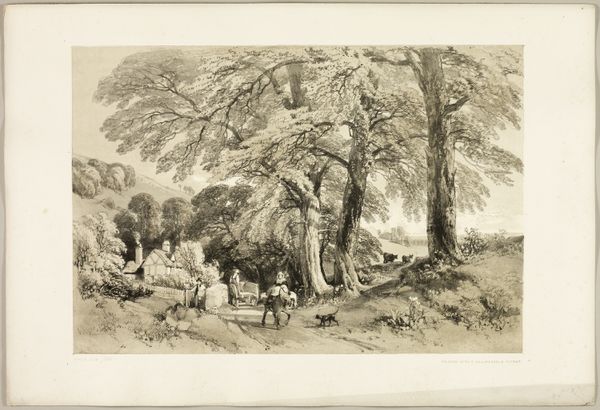
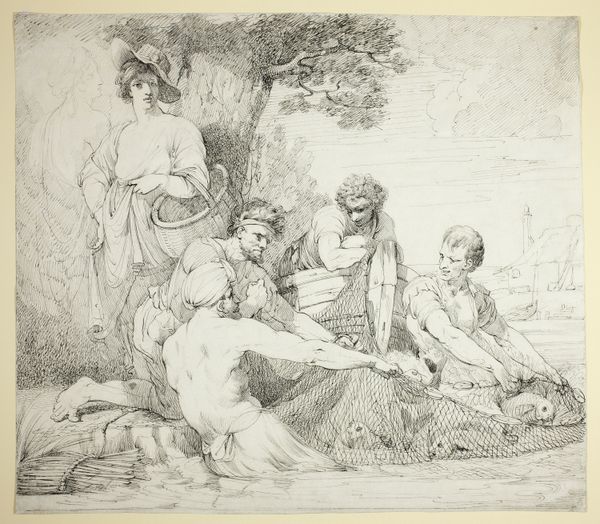
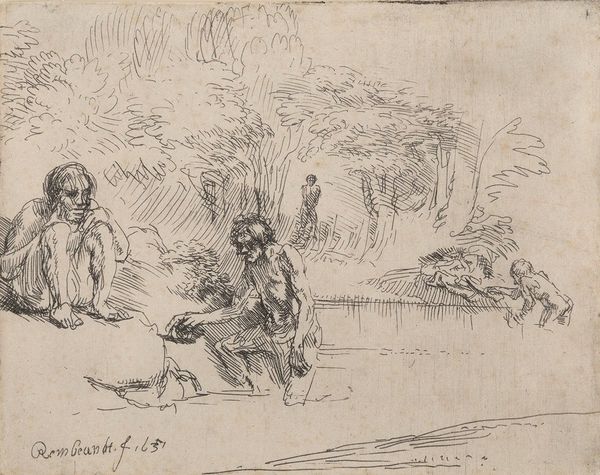
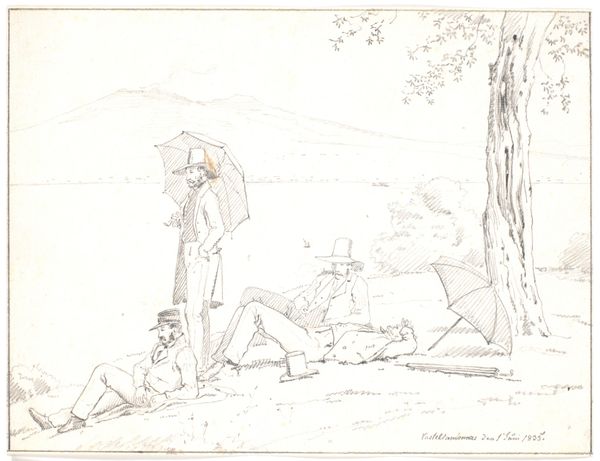
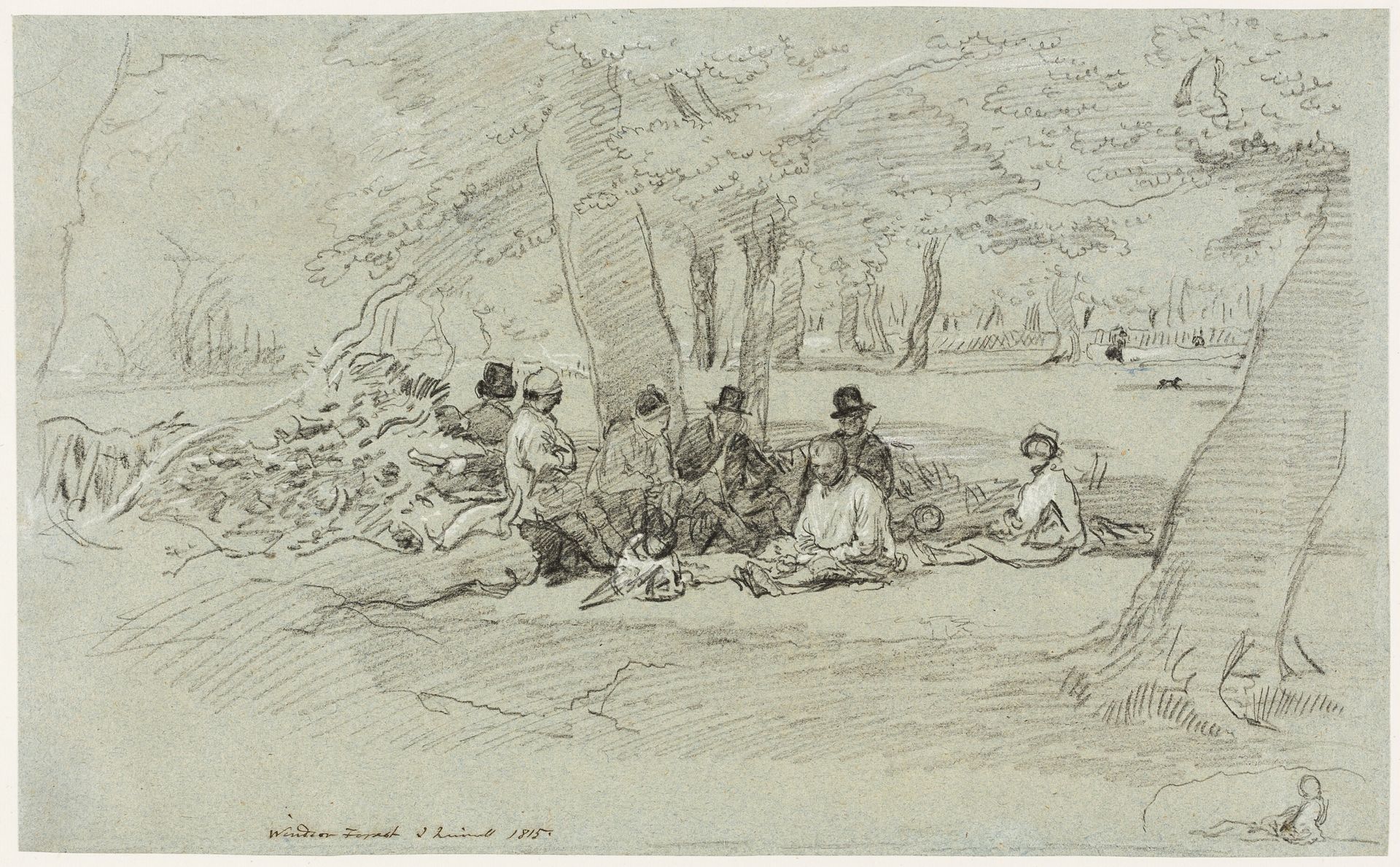
John Linnell made this pencil drawing titled 'The Woodcutters' Repast' in 1861. It depicts a group of workers resting beneath the shade of a tree. In Victorian England, the art world was increasingly shaped by institutions like the Royal Academy, which emphasized idealized landscapes and historical narratives. However, Linnell and his contemporaries were part of a shift towards portraying everyday life and labor. This drawing, with its focus on working-class figures during a moment of leisure, reflects a growing interest in social realism. The woodcutters are shown not as symbols of rustic virtue, but as ordinary people taking a break from their work. To understand this piece fully, we can examine the economic conditions of the time, the rise of social reform movements, and the changing role of art in reflecting and commenting on society. Exploring these factors helps reveal the drawing’s significance as a commentary on the social structures of its time.
The Woodcutters' Repast
1815


Artwork details
- Medium
- drawing, print, paper, pencil, chalk, black-chalk
- Dimensions
- 265 × 432 mm
- Location
- The Art Institute of Chicago
- Copyright
- Public Domain
Tags
portrait
drawing
landscape
paper
pencil
chalk
black-chalk
realism
Comments
Be the first to share your thoughts about this work.
About this artwork
John Linnell made this pencil drawing titled 'The Woodcutters' Repast' in 1861. It depicts a group of workers resting beneath the shade of a tree. In Victorian England, the art world was increasingly shaped by institutions like the Royal Academy, which emphasized idealized landscapes and historical narratives. However, Linnell and his contemporaries were part of a shift towards portraying everyday life and labor. This drawing, with its focus on working-class figures during a moment of leisure, reflects a growing interest in social realism. The woodcutters are shown not as symbols of rustic virtue, but as ordinary people taking a break from their work. To understand this piece fully, we can examine the economic conditions of the time, the rise of social reform movements, and the changing role of art in reflecting and commenting on society. Exploring these factors helps reveal the drawing’s significance as a commentary on the social structures of its time.
Comments
Be the first to share your thoughts about this work.