1860 - 1862
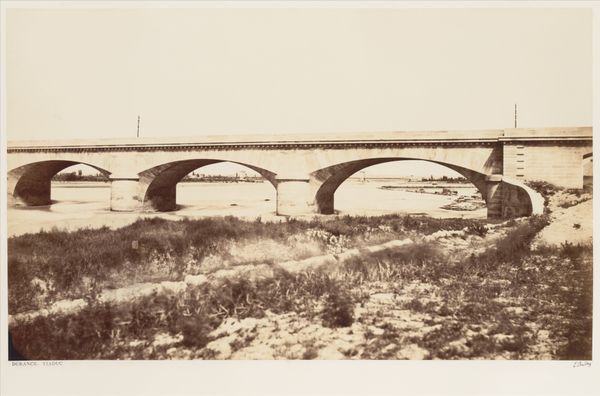
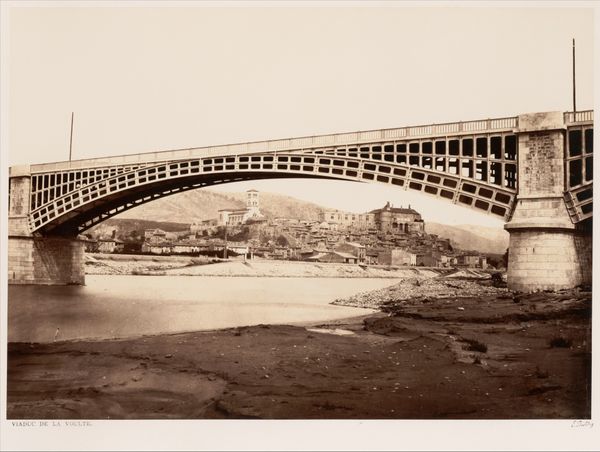
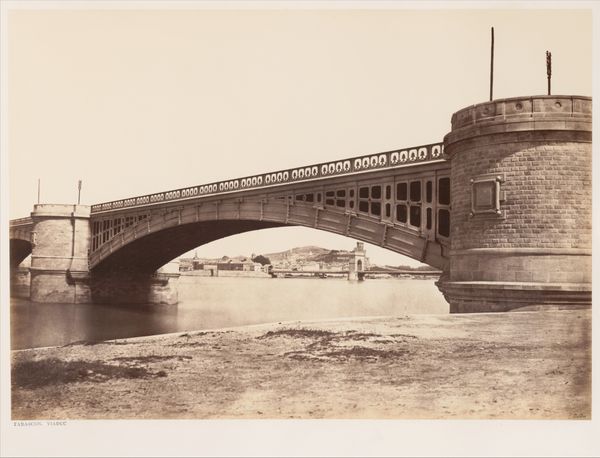
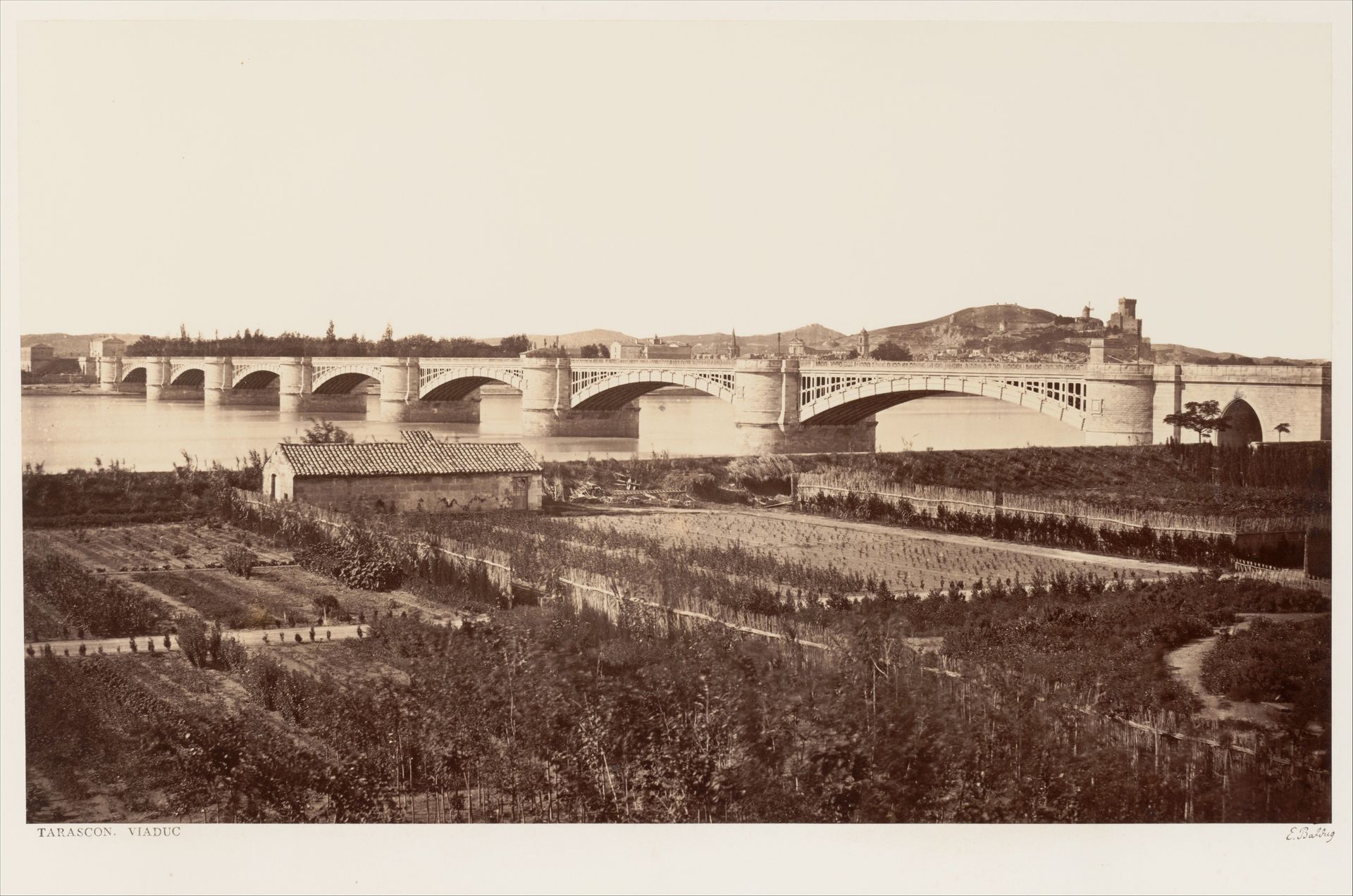
Tarascon, Viaduc


Listen to curator's interpretation
Curatorial notes
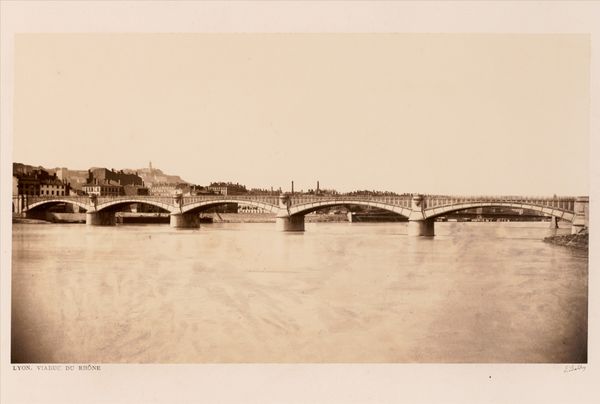
Editor: Here we have Edouard Baldus’ "Tarascon, Viaduc," an albumen print from the early 1860s. There’s a remarkable stillness to it, the tones all soft browns and greys. The composition is clearly divided, with this imposing bridge set against a carefully cultivated foreground. How do you interpret this work, especially focusing on the formal elements? Curator: A fascinating study in structure. The bridge, with its repeating arches, establishes a strong horizontal rhythm. Note how Baldus contrasts this regularity with the more organic forms in the foreground – the vegetation and the small building with its tiled roof. This interplay creates a visual tension. Consider also the tonal range. It's narrow, almost monochromatic, but within that limitation, Baldus achieves a remarkable differentiation of textures. What strikes you about the light in the photograph? Editor: It seems almost uniformly distributed, lacking strong shadows. Does that flatten the image or enhance its sense of distance and depth? Curator: That diffusion enhances the overall pictorial depth. Baldus isn't striving for dramatic contrasts. Instead, he emphasizes a measured observation of the scene. Look carefully at the collotype texture too; does the mechanical application add to the perceived depth? Editor: That’s really insightful. Focusing on these visual relationships makes the image so much more complex. Thank you. Curator: Indeed, analysing the structure of an artwork such as "Tarascon, Viaduc," and then understanding how the different layers of materials operate is invaluable for better appreciation.