About this artwork
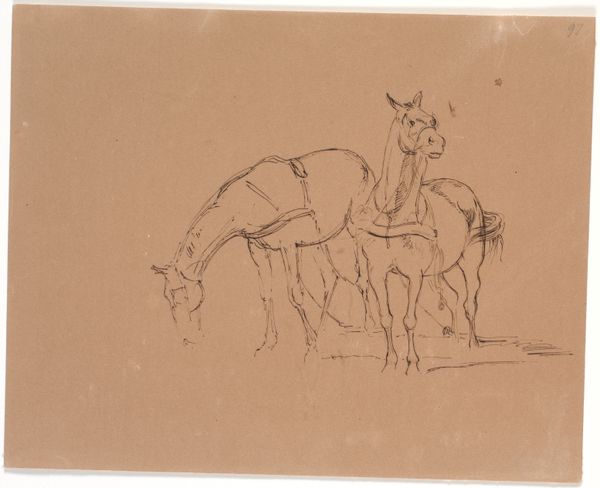
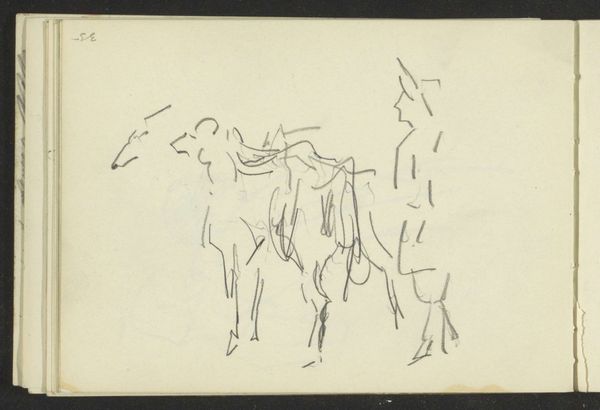
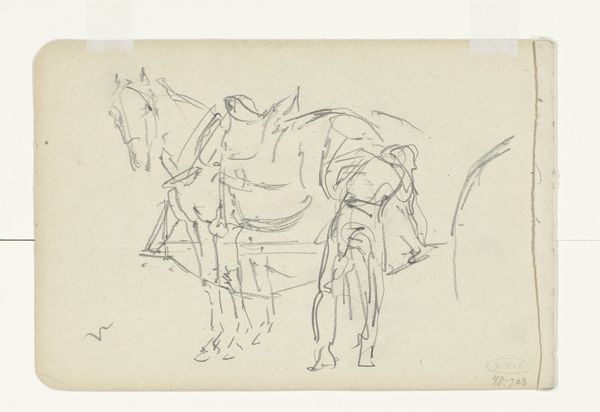
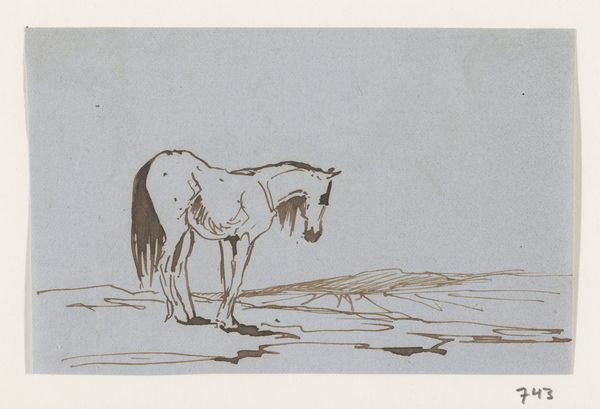
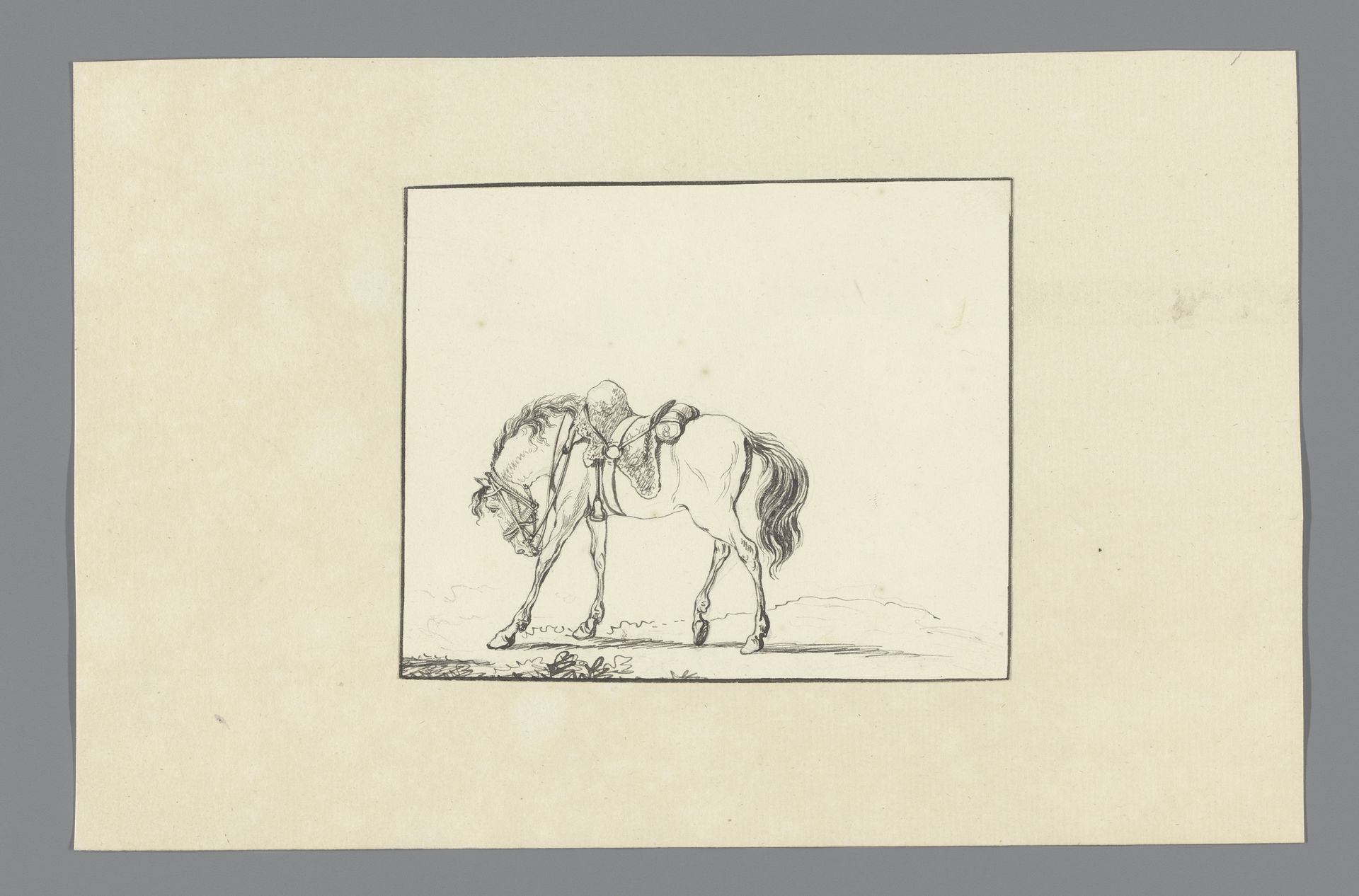
David-Pierre Giottino Humbert de Superville sketched this saddled horse with pen in the early 19th century. Look at its head, lowered in a gesture of submission, or perhaps weariness. The horse, a symbol of nobility and virility, appears across cultures from ancient Greece to the Renaissance, often depicted in heroic poses, bearing triumphant riders. Yet here, the drooping head evokes a sense of vulnerability. It reminds me of images of defeated warhorses, their proud spirit broken. Consider how this motif echoes through art history. From the proud steeds of antiquity, we arrive here. There is a quiet melancholy in the bowed head of this horse, a potent symbol transformed by time and circumstance. The archetype of the powerful horse is imbued with a sense of mortality. This is not a linear progression but a cyclical return to primal themes of strength, fragility, and the inexorable passage of time.
Gezadeld paard 1780 - 1849

David-Pierre Giottino Humbert de Superville
1770 - 1849Location
RijksmuseumArtwork details
- Medium
- drawing, pencil
- Dimensions
- height 117 mm, width 142 mm
- Location
- Rijksmuseum
- Copyright
- Rijks Museum: Open Domain
Tags
drawing
animal
landscape
romanticism
pencil
horse
Comments
No comments
About this artwork
David-Pierre Giottino Humbert de Superville sketched this saddled horse with pen in the early 19th century. Look at its head, lowered in a gesture of submission, or perhaps weariness. The horse, a symbol of nobility and virility, appears across cultures from ancient Greece to the Renaissance, often depicted in heroic poses, bearing triumphant riders. Yet here, the drooping head evokes a sense of vulnerability. It reminds me of images of defeated warhorses, their proud spirit broken. Consider how this motif echoes through art history. From the proud steeds of antiquity, we arrive here. There is a quiet melancholy in the bowed head of this horse, a potent symbol transformed by time and circumstance. The archetype of the powerful horse is imbued with a sense of mortality. This is not a linear progression but a cyclical return to primal themes of strength, fragility, and the inexorable passage of time.
Comments
No comments