About this artwork
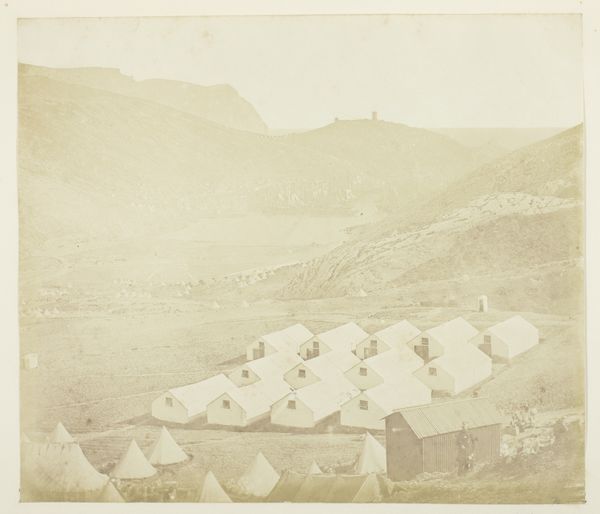
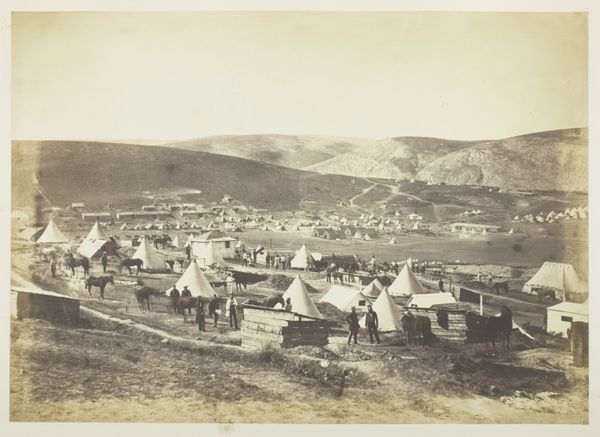
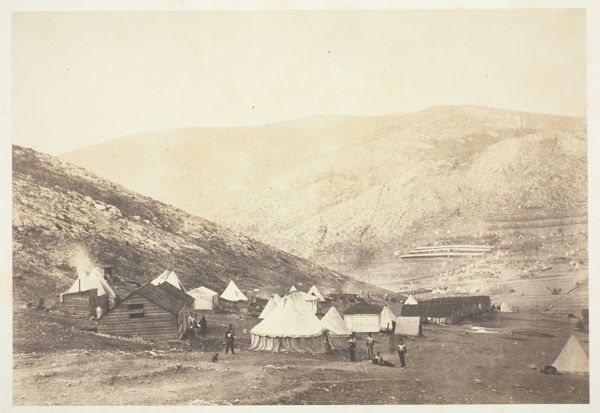
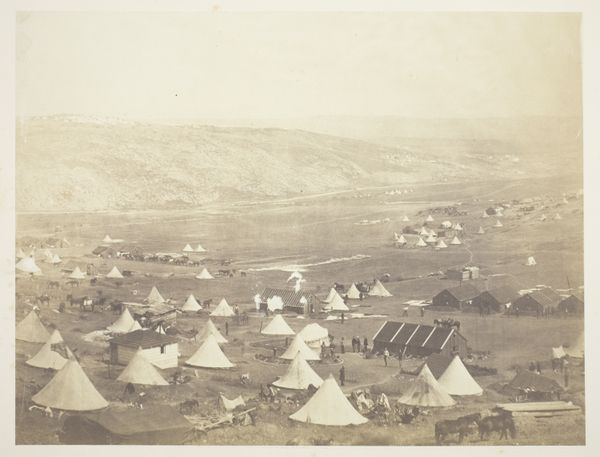
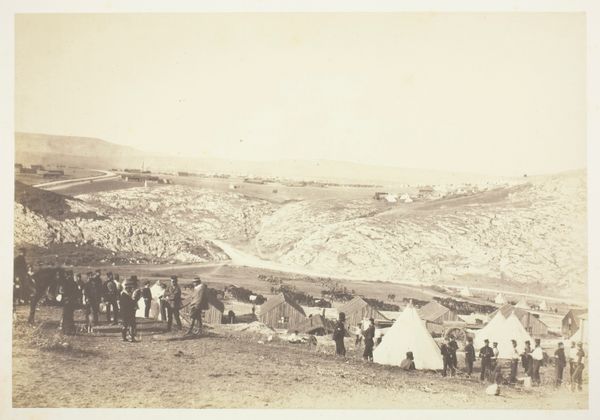
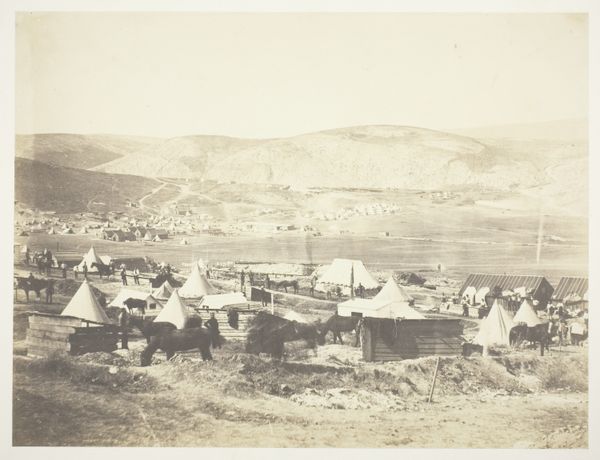
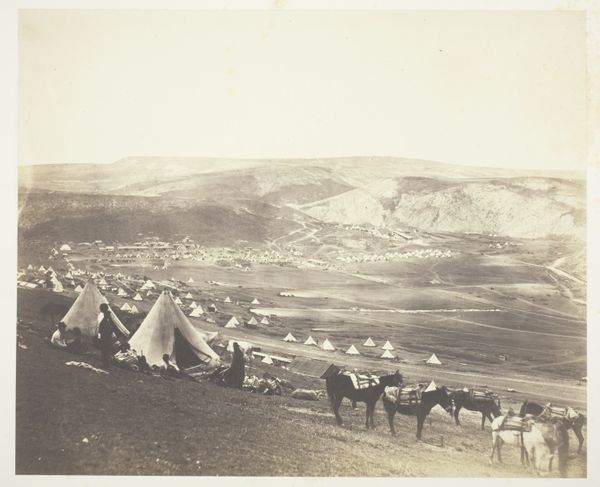
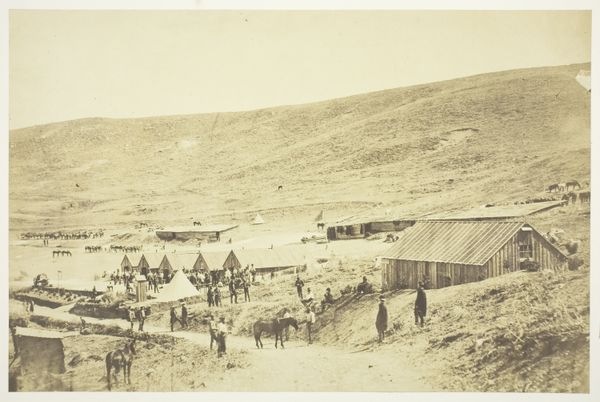
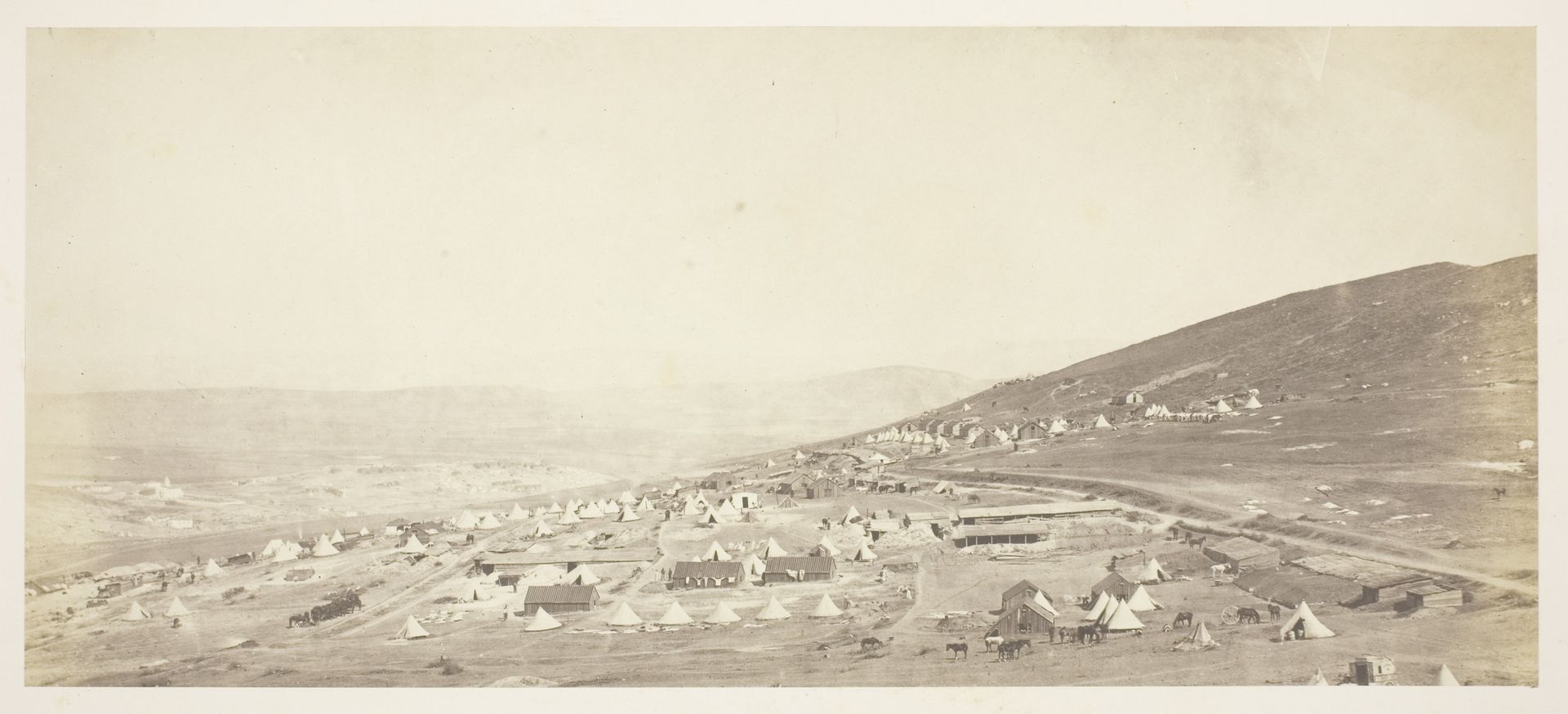
Roger Fenton made this albumen silver print, "Camp of the 4th Light Dragoons, Officer's Quarters," with a camera, lens and plates that imposed their own rules on the image. The tonal range is narrow; the details are soft. The composition of the image is divided by the placement of the camp and the horizon line. Looking at the image, we see a careful arrangement of the tents, which lead the eye across the landscape in a series of receding planes. The arrangement of the camp and the surrounding landscape are carefully framed. Fenton created an ordered, almost picturesque view of military life, despite being in a war zone. The technical limitations of early photography meant that capturing movement was difficult, contributing to the still, almost staged quality of the scene. The print presents a visual narrative that balances documentary with artistic intent, inviting us to consider how photography shapes our understanding of conflict and its representation.
Camp of the 4th Light Dragoons, Officer's Quarters
1855


Artwork details
- Medium
- print, paper, photography
- Dimensions
- 15.6 × 35.8 cm (image/paper); 40.4 × 53.3 cm (mount)
- Location
- The Art Institute of Chicago
- Copyright
- Public Domain
Tags
Comments
Share your thoughts
About this artwork
Roger Fenton made this albumen silver print, "Camp of the 4th Light Dragoons, Officer's Quarters," with a camera, lens and plates that imposed their own rules on the image. The tonal range is narrow; the details are soft. The composition of the image is divided by the placement of the camp and the horizon line. Looking at the image, we see a careful arrangement of the tents, which lead the eye across the landscape in a series of receding planes. The arrangement of the camp and the surrounding landscape are carefully framed. Fenton created an ordered, almost picturesque view of military life, despite being in a war zone. The technical limitations of early photography meant that capturing movement was difficult, contributing to the still, almost staged quality of the scene. The print presents a visual narrative that balances documentary with artistic intent, inviting us to consider how photography shapes our understanding of conflict and its representation.
Comments
Share your thoughts