About this artwork
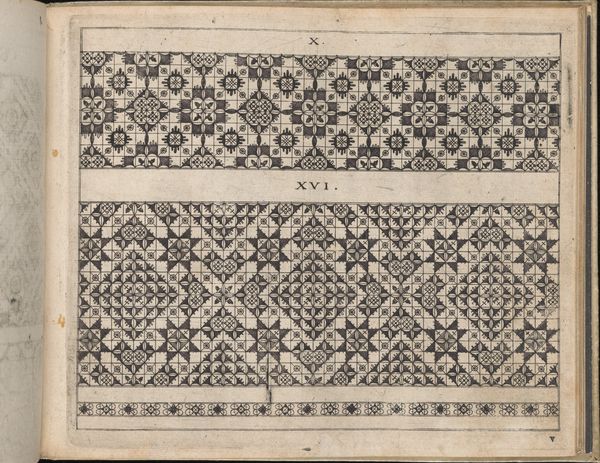
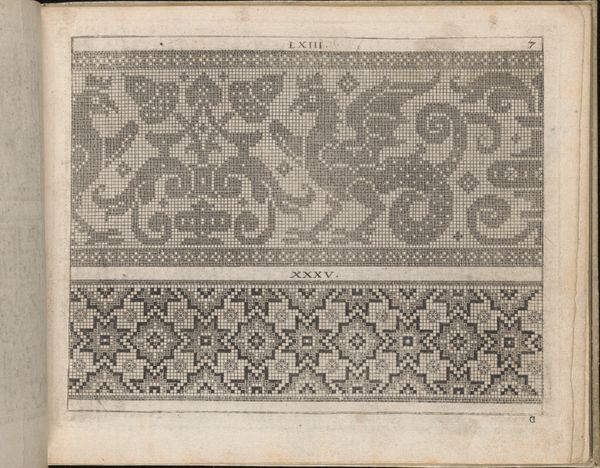
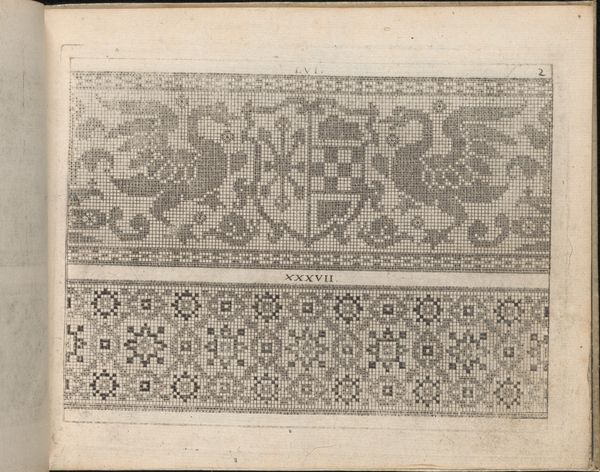
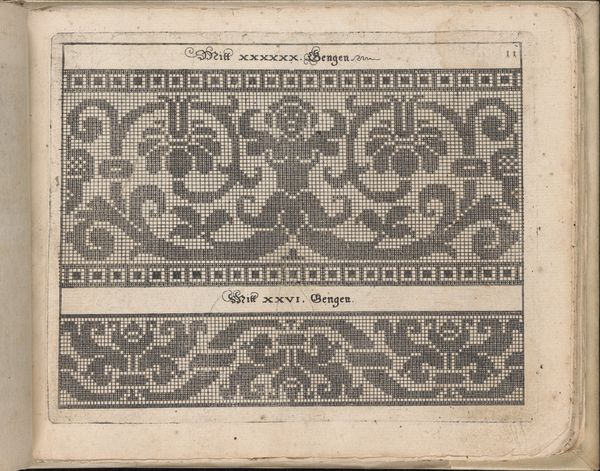
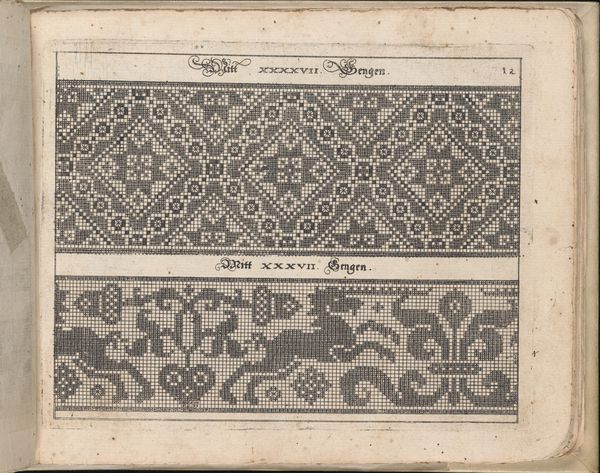
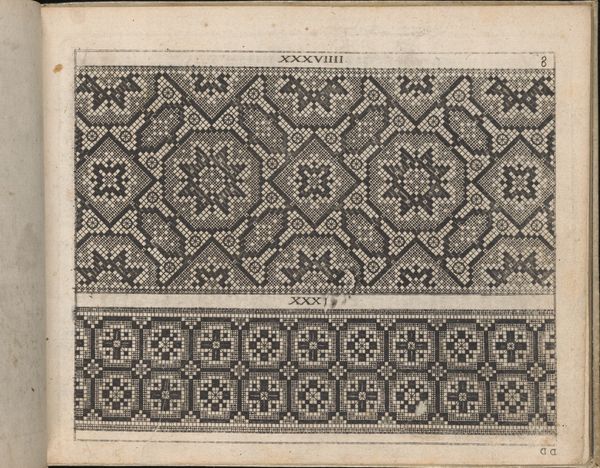
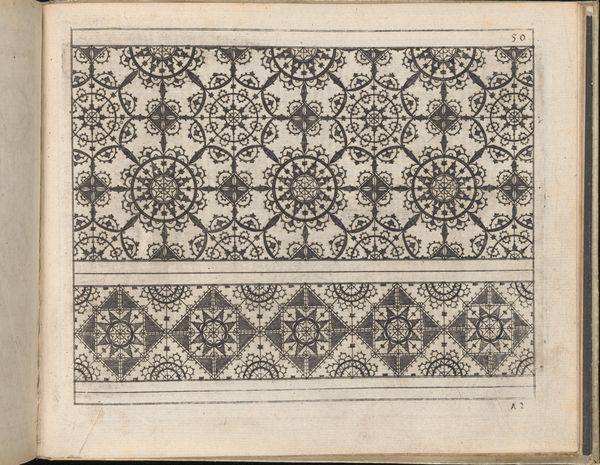
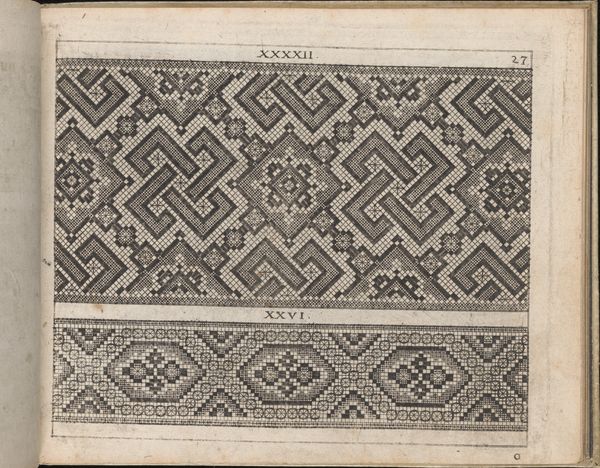
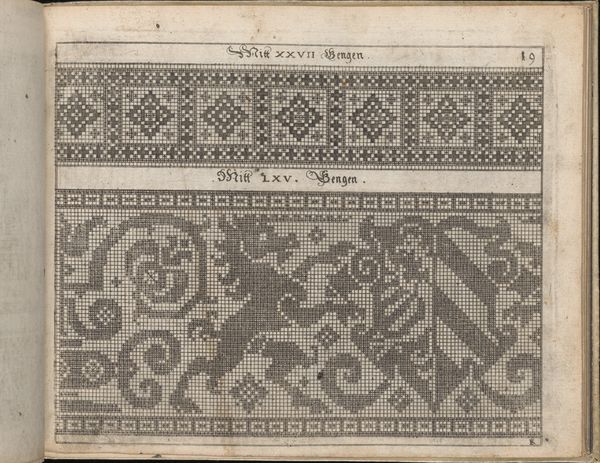
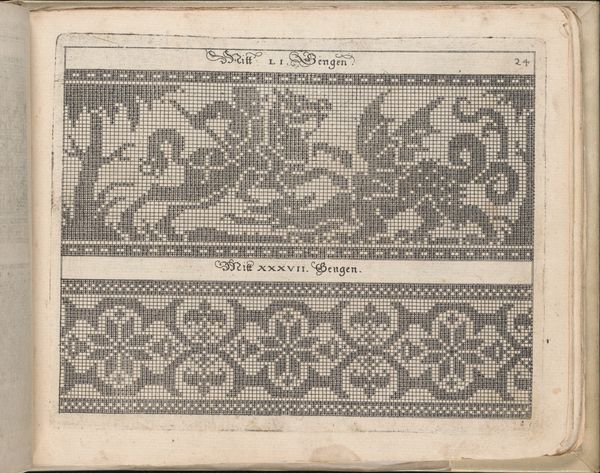
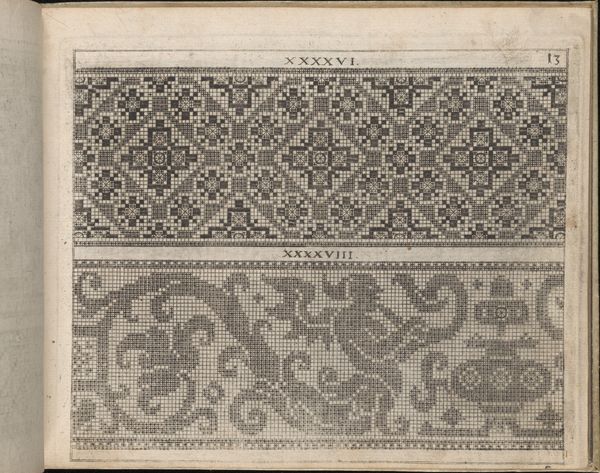
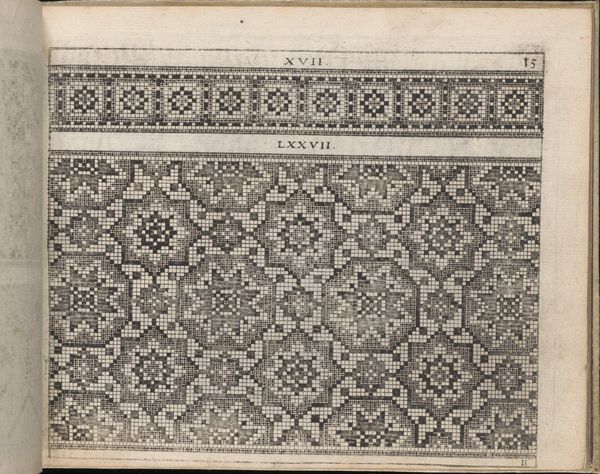
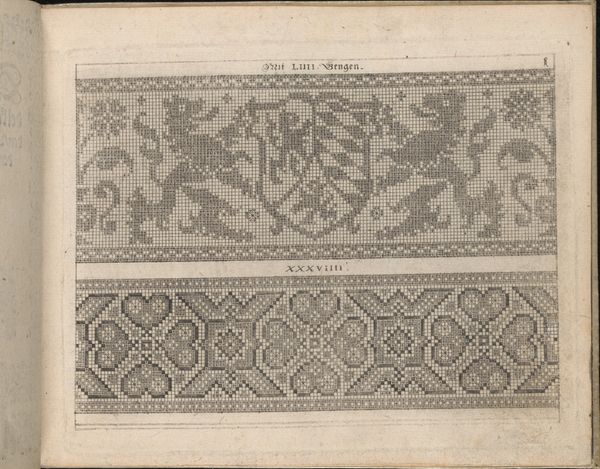
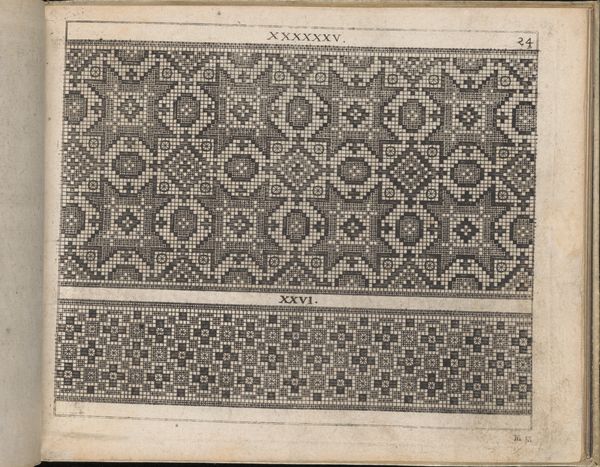
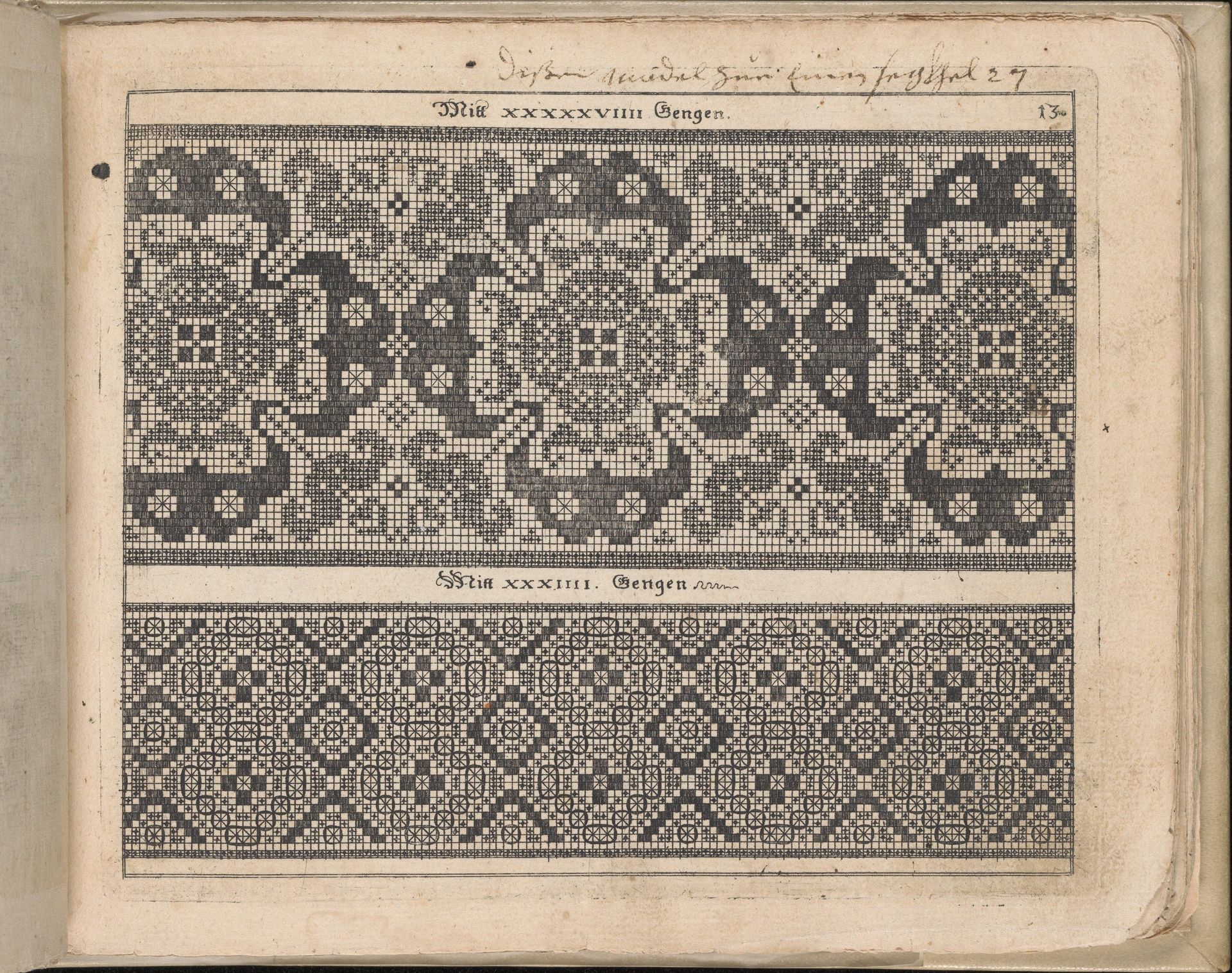
Editor: Here we have a page from "Schön Neues Modelbuch" created in 1597 by Johann Sibmacher. It's an engraving, so ink on paper. I'm struck by the almost mathematical precision of these repeating patterns. What was its original purpose? Curator: Ah, yes! Sibmacher's model book – think of it as a Renaissance Instagram feed for needleworkers. Forget doomscrolling; they were pattern-scrolling! Each page was bursting with design inspo. It’s a fascinating collision of craft, artistry, and commerce, wouldn't you agree? Were you picturing it as something more serious at first glance? Editor: Well, I suppose I hadn't thought of it as 'inspo,' but now that you say that, it seems so obvious! Were these patterns specifically for embroidery, or could they be used for other crafts, too? Curator: Versatility was key! Embroidery, certainly, but also lacemaking, weaving… anything where you needed a repeating design. It’s a testament to the ingenuity of artisans in the Renaissance. Imagine taking these simple blocks and turning them into something magnificent! Like a chef improvising a culinary masterpiece, but with thread. Editor: That's a really good way to imagine that. I see that this book provides blueprints. What can these drawings teach us about that historical time period? Curator: It tells a delicious story about cultural values. It showcases not just artistic trends, but also the rising importance of skilled craftsmanship, and the democratization of design as printed books became more accessible. Plus, glimpsing these tiny patterns helps us envision the intimate, daily lives of people stitching away by candlelight. How’s that for time travel? Editor: Definitely some food for thought. Thanks for showing me a fresh perspective on this artwork! Curator: The pleasure was mine! Who knew geometric shapes could hold so many secrets?
Schön Neues Modelbuch (Page 18 recto) 1597


Artwork details
- Medium
- drawing, graphic-art, ornament, print, engraving
- Dimensions
- Overall: 6 1/8 x 7 13/16 in. (15.5 x 19.8 cm)
- Location
- Metropolitan Museum of Art, New York, NY
- Copyright
- Public Domain
Tags
drawing
graphic-art
ornament
muted colour palette
ink paper printed
book
11_renaissance
northern-renaissance
engraving
Comments
No comments
About this artwork
Editor: Here we have a page from "Schön Neues Modelbuch" created in 1597 by Johann Sibmacher. It's an engraving, so ink on paper. I'm struck by the almost mathematical precision of these repeating patterns. What was its original purpose? Curator: Ah, yes! Sibmacher's model book – think of it as a Renaissance Instagram feed for needleworkers. Forget doomscrolling; they were pattern-scrolling! Each page was bursting with design inspo. It’s a fascinating collision of craft, artistry, and commerce, wouldn't you agree? Were you picturing it as something more serious at first glance? Editor: Well, I suppose I hadn't thought of it as 'inspo,' but now that you say that, it seems so obvious! Were these patterns specifically for embroidery, or could they be used for other crafts, too? Curator: Versatility was key! Embroidery, certainly, but also lacemaking, weaving… anything where you needed a repeating design. It’s a testament to the ingenuity of artisans in the Renaissance. Imagine taking these simple blocks and turning them into something magnificent! Like a chef improvising a culinary masterpiece, but with thread. Editor: That's a really good way to imagine that. I see that this book provides blueprints. What can these drawings teach us about that historical time period? Curator: It tells a delicious story about cultural values. It showcases not just artistic trends, but also the rising importance of skilled craftsmanship, and the democratization of design as printed books became more accessible. Plus, glimpsing these tiny patterns helps us envision the intimate, daily lives of people stitching away by candlelight. How’s that for time travel? Editor: Definitely some food for thought. Thanks for showing me a fresh perspective on this artwork! Curator: The pleasure was mine! Who knew geometric shapes could hold so many secrets?
Comments
No comments