About this artwork
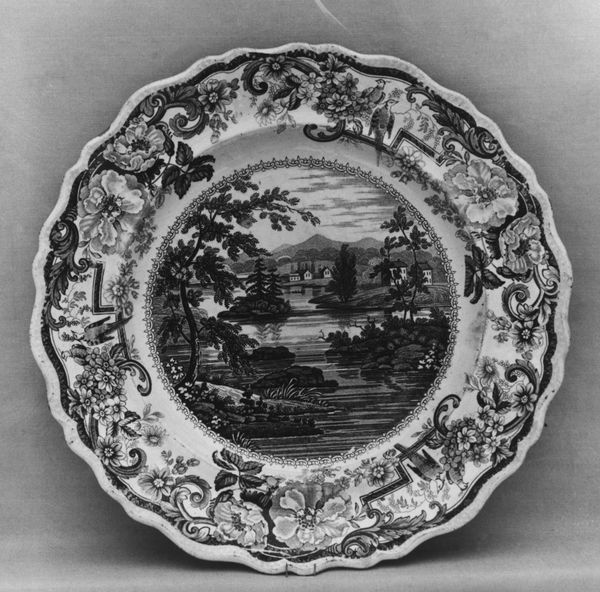
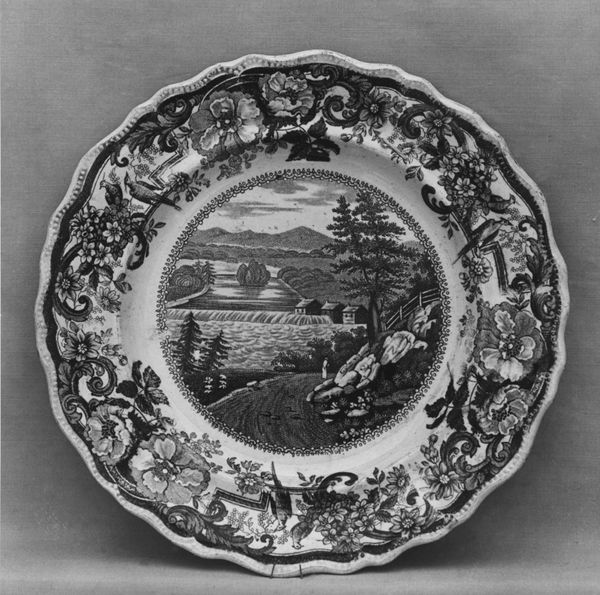
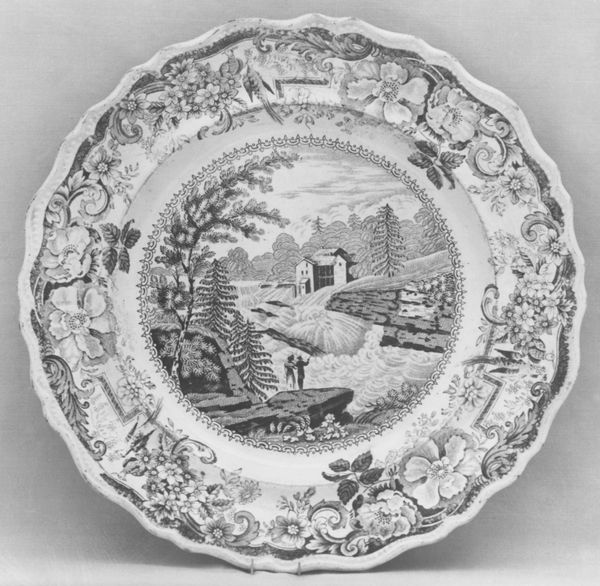
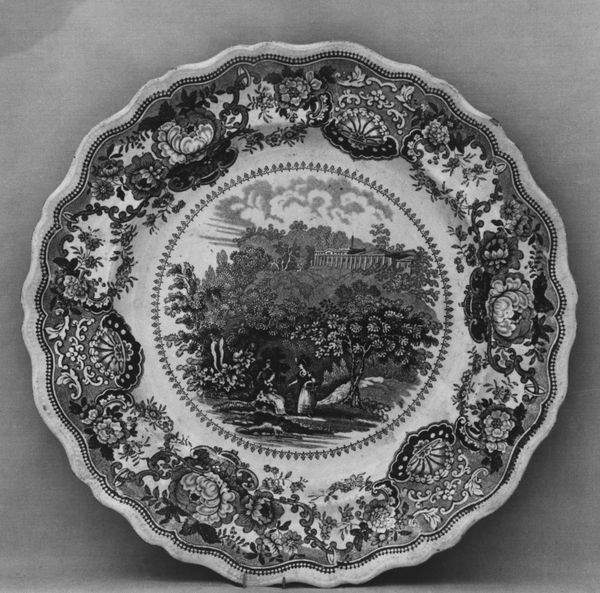
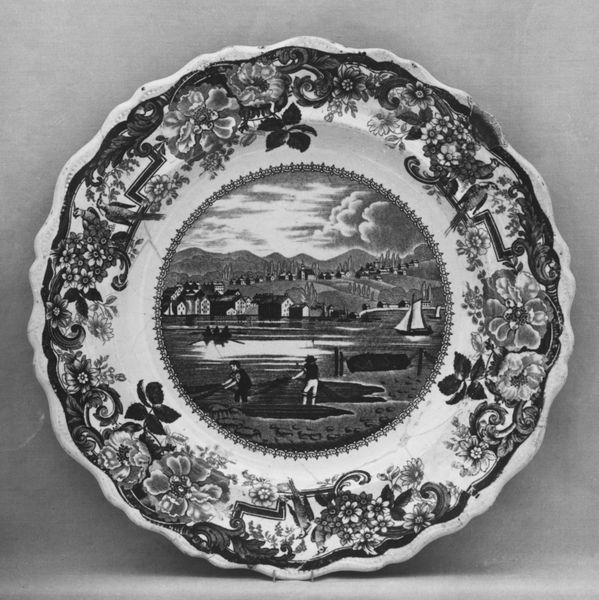
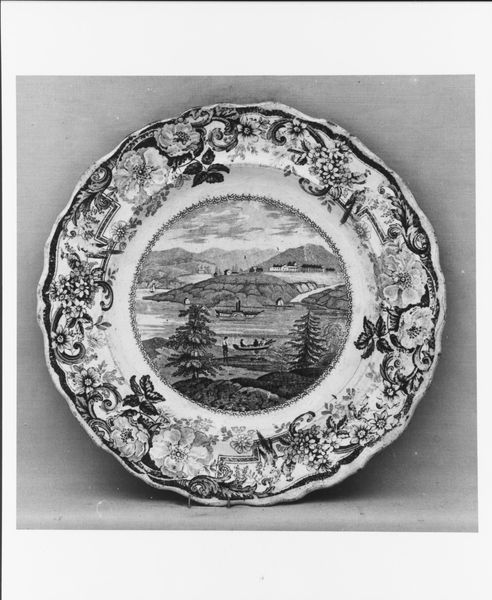
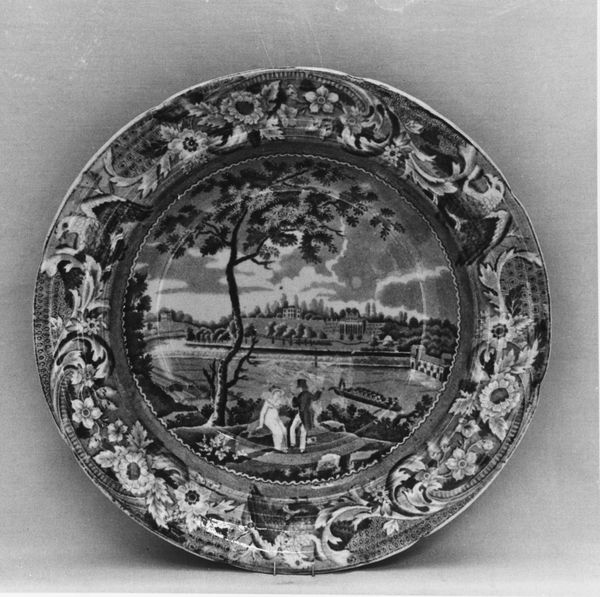
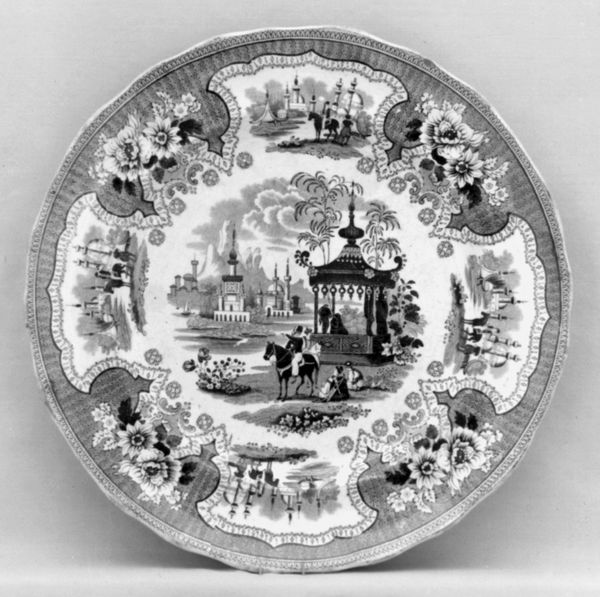
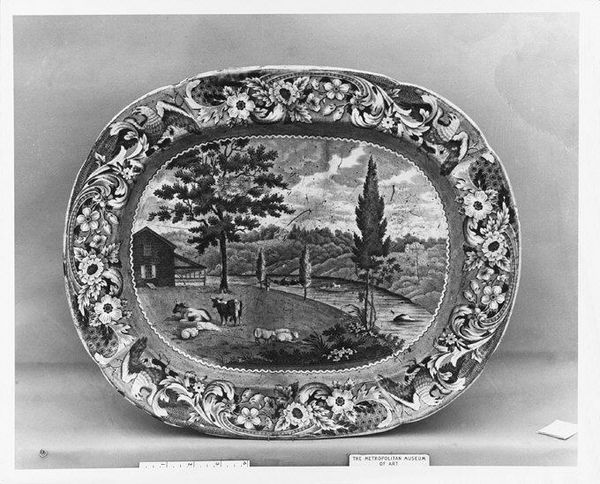
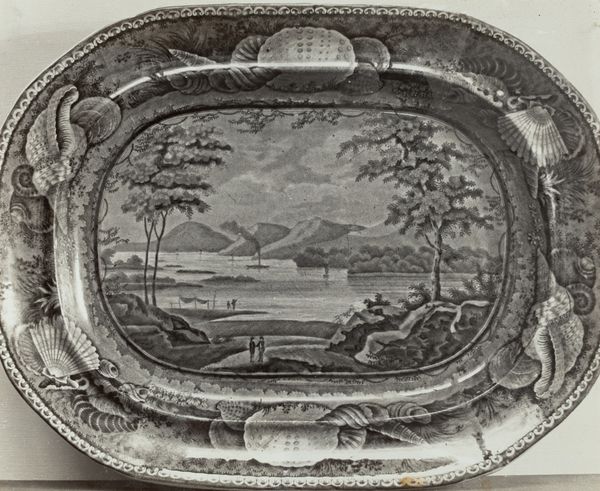
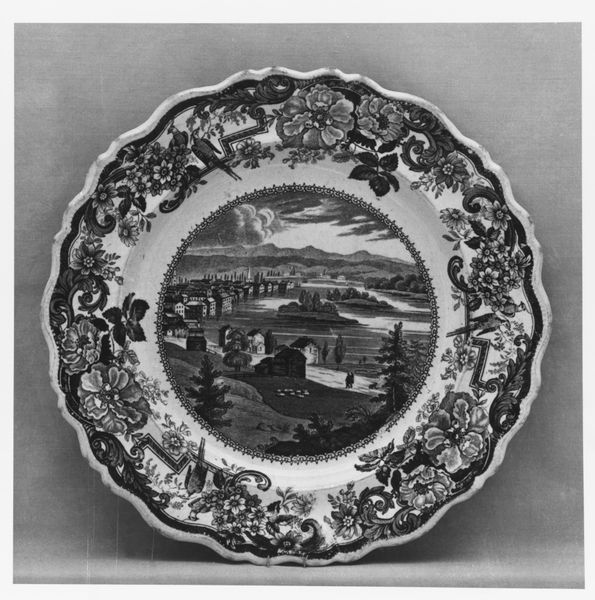
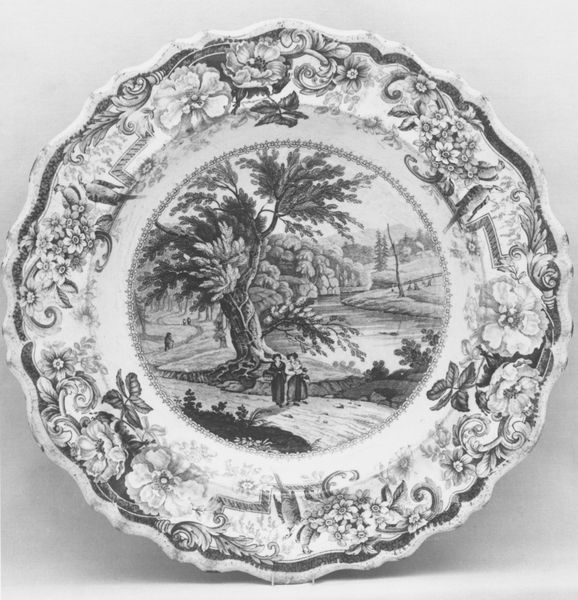
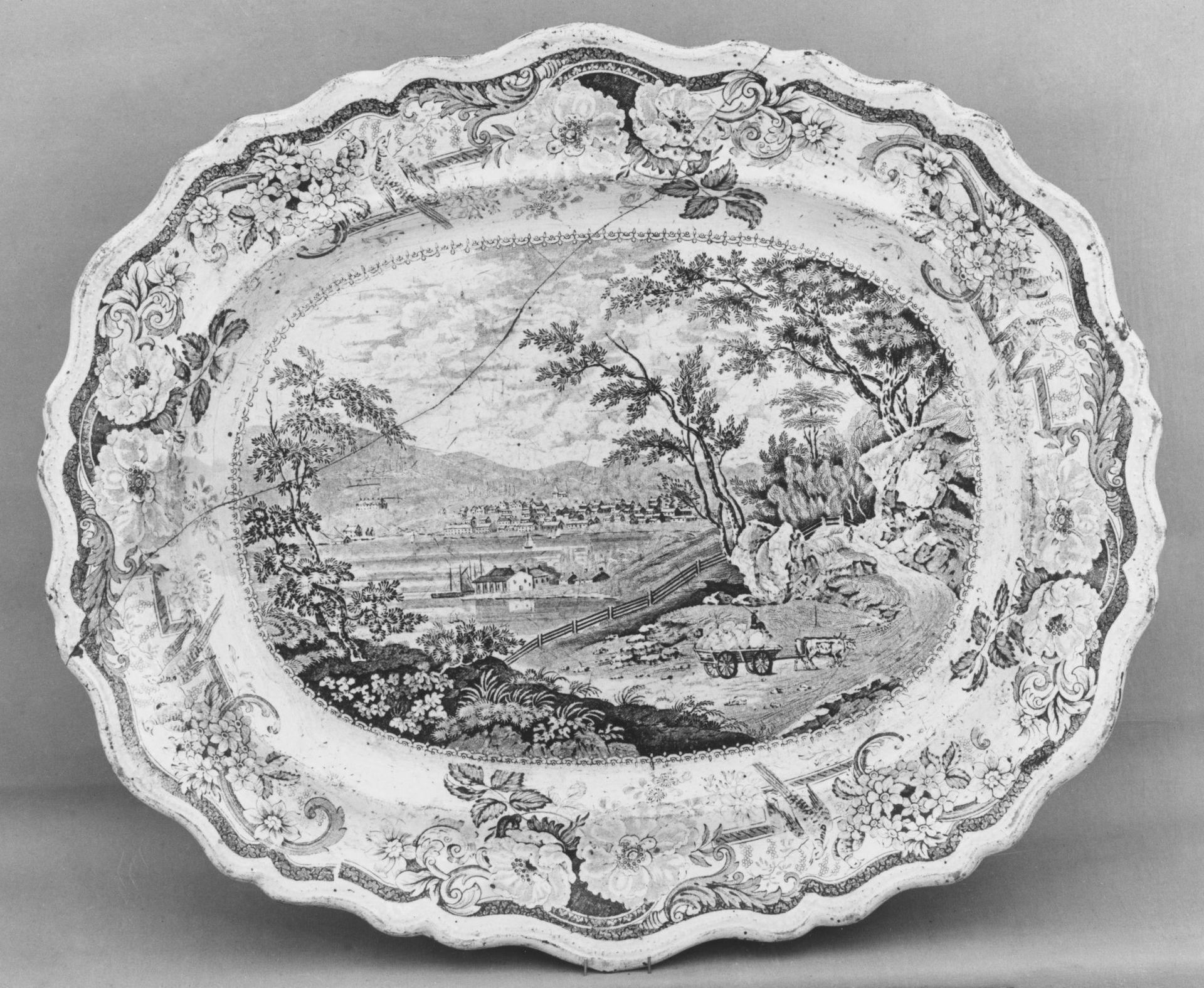
Editor: We’re looking at a ceramic platter, made sometime between 1822 and 1837 by James and Ralph Clews. What strikes me most is the detailed landscape design in the center; it gives me a sense of looking into the past. What can you tell us about it? Curator: Well, these platters were mass-produced using transfer printing, making decorative landscapes accessible to a broader public. This democratization of art reflects a shift in societal values during that period. The landscapes depicted often idealize rural life. Editor: It’s interesting how something mass-produced could still carry so much… weight, culturally speaking. I guess, beyond pure decoration, it hints at how people viewed the world. It romanticizes something attainable, a rural landscape... Was there something subversive or politically charged that stood out to you, beyond the mere democratization of art? Curator: Certainly! The choice of landscape itself is a political one. Representing the American landscape specifically helped build a sense of national identity. Further, the presence of industry alongside that rural setting suggests the cultural conversation on progress. Was it harmonious, or at odds with natural ideals? Editor: It almost acts as propaganda in plain sight – subtly promoting a national identity. It’s amazing to think a common household object can reveal so much. Thank you for unveiling these political and social nuances embedded in a decorative platter. Curator: My pleasure. It reminds us that art’s power lies not only in the object itself but also in its ability to reflect and shape collective values. It’s important to consider art's function in the cultural zeitgeist, how artworks and styles have social roles beyond the artistic.
Platter
1822 - 1837

James and Ralph Clews
1813 - 1836
The Metropolitan Museum of Art
Metropolitan Museum of Art, New York, NYArtwork details
- Medium
- print, ceramic
- Dimensions
- 15 1/2 x 12 7/8 in. (39.4 x 32.7 cm)
- Location
- Metropolitan Museum of Art, New York, NY
- Copyright
- Public Domain
Tags
neoclassicism
landscape
ceramic
decorative-art
Comments
Be the first to share your thoughts about this work.
About this artwork
Editor: We’re looking at a ceramic platter, made sometime between 1822 and 1837 by James and Ralph Clews. What strikes me most is the detailed landscape design in the center; it gives me a sense of looking into the past. What can you tell us about it? Curator: Well, these platters were mass-produced using transfer printing, making decorative landscapes accessible to a broader public. This democratization of art reflects a shift in societal values during that period. The landscapes depicted often idealize rural life. Editor: It’s interesting how something mass-produced could still carry so much… weight, culturally speaking. I guess, beyond pure decoration, it hints at how people viewed the world. It romanticizes something attainable, a rural landscape... Was there something subversive or politically charged that stood out to you, beyond the mere democratization of art? Curator: Certainly! The choice of landscape itself is a political one. Representing the American landscape specifically helped build a sense of national identity. Further, the presence of industry alongside that rural setting suggests the cultural conversation on progress. Was it harmonious, or at odds with natural ideals? Editor: It almost acts as propaganda in plain sight – subtly promoting a national identity. It’s amazing to think a common household object can reveal so much. Thank you for unveiling these political and social nuances embedded in a decorative platter. Curator: My pleasure. It reminds us that art’s power lies not only in the object itself but also in its ability to reflect and shape collective values. It’s important to consider art's function in the cultural zeitgeist, how artworks and styles have social roles beyond the artistic.
Comments
Be the first to share your thoughts about this work.