

About this artwork
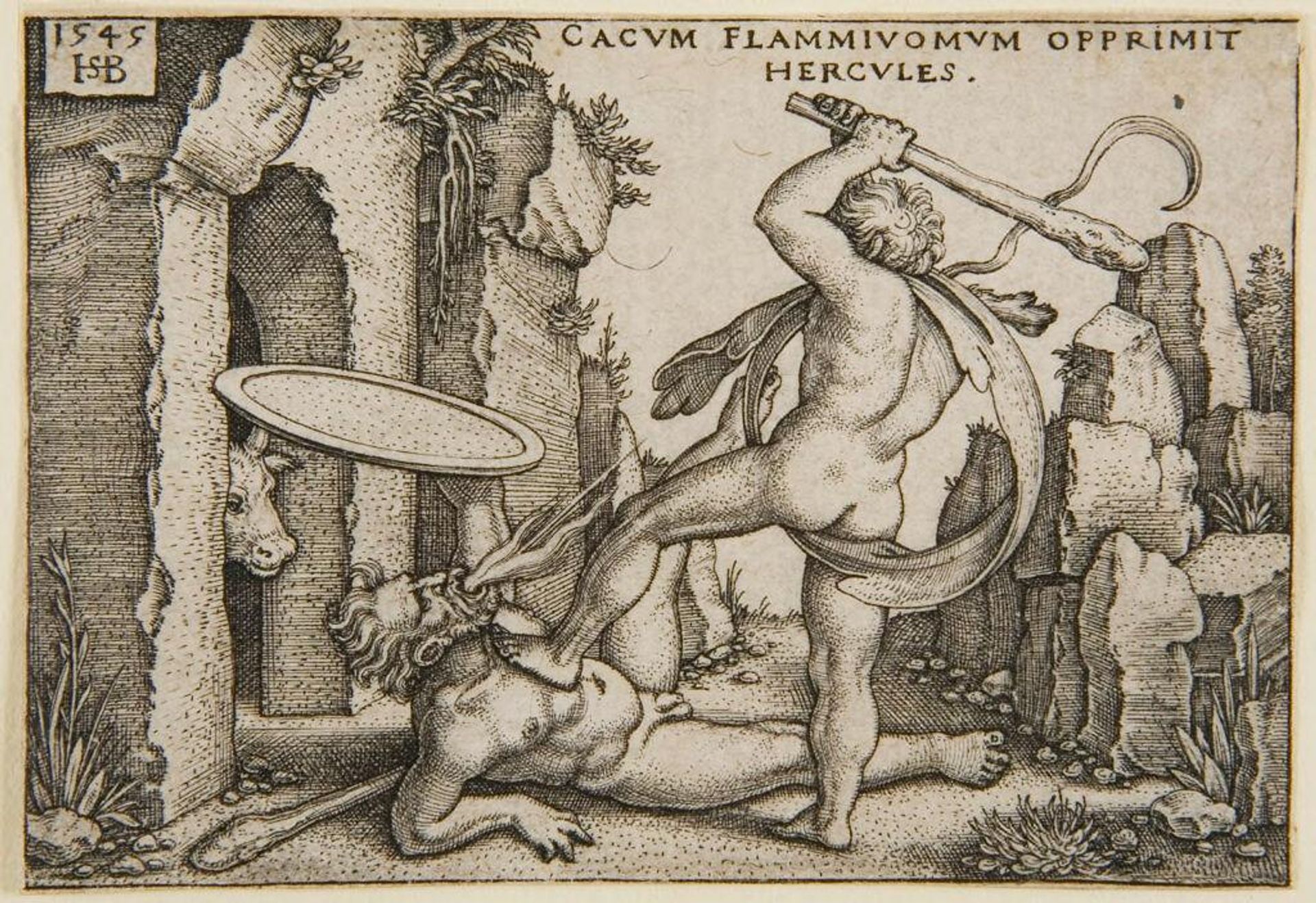
Editor: This is Sebald Beham's "Hercules and Cacus," a print made around 1545, now at the Harvard Art Museums. It depicts a dramatic scene. What symbols strike you as particularly meaningful? Curator: Notice the cattle peering from the cave, and Hercules's club raised high. Cacus, the fire-breathing monster, lies defeated. Consider how this echoes older myths of hero overcoming beast, representing the triumph of order over chaos. What emotions does this clash evoke? Editor: It feels brutal, but also triumphant. The detail in the figures is amazing. Curator: Indeed. Beham uses the visual language of the classical hero, but charges it with the anxieties of his own era. The image becomes a vessel for anxieties and aspirations, carrying echoes of cultural memory. Editor: I never thought about it that way; it's more than just a simple story. Curator: Precisely. It’s a reminder of how images hold layers of meaning, shaped by time and culture.
Hercules and Cacus
c. 16th century


Artwork details
- Location
- Harvard Art Museums
- Copyright
- CC0 1.0
Comments
Share your thoughts
About this artwork
Editor: This is Sebald Beham's "Hercules and Cacus," a print made around 1545, now at the Harvard Art Museums. It depicts a dramatic scene. What symbols strike you as particularly meaningful? Curator: Notice the cattle peering from the cave, and Hercules's club raised high. Cacus, the fire-breathing monster, lies defeated. Consider how this echoes older myths of hero overcoming beast, representing the triumph of order over chaos. What emotions does this clash evoke? Editor: It feels brutal, but also triumphant. The detail in the figures is amazing. Curator: Indeed. Beham uses the visual language of the classical hero, but charges it with the anxieties of his own era. The image becomes a vessel for anxieties and aspirations, carrying echoes of cultural memory. Editor: I never thought about it that way; it's more than just a simple story. Curator: Precisely. It’s a reminder of how images hold layers of meaning, shaped by time and culture.
Comments
Share your thoughts