About this artwork
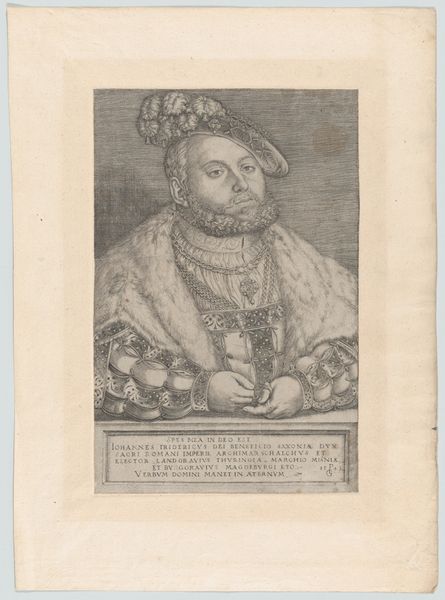
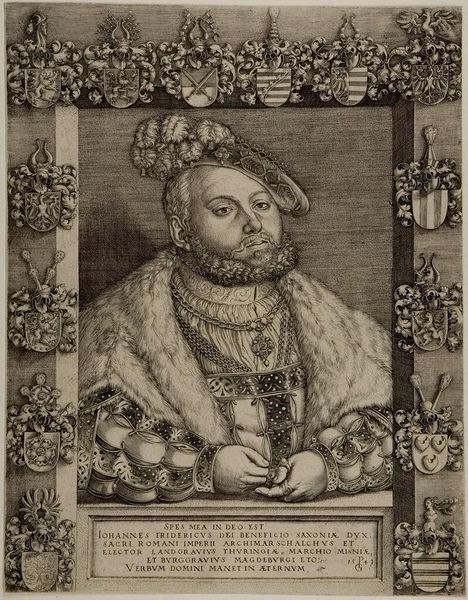
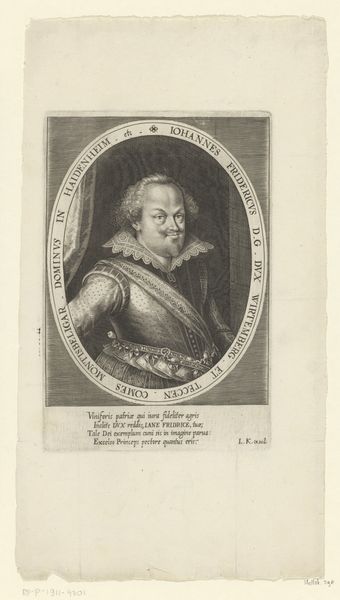
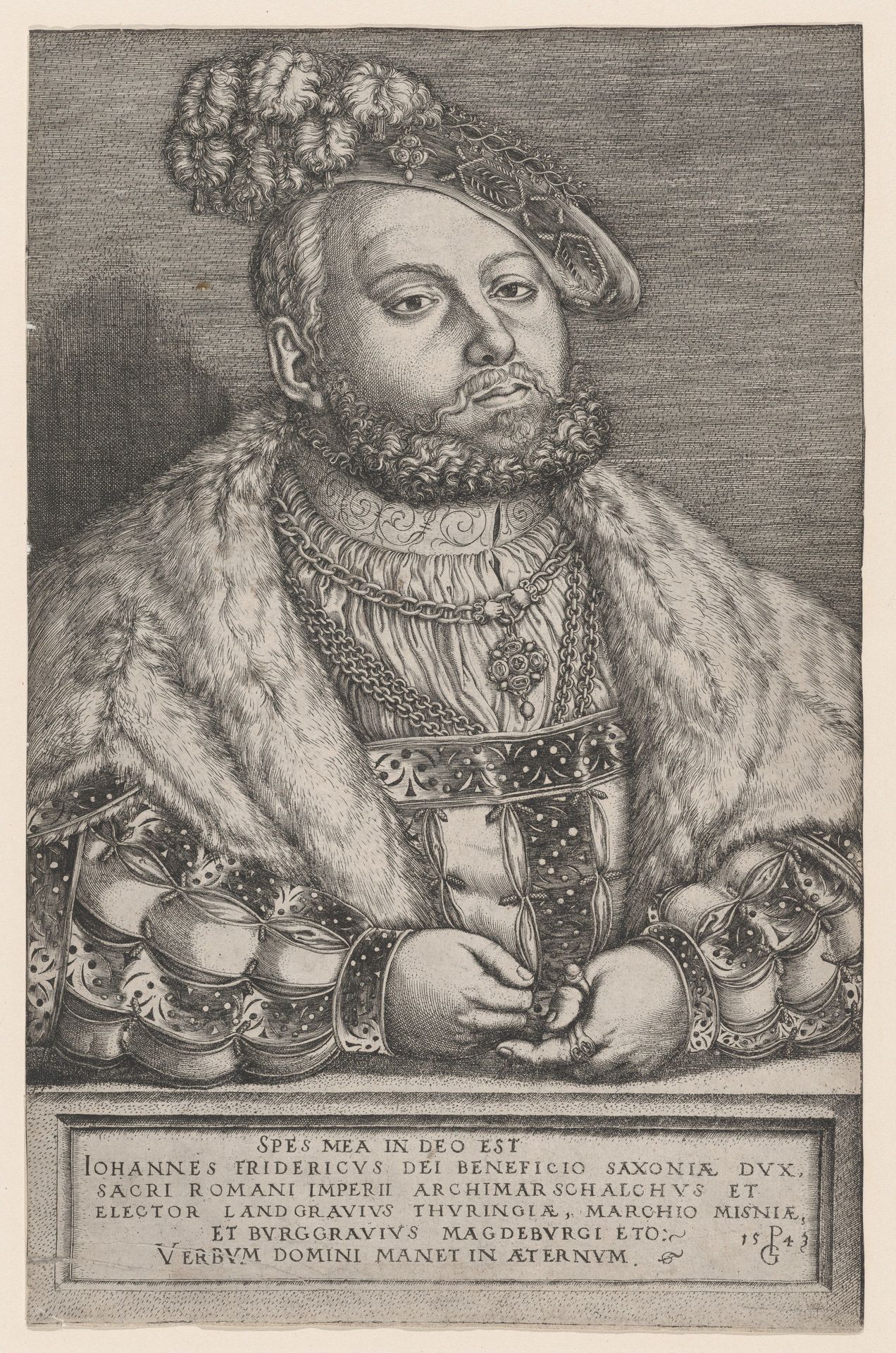
This is Georg Pencz’s engraving of Johann Friedrich the Magnanimous, Elector of Saxony. The image is a potent assertion of dynastic power. The Elector is adorned with the symbols of his status: the fur mantle, the feathered cap, and the heavy chains of office. A Latin inscription proclaims that his hope rests in God’s favor. Pencz made this print in 1543, at a time when the Holy Roman Empire was fracturing along religious and political lines. Johann Friedrich was a leading figure in the Schmalkaldic League, an alliance of Protestant princes who challenged the authority of the Catholic emperor, Charles V. This print stakes a claim in the visual arena, demonstrating how art played a key role in shaping public opinion and asserting political legitimacy. To understand its full significance, a historian might consult pamphlets, letters, and other printed materials from the period. In studying the art of the Reformation, we gain insight into a society in the throes of profound transformation.
Portrait of Johann Friedrich the Magnanimous, Elector of Saxony
1543


Artwork details
- Medium
- drawing, print, metal, engraving
- Dimensions
- Sheet (trimmed; without frame): 12 15/16 × 8 7/16 in. (32.8 × 21.4 cm)
- Location
- Metropolitan Museum of Art, New York, NY
- Copyright
- Public Domain
Tags
portrait
drawing
metal
old engraving style
11_renaissance
men
portrait drawing
history-painting
northern-renaissance
engraving
Comments
Be the first to share your thoughts about this work.
About this artwork
This is Georg Pencz’s engraving of Johann Friedrich the Magnanimous, Elector of Saxony. The image is a potent assertion of dynastic power. The Elector is adorned with the symbols of his status: the fur mantle, the feathered cap, and the heavy chains of office. A Latin inscription proclaims that his hope rests in God’s favor. Pencz made this print in 1543, at a time when the Holy Roman Empire was fracturing along religious and political lines. Johann Friedrich was a leading figure in the Schmalkaldic League, an alliance of Protestant princes who challenged the authority of the Catholic emperor, Charles V. This print stakes a claim in the visual arena, demonstrating how art played a key role in shaping public opinion and asserting political legitimacy. To understand its full significance, a historian might consult pamphlets, letters, and other printed materials from the period. In studying the art of the Reformation, we gain insight into a society in the throes of profound transformation.
Comments
Be the first to share your thoughts about this work.