About this artwork
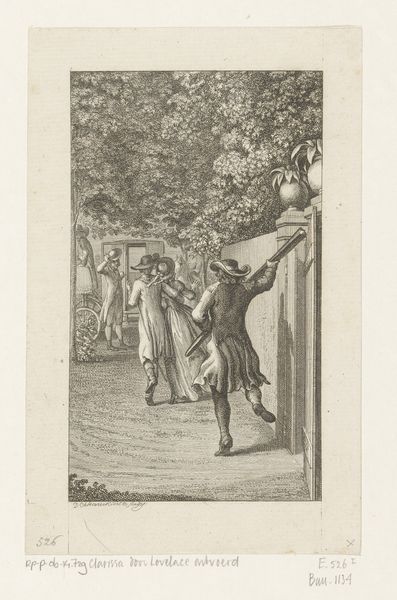
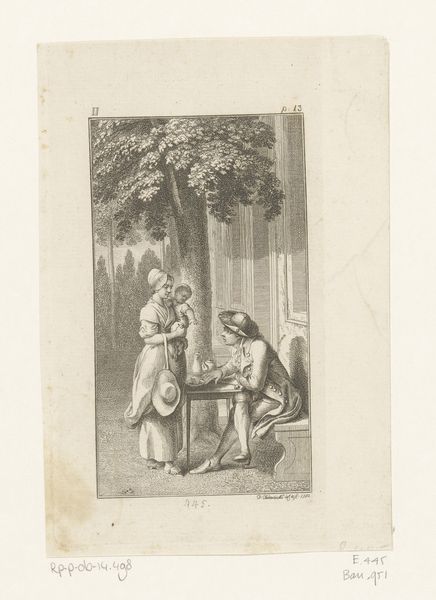
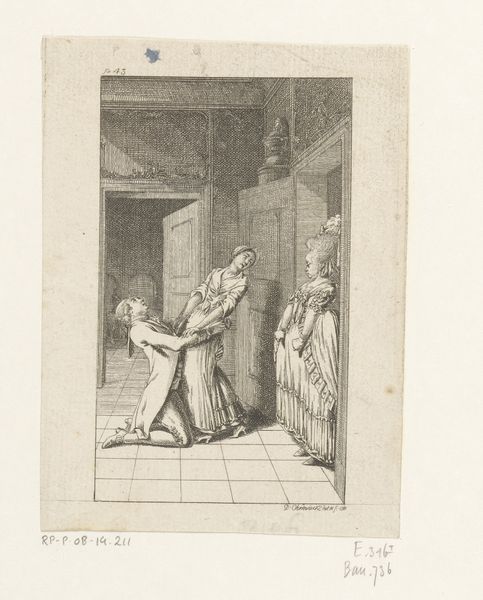
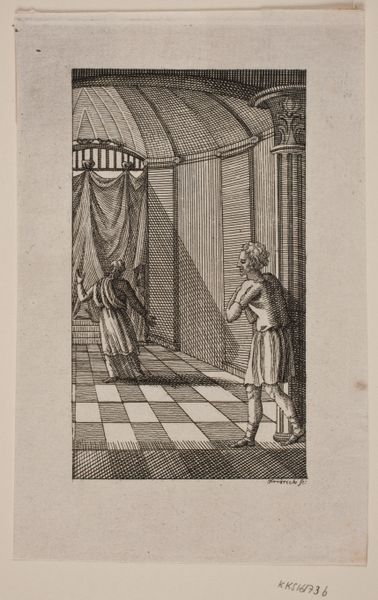
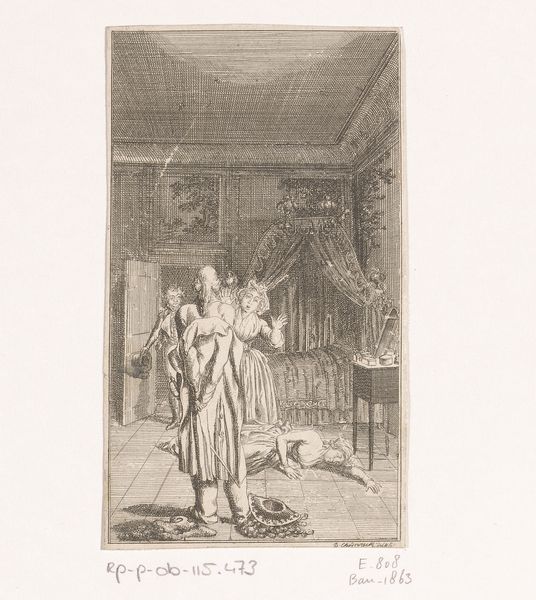
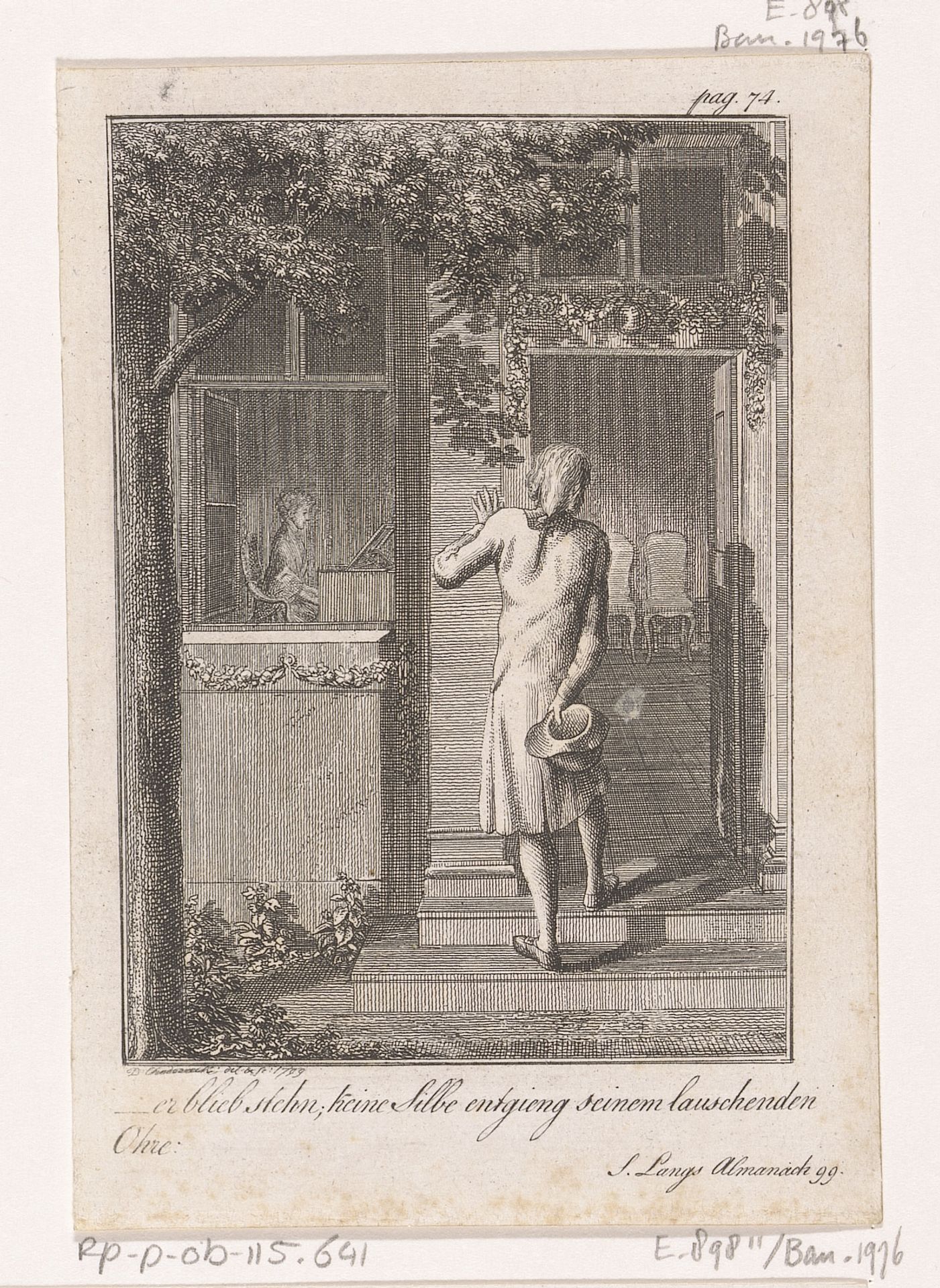
Daniel Nikolaus Chodowiecki made this print, Robert hears Luise playing the piano, using etching, a printmaking technique that democratized image production in the 18th century. A metal plate, likely copper, is coated with a waxy ground, and the artist scratches away the ground to expose the metal. The plate is then immersed in acid, which bites into the exposed lines, creating grooves. Ink is applied to the plate, filling these grooves, and then the surface is wiped clean. Finally, paper is pressed onto the plate, transferring the ink and producing the print. The incisive, delicate lines capture a scene of bourgeois domesticity, with labor implied by its absence. A man pauses to listen to a woman playing piano, their leisure made possible by the labor of others. Consider the social context, with the rise of a middle class eager for affordable art. This etching speaks volumes about the era’s shifting social dynamics and the growing appetite for accessible imagery. It reminds us that art is always embedded in the material conditions of its making.
Robert hoort Luise piano spelen 1799

Daniel Nikolaus Chodowiecki
1726 - 1801Location
RijksmuseumArtwork details
- Medium
- print, engraving
- Dimensions
- height 123 mm, width 85 mm
- Location
- Rijksmuseum
- Copyright
- Rijks Museum: Open Domain
Tags
portrait
old engraving style
romanticism
genre-painting
engraving
Comments
No comments
About this artwork
Daniel Nikolaus Chodowiecki made this print, Robert hears Luise playing the piano, using etching, a printmaking technique that democratized image production in the 18th century. A metal plate, likely copper, is coated with a waxy ground, and the artist scratches away the ground to expose the metal. The plate is then immersed in acid, which bites into the exposed lines, creating grooves. Ink is applied to the plate, filling these grooves, and then the surface is wiped clean. Finally, paper is pressed onto the plate, transferring the ink and producing the print. The incisive, delicate lines capture a scene of bourgeois domesticity, with labor implied by its absence. A man pauses to listen to a woman playing piano, their leisure made possible by the labor of others. Consider the social context, with the rise of a middle class eager for affordable art. This etching speaks volumes about the era’s shifting social dynamics and the growing appetite for accessible imagery. It reminds us that art is always embedded in the material conditions of its making.
Comments
No comments