About this artwork
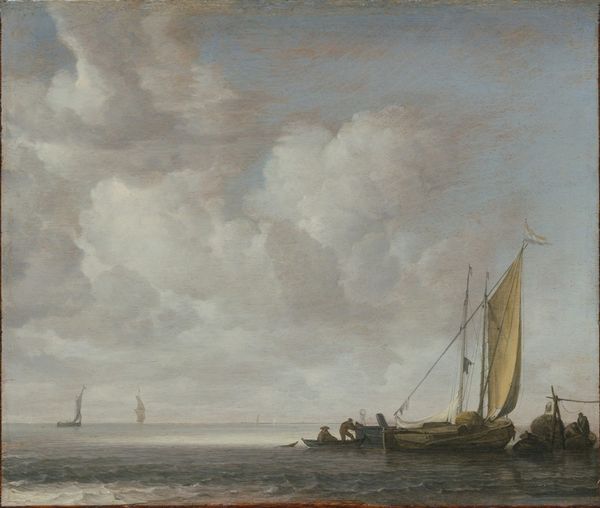
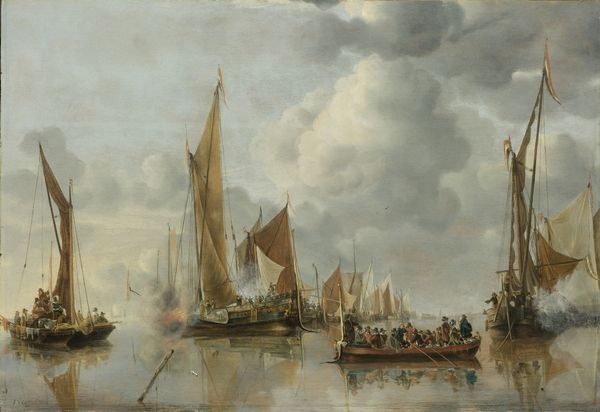
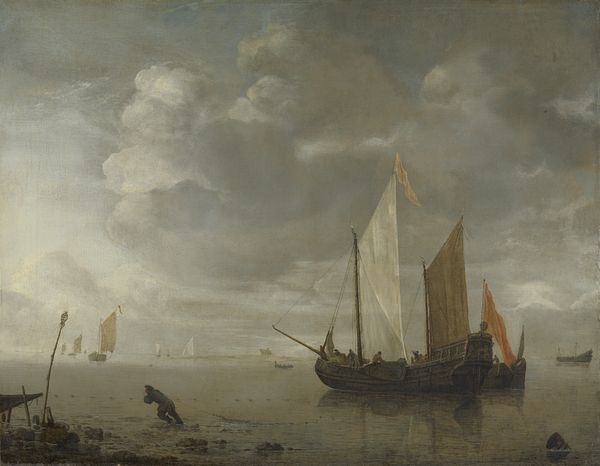
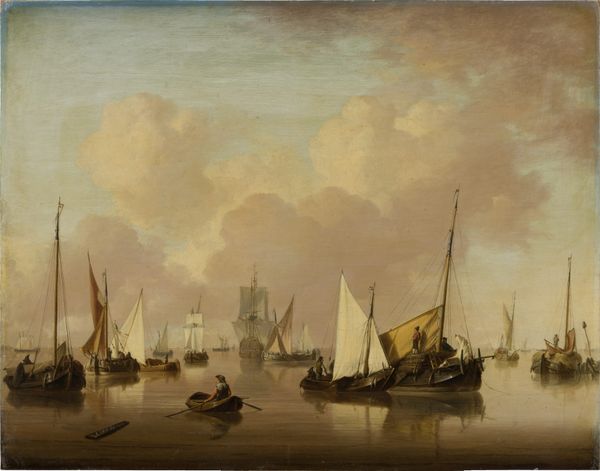
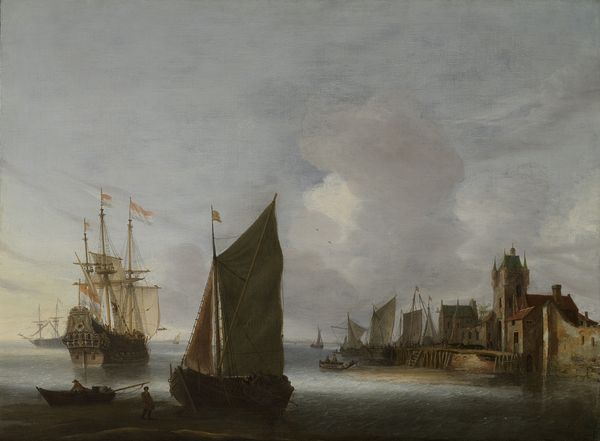
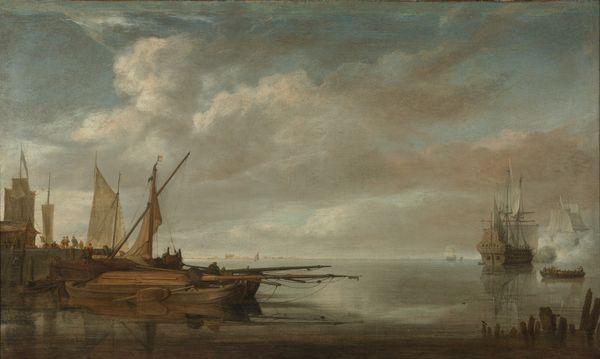
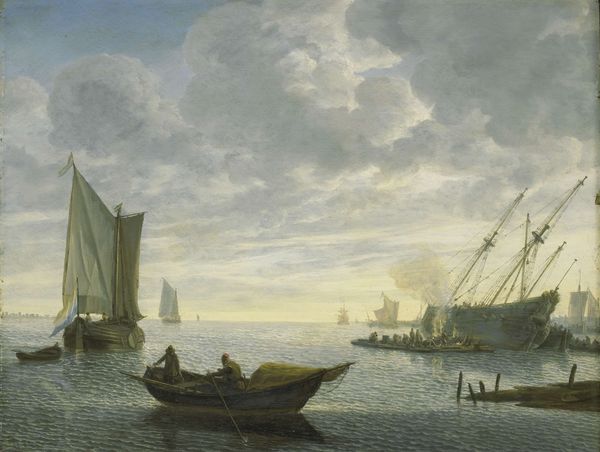
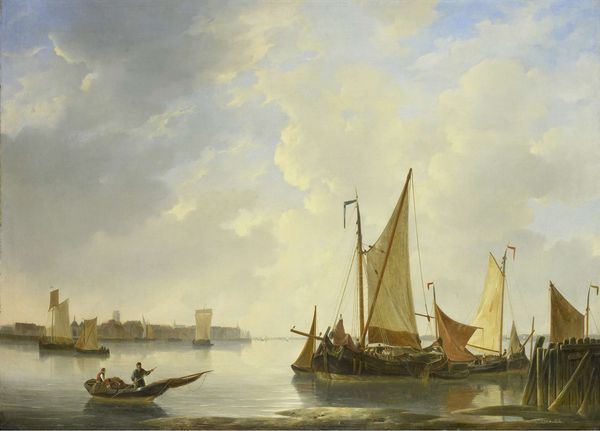
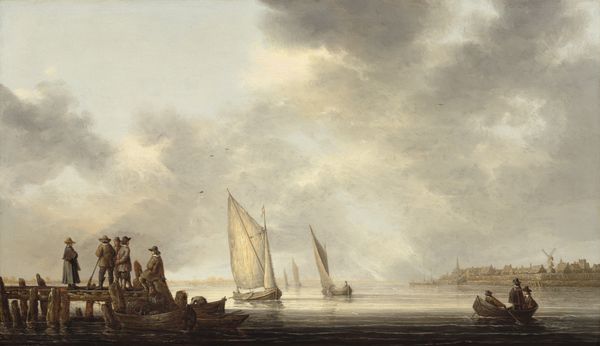
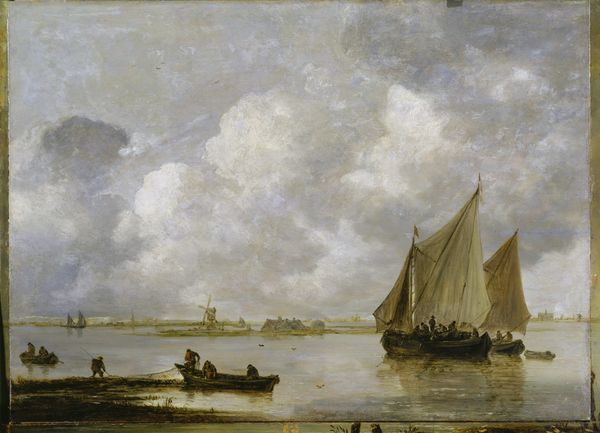
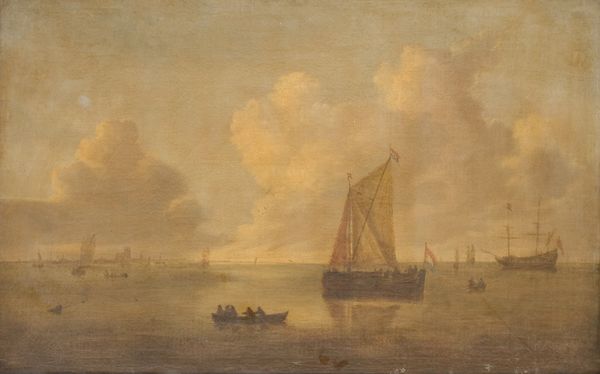
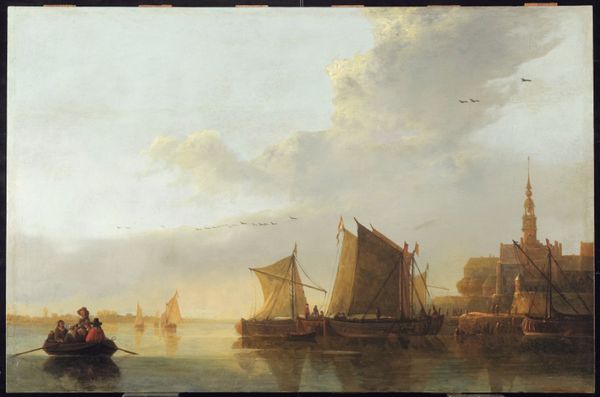
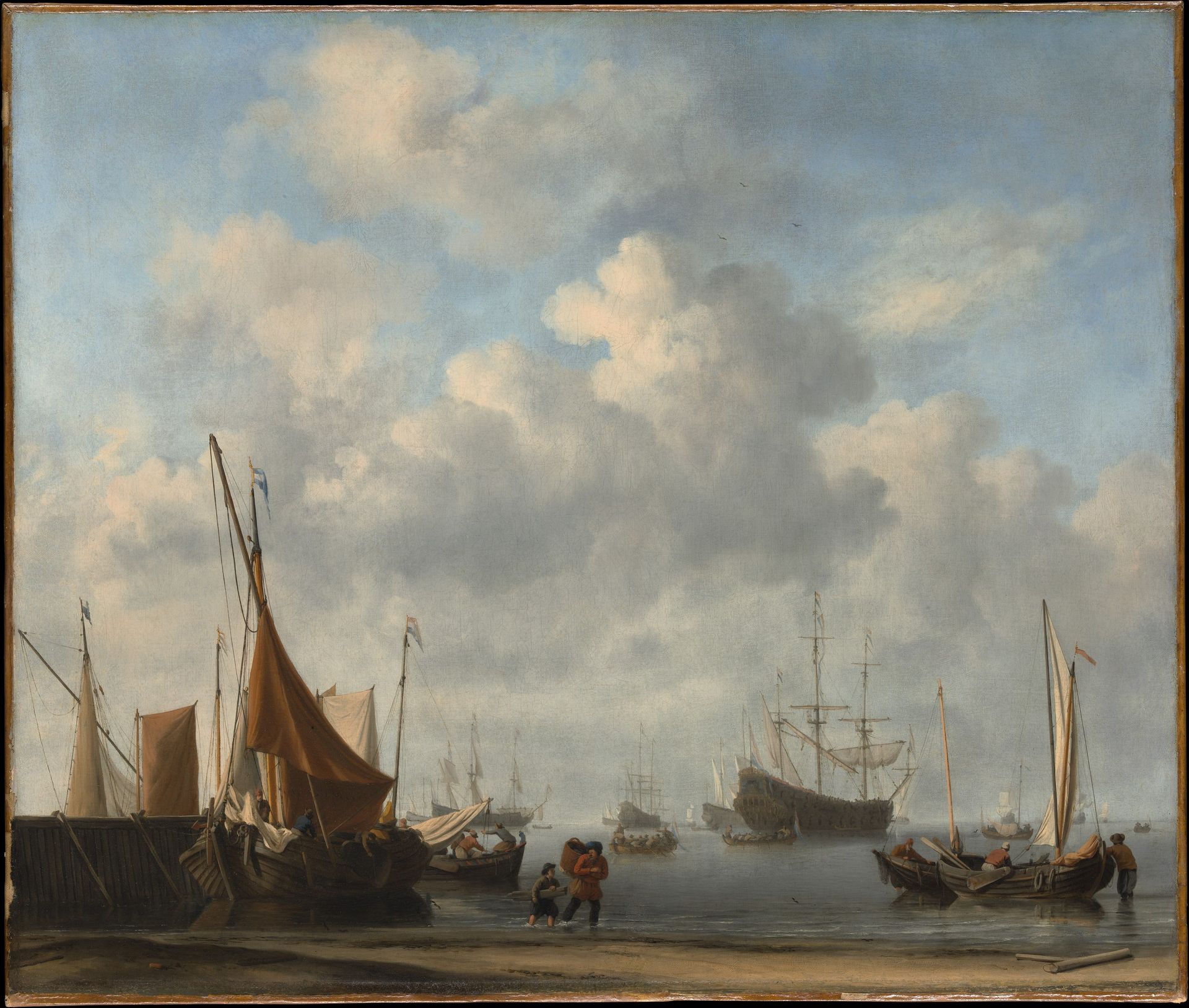
Willem van de Velde II captured this ‘Entrance to a Dutch Port’ with oils on canvas, immortalizing a bustling 17th-century scene. The ships, symbols of Dutch mercantile power, are dressed with flags and pennants, a language of the sea that speaks of identity and trade. Consider the single figure in the small boat on the right; he is framed by a triangular sail, evoking images of navigation and the human drive to explore the unknown. We can see echoes of this composition in earlier and later works where similar motifs appear, each time imbued with new cultural meanings. This triangular shape resonates with the subconscious, reminding us of humanity's relationship to the sea. Maritime imagery is deeply embedded in the collective memory of the Netherlands, a symbol that has reappeared, evolved, and taken on new meanings throughout history.
Entrance to a Dutch Port
1660 - 1670

Willem van de Velde II
1633 - 1707
The Metropolitan Museum of Art
Metropolitan Museum of Art, New York, NYArtwork details
- Medium
- painting, oil-paint
- Dimensions
- 25 7/8 x 30 5/8 in. (65.7 x 77.8 cm)
- Location
- Metropolitan Museum of Art, New York, NY
- Copyright
- Public Domain
Tags
Comments
Share your thoughts
About this artwork
Willem van de Velde II captured this ‘Entrance to a Dutch Port’ with oils on canvas, immortalizing a bustling 17th-century scene. The ships, symbols of Dutch mercantile power, are dressed with flags and pennants, a language of the sea that speaks of identity and trade. Consider the single figure in the small boat on the right; he is framed by a triangular sail, evoking images of navigation and the human drive to explore the unknown. We can see echoes of this composition in earlier and later works where similar motifs appear, each time imbued with new cultural meanings. This triangular shape resonates with the subconscious, reminding us of humanity's relationship to the sea. Maritime imagery is deeply embedded in the collective memory of the Netherlands, a symbol that has reappeared, evolved, and taken on new meanings throughout history.
Comments
Share your thoughts