About this artwork
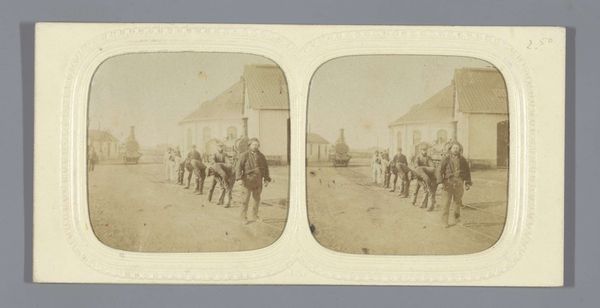
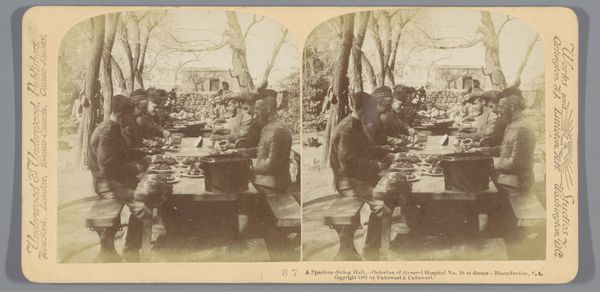
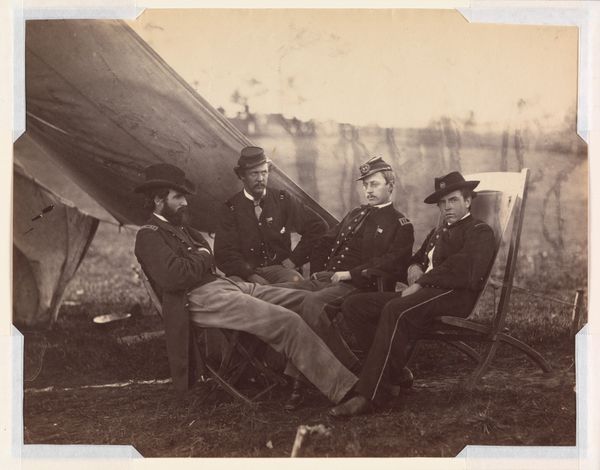
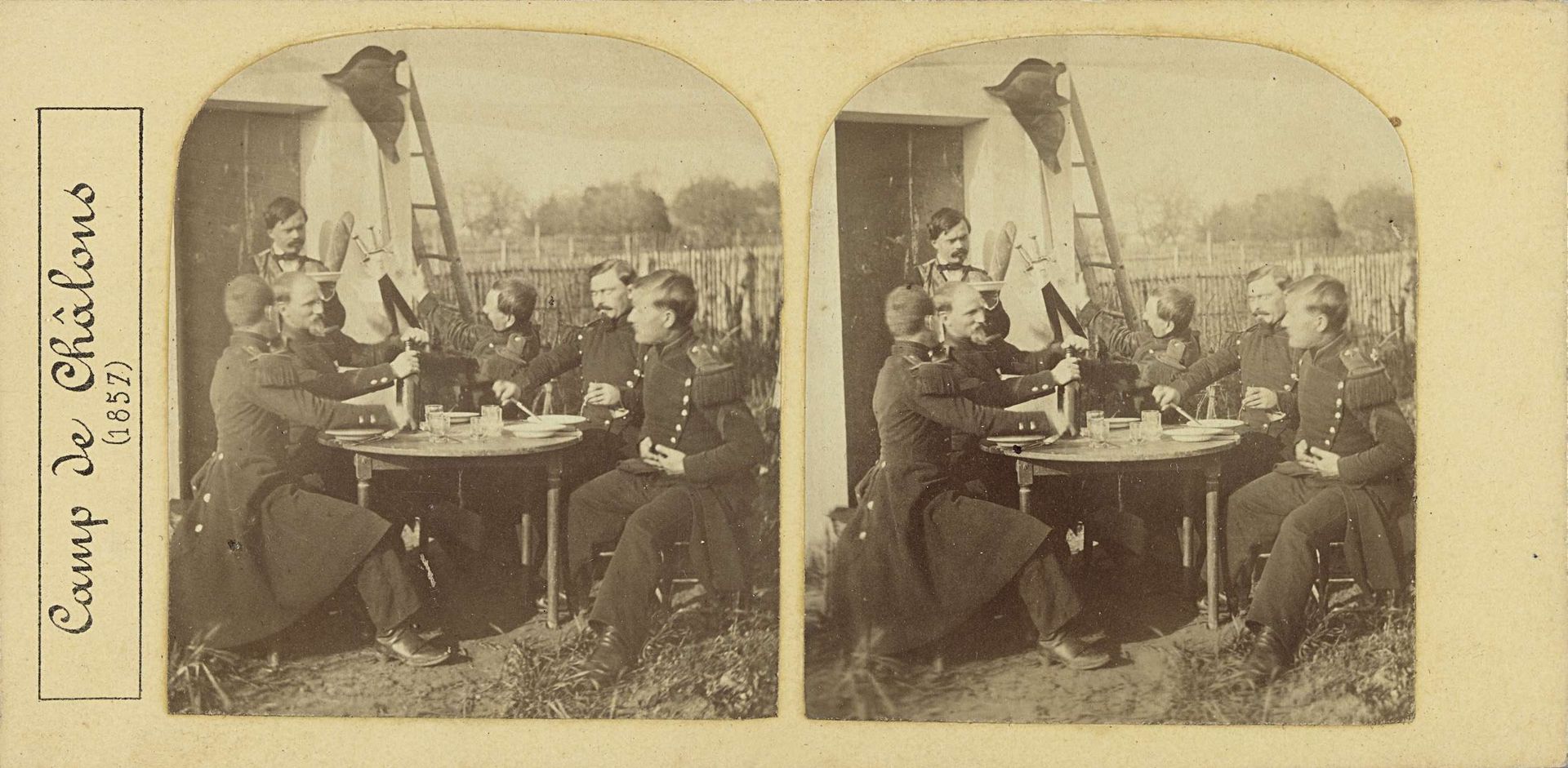
Alexis Gaudin made this stereo card, entitled Camp de Châlons, in 1857. A stereoscopic card like this would have been placed in a special viewer that would trick the brain into seeing a three-dimensional image. Here we see a group of men, presumably soldiers, sitting around a table, sharing a meal, and drinking wine. Stereoscopic cards were a popular form of entertainment at the time, but they also served as a form of documentation, and this card offers a fascinating glimpse into the daily life of soldiers in the French army during the Second Empire, when France was at war with Russia in the Crimea. The image presents the army as an institution, with a hierarchy shown in the arrangement of figures around the table, and with the ladder leaning against the side of the building. The stereoscopic effect would have made the image all the more striking and lifelike for viewers. To understand this work more fully, one might research the history of photography, military history, the Second Empire, and popular entertainment. It's important to remember that the meaning of any artwork is always shaped by the social and institutional context in which it was made and viewed.

Artwork details
- Medium
- daguerreotype, photography
- Dimensions
- height 75 mm, width 150 mm
- Copyright
- Rijks Museum: Open Domain
Tags
Comments
Share your thoughts
About this artwork
Alexis Gaudin made this stereo card, entitled Camp de Châlons, in 1857. A stereoscopic card like this would have been placed in a special viewer that would trick the brain into seeing a three-dimensional image. Here we see a group of men, presumably soldiers, sitting around a table, sharing a meal, and drinking wine. Stereoscopic cards were a popular form of entertainment at the time, but they also served as a form of documentation, and this card offers a fascinating glimpse into the daily life of soldiers in the French army during the Second Empire, when France was at war with Russia in the Crimea. The image presents the army as an institution, with a hierarchy shown in the arrangement of figures around the table, and with the ladder leaning against the side of the building. The stereoscopic effect would have made the image all the more striking and lifelike for viewers. To understand this work more fully, one might research the history of photography, military history, the Second Empire, and popular entertainment. It's important to remember that the meaning of any artwork is always shaped by the social and institutional context in which it was made and viewed.
Comments
Share your thoughts