About this artwork
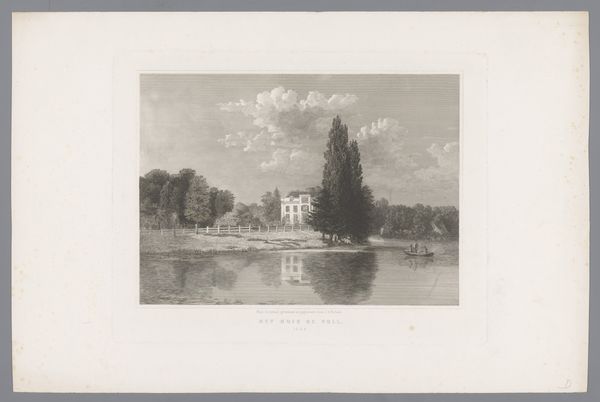
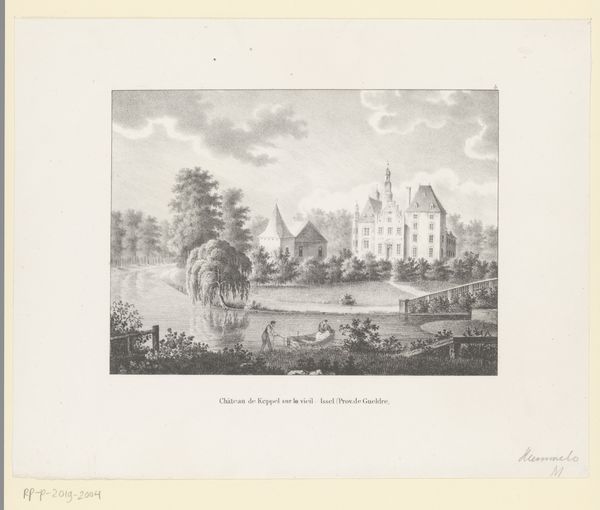
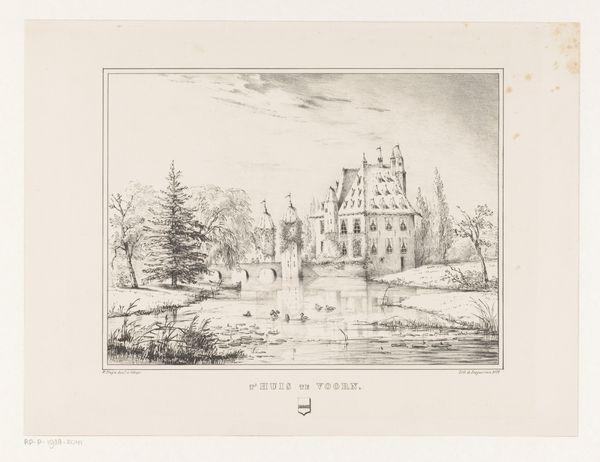
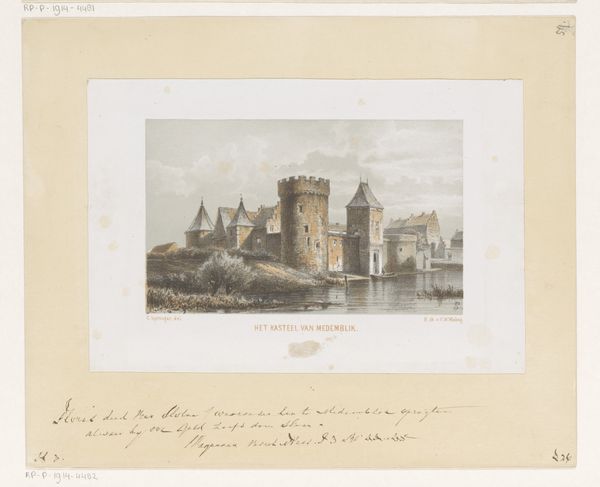
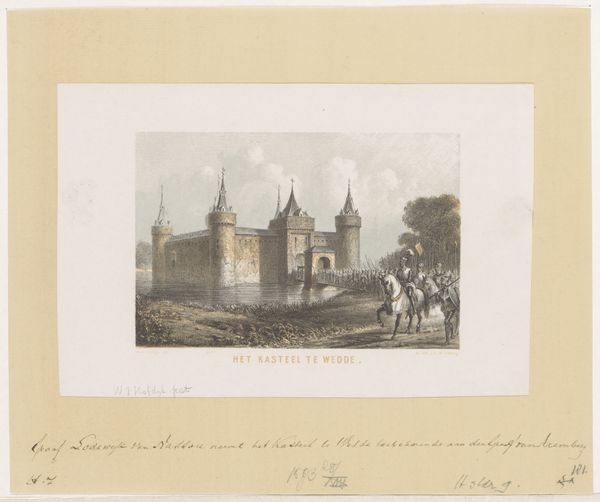
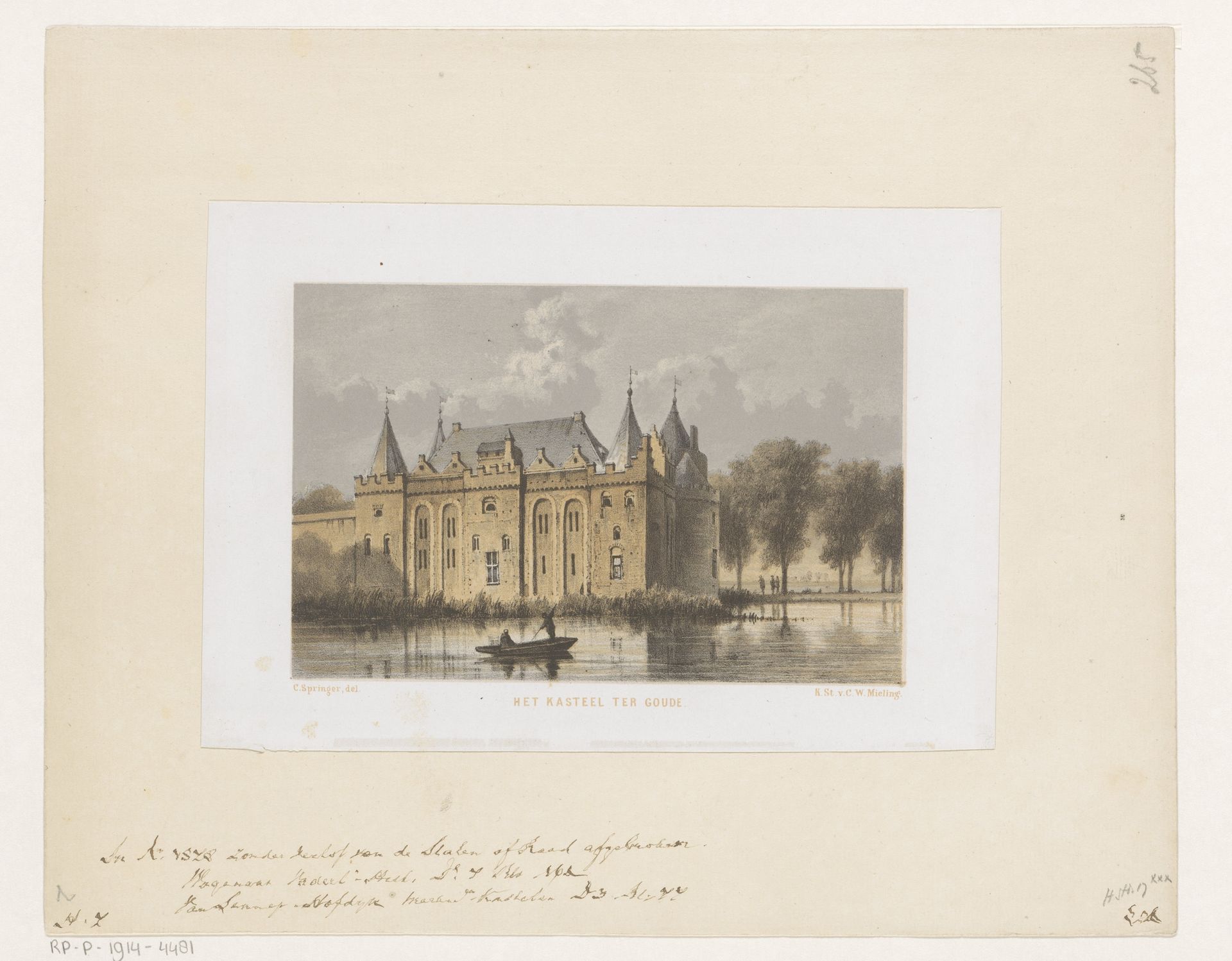
Curator: I’m immediately drawn to the water; it has such a shimmering quality that really brings the castle to life. Editor: Absolutely, Cornelis Springer’s “Kasteel van Gouda,” dating from 1847-1865, uses watercolour and print to capture a very particular moment in Dutch history. The romanticism evident in the landscape style is no accident; we’re seeing the deliberate aestheticizing of Dutch heritage and power. Curator: Power, yes, but softened around the edges. The muted palette – gentle greys and browns – and the people enjoying a boat trip lend the scene a sense of idyllic tranquility, almost like a memory. You can almost feel the castle whispering stories. Editor: That "softening," though, is crucial. It presents a carefully constructed narrative of Dutch identity, likely masking social and political complexities of the time. What does it mean to romanticize such structures without interrogating the historical realities of power and exclusion they represented? Curator: Oof, harsh truths! But that’s where art becomes so juicy, right? Beyond the history lesson, there's such craftsmanship on display. The detail in the stonework and the way he captures the reflection in the water are just... chef's kiss. Editor: For sure. Considering the popularity of genre-painting during that period, the quotidian activities, like boating or strolling the grounds, reflect bourgeois sensibilities and an idealized relationship between the powerful architectural presence and everyday life. It almost sanitizes the structure, inviting viewers into a nostalgic fantasy. Curator: So, is Springer inviting us into a comfortable delusion or offering a comforting vision in times of upheaval? Editor: Perhaps both. He's skillfully employing aesthetics to craft an appealing, but not necessarily truthful, depiction of his era's architectural and societal foundations. Art demands more from its viewer. Curator: Exactly. Art, like life, needs its layers. Thank you for enriching our perspective! Editor: Thank you. Let's continue peeling back those layers, together.

Artwork details
- Dimensions
- height 158 mm, width 231 mm, height 265 mm, width 329 mm
- Location
- Rijksmuseum
- Copyright
- Rijks Museum: Open Domain
Comments
Share your thoughts
About this artwork
Curator: I’m immediately drawn to the water; it has such a shimmering quality that really brings the castle to life. Editor: Absolutely, Cornelis Springer’s “Kasteel van Gouda,” dating from 1847-1865, uses watercolour and print to capture a very particular moment in Dutch history. The romanticism evident in the landscape style is no accident; we’re seeing the deliberate aestheticizing of Dutch heritage and power. Curator: Power, yes, but softened around the edges. The muted palette – gentle greys and browns – and the people enjoying a boat trip lend the scene a sense of idyllic tranquility, almost like a memory. You can almost feel the castle whispering stories. Editor: That "softening," though, is crucial. It presents a carefully constructed narrative of Dutch identity, likely masking social and political complexities of the time. What does it mean to romanticize such structures without interrogating the historical realities of power and exclusion they represented? Curator: Oof, harsh truths! But that’s where art becomes so juicy, right? Beyond the history lesson, there's such craftsmanship on display. The detail in the stonework and the way he captures the reflection in the water are just... chef's kiss. Editor: For sure. Considering the popularity of genre-painting during that period, the quotidian activities, like boating or strolling the grounds, reflect bourgeois sensibilities and an idealized relationship between the powerful architectural presence and everyday life. It almost sanitizes the structure, inviting viewers into a nostalgic fantasy. Curator: So, is Springer inviting us into a comfortable delusion or offering a comforting vision in times of upheaval? Editor: Perhaps both. He's skillfully employing aesthetics to craft an appealing, but not necessarily truthful, depiction of his era's architectural and societal foundations. Art demands more from its viewer. Curator: Exactly. Art, like life, needs its layers. Thank you for enriching our perspective! Editor: Thank you. Let's continue peeling back those layers, together.
Comments
Share your thoughts