About this artwork
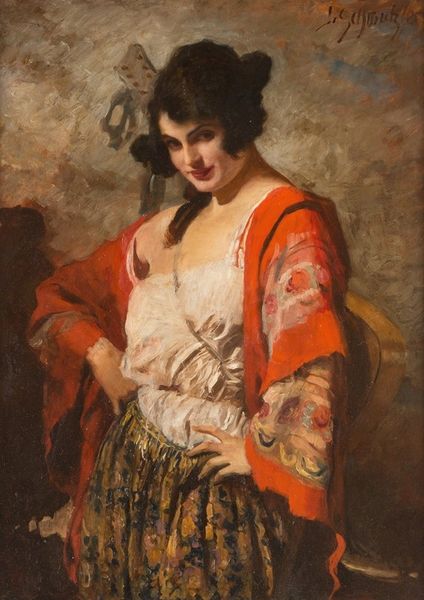
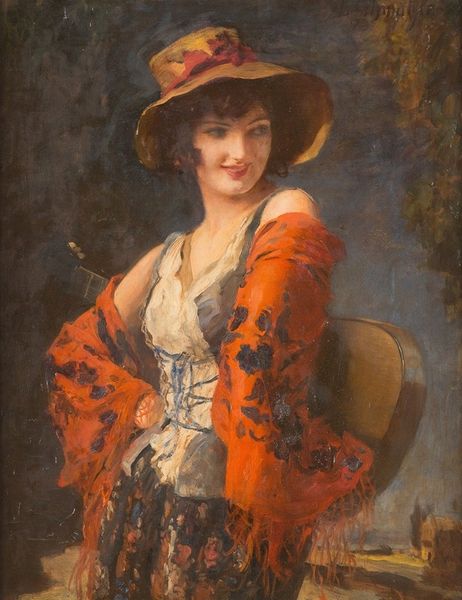
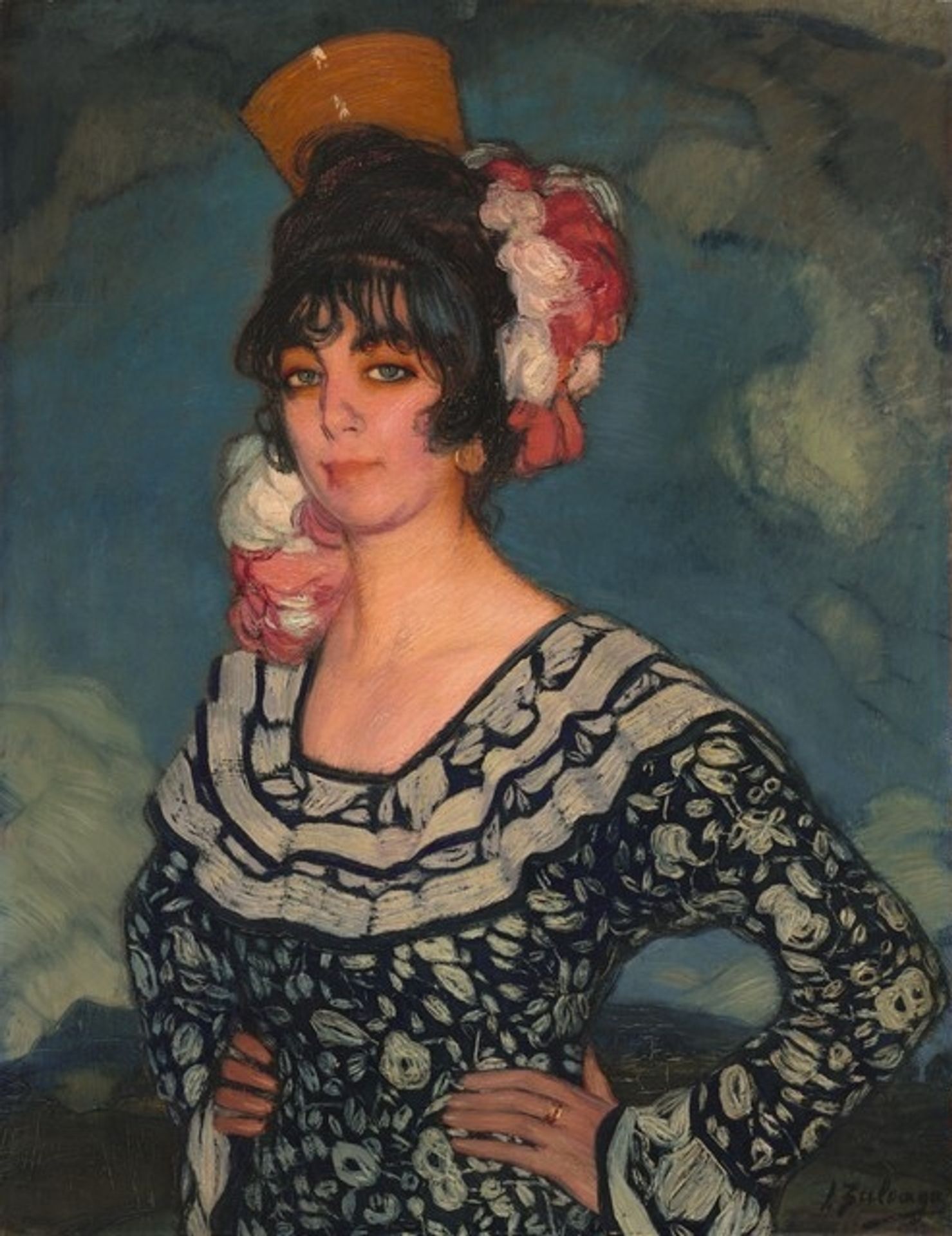
Ignacio Zuloaga painted ‘Woman in Andalusian Dress’ with oil on canvas. Zuloaga, who was working in the late 19th and early 20th century, often chose Spanish subjects, drawing inspiration from the cultural history of Spain. This portrait captures a woman adorned in traditional Andalusian attire, with her hands confidently placed on her hips. The attire serves as a powerful marker of cultural identity. The artist seems to want to capture an authentic representation of Spanish identity, yet the woman’s gaze conveys both pride and vulnerability. Zuloaga’s work taps into the complex interplay between tradition, identity, and representation, and invites us to reflect on how cultural symbols can be both celebrated and critiqued. It is a reminder that identity is not a fixed construct but rather a fluid negotiation between self-perception and cultural expectations.
Woman in Andalusian Dress
1911 - 1913


Artwork details
- Medium
- oil-paint
- Dimensions
- overall: 87 x 66.7 cm (34 1/4 x 26 1/4 in.) framed: 107.9 x 87.6 x 3.8 cm (42 1/2 x 34 1/2 x 1 1/2 in.)
- Copyright
- National Gallery of Art: CC0 1.0
Tags
portrait
oil-paint
figuration
oil painting
portrait reference
genre-painting
portrait art
modernism
Comments
Be the first to share your thoughts about this work.
About this artwork
Ignacio Zuloaga painted ‘Woman in Andalusian Dress’ with oil on canvas. Zuloaga, who was working in the late 19th and early 20th century, often chose Spanish subjects, drawing inspiration from the cultural history of Spain. This portrait captures a woman adorned in traditional Andalusian attire, with her hands confidently placed on her hips. The attire serves as a powerful marker of cultural identity. The artist seems to want to capture an authentic representation of Spanish identity, yet the woman’s gaze conveys both pride and vulnerability. Zuloaga’s work taps into the complex interplay between tradition, identity, and representation, and invites us to reflect on how cultural symbols can be both celebrated and critiqued. It is a reminder that identity is not a fixed construct but rather a fluid negotiation between self-perception and cultural expectations.
Comments
Be the first to share your thoughts about this work.