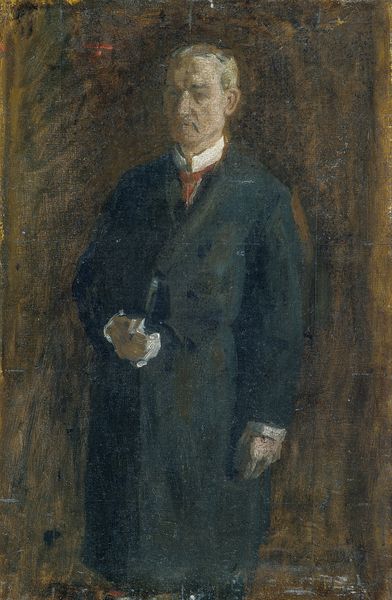
1926
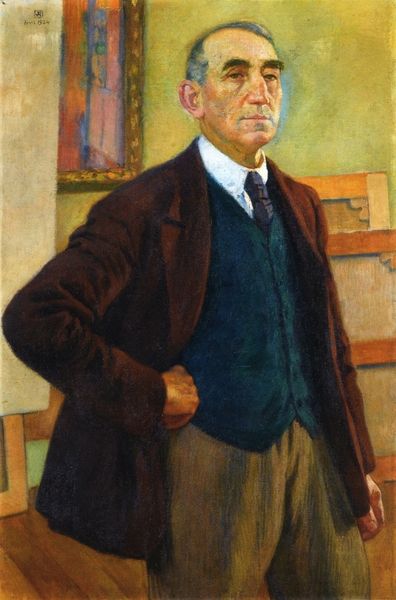
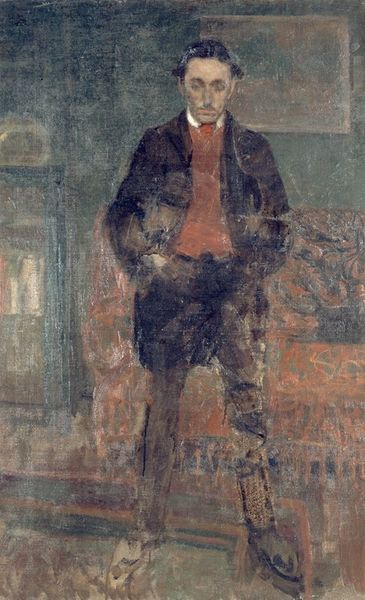
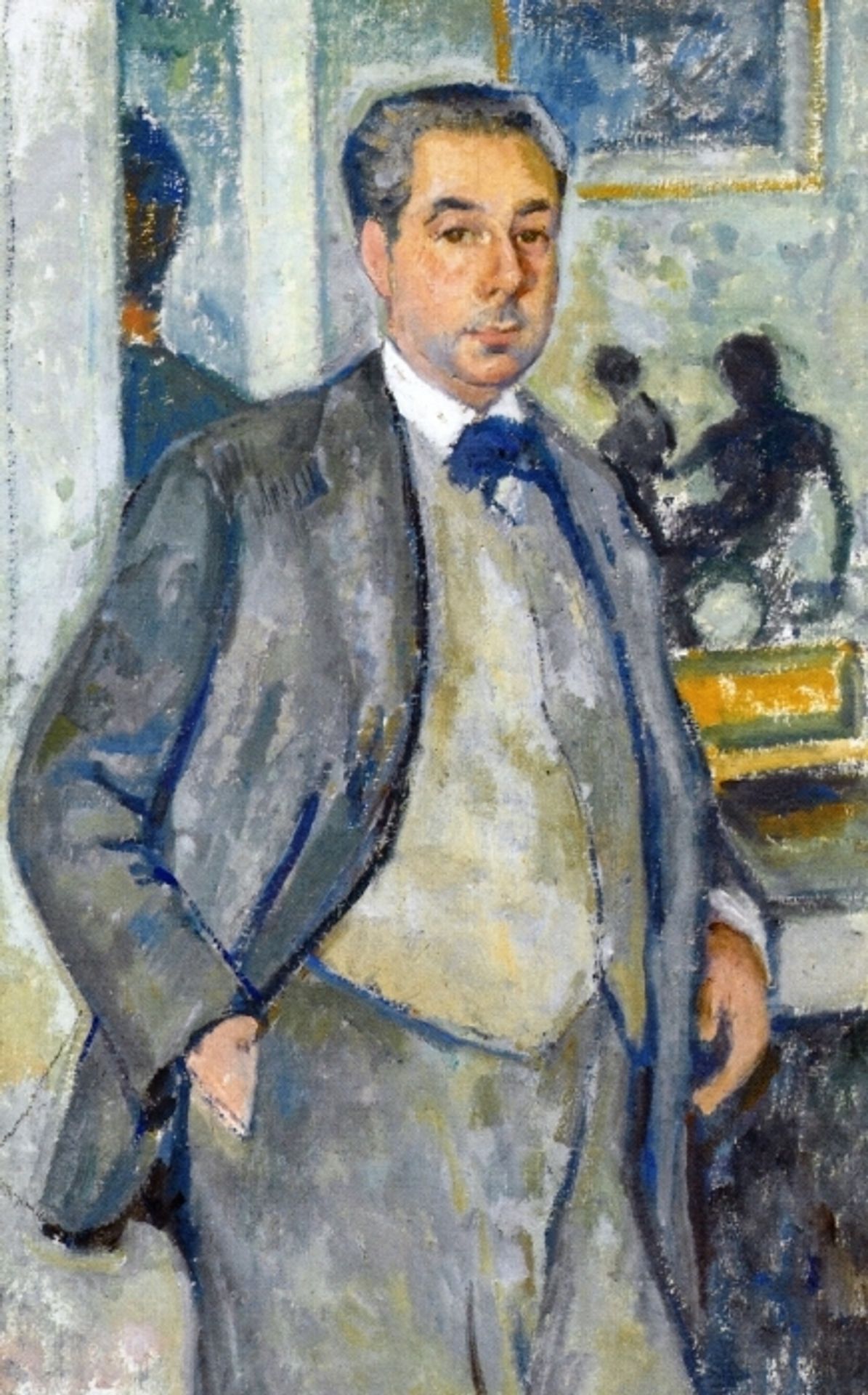
Roger Martin du Gard

Theo van Rysselberghe
1862 - 1926Location
Private CollectionListen to curator's interpretation
Curatorial notes
Curator: Welcome. Before us, we see Theo van Rysselberghe’s "Roger Martin du Gard," an oil painting dating from 1926. It’s currently held in a private collection. Editor: The initial feeling is rather muted, wouldn't you say? The gray tones dominate, and there's a kind of hesitant, almost blurry quality. He appears respectable, firmly part of the establishment. The subdued tones almost feel like an indictment. Curator: Rysselberghe, although associated with Neo-Impressionism earlier in his career, embraces a more loosely handled approach here, wouldn’t you agree? Notice the textured brushstrokes that give the whole canvas a sense of vibrancy. He depicts the French novelist, Roger Martin du Gard, projecting the quiet intensity that many associate with the author’s literary works. Editor: Yes, and I see a clear statement about the cultural elite. Martin du Gard, a celebrated writer, is presented as an important pillar of French society. What's interesting is that his serious expression offers some degree of skepticism, mirroring intellectual tensions of the era. I mean, doesn't it make you wonder what Rysselberghe sought to capture? Curator: Well, portraits during this period served a function; they reflected the sitter's social standing and achievements. As an artist deeply engaged in portraying intellectuals and cultural figures, Rysselberghe provides us a glimpse into Martin du Gard’s world through his distinct, modern lens. Editor: Beyond the immediate social representation, the muted colors speak to the atmosphere of the time. Post-World War I, there was certainly a sense of exhaustion and weariness in intellectual circles as they grappled with existential questions and re-evaluating societal norms. This portrait acts as a powerful reminder of the intellectual class grappling with complex and shifting values during that era. Curator: Absolutely, it’s a fascinating study in how an artist translates intellectual presence into a visual experience, encapsulating an individual, an era, and perhaps even questioning the very structures they represent. Editor: It’s certainly one of those pieces that invites repeated viewings. Each time, there are always different nuances that speak to both the subject and the context in which it was created.