About this artwork
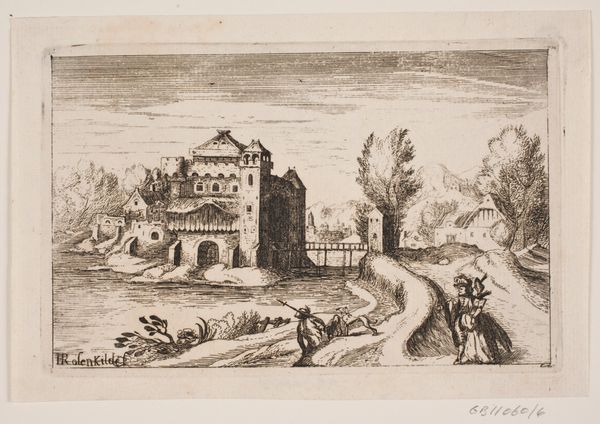
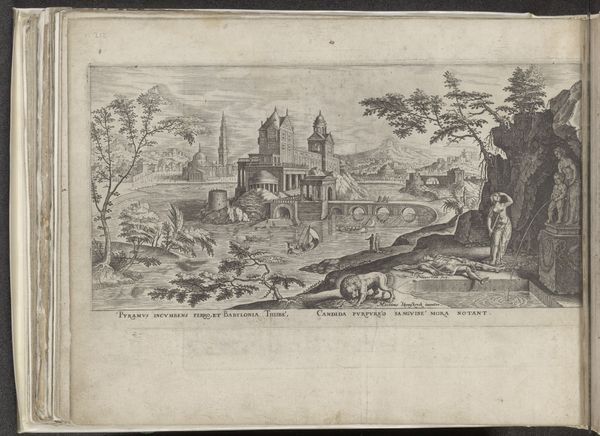
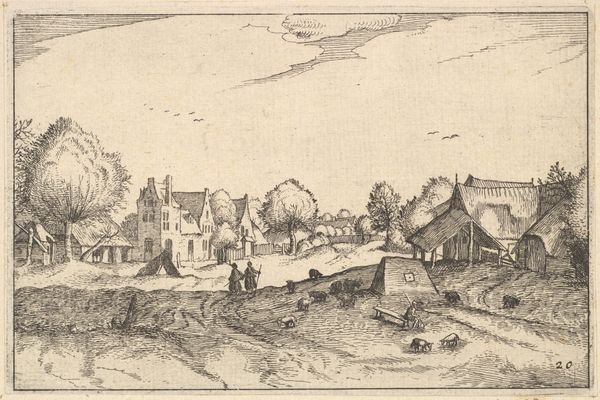
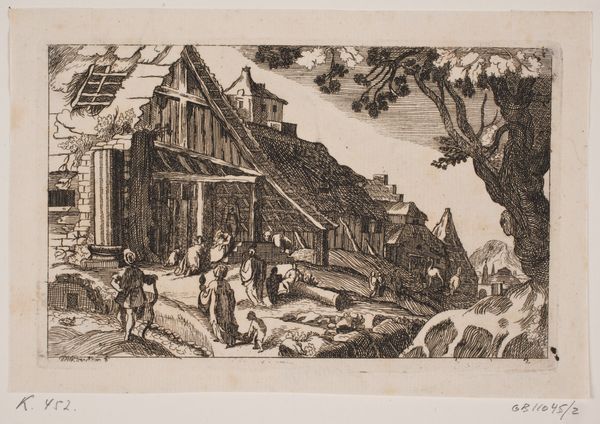
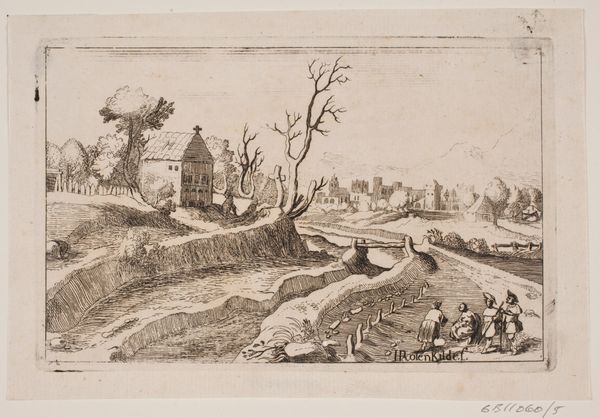
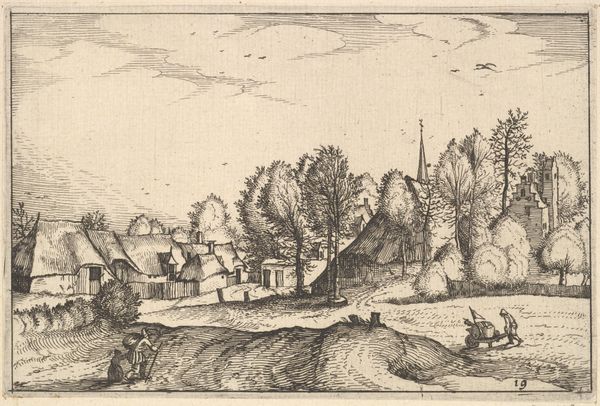
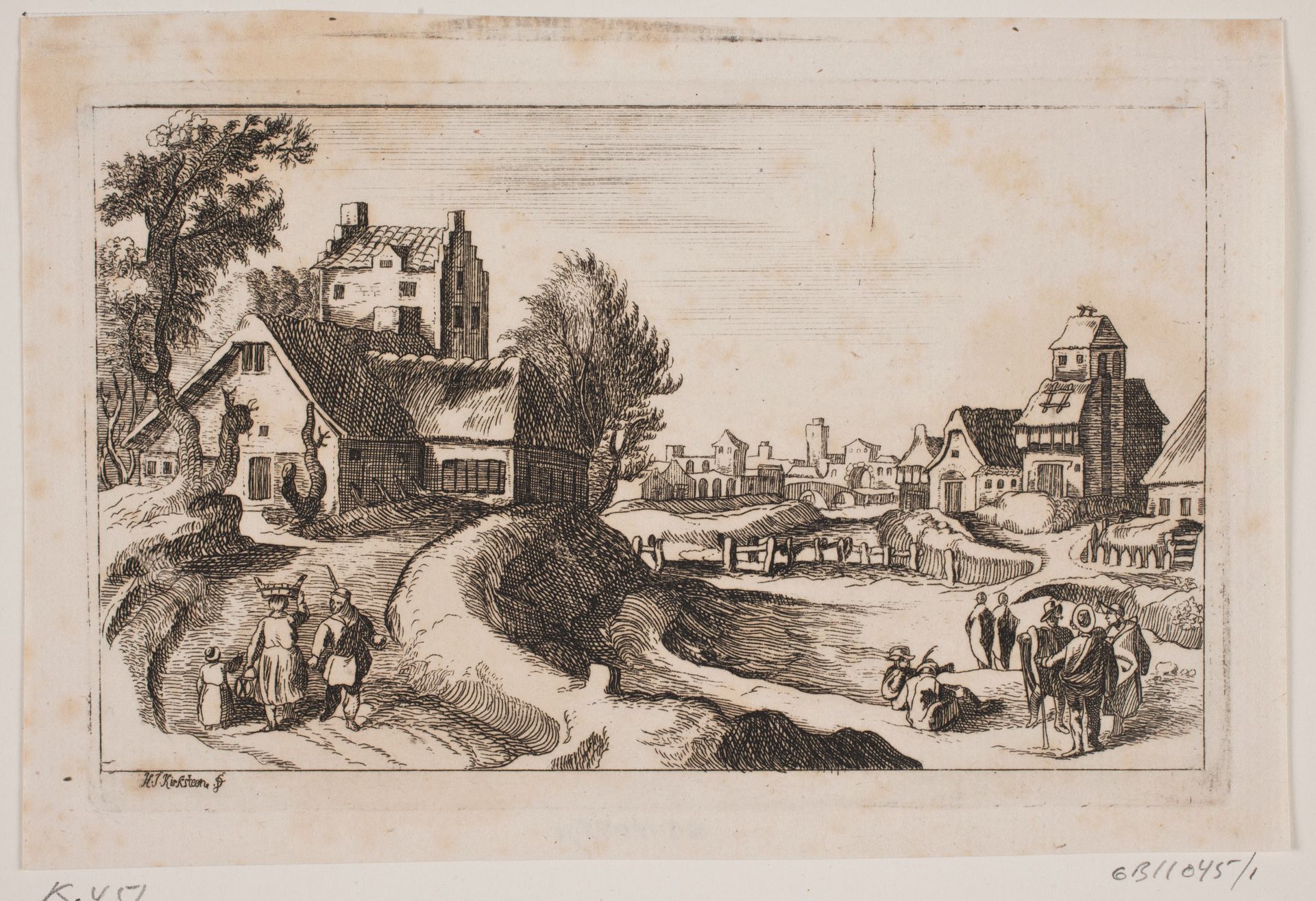
Hans Jørgen Kirksteen made this print of a Danish village using etching. Though undated, its style points to the mid-18th century, a period when the Danish art world was beginning to define itself against foreign influences through the Royal Danish Academy of Fine Arts. "Landsby," or "Village," presents a scene that appears deliberately local, seemingly untouched by external fashion. The people, architecture, and landscape are rendered with what seems to be an objective gaze. But the very act of depicting this scene suggests something of a cultural project, something that served the consolidation of a national artistic identity during a time of cultural and political transition. To understand such artworks more fully, scholars consult period documents, studies of cultural and political history, and institutional records. In doing so, we reveal the complex meanings that emerge when art becomes entwined with the formation of national and cultural identity.
Landsby. Til venstre en vej med en kvinde med kurv på hovedet og et lille barn ved sin side
1746


Artwork details
- Medium
- print, engraving
- Dimensions
- 98 mm (height) x 154 mm (width) (plademaal)
- Location
- SMK - Statens Museum for Kunst
Tags
amateur sketch
toned paper
light pencil work
ink painting
pencil sketch
etching
charcoal drawing
underpainting
watercolour illustration
engraving
watercolor
Comments
Be the first to share your thoughts about this work.
About this artwork
Hans Jørgen Kirksteen made this print of a Danish village using etching. Though undated, its style points to the mid-18th century, a period when the Danish art world was beginning to define itself against foreign influences through the Royal Danish Academy of Fine Arts. "Landsby," or "Village," presents a scene that appears deliberately local, seemingly untouched by external fashion. The people, architecture, and landscape are rendered with what seems to be an objective gaze. But the very act of depicting this scene suggests something of a cultural project, something that served the consolidation of a national artistic identity during a time of cultural and political transition. To understand such artworks more fully, scholars consult period documents, studies of cultural and political history, and institutional records. In doing so, we reveal the complex meanings that emerge when art becomes entwined with the formation of national and cultural identity.
Comments
Be the first to share your thoughts about this work.