About this artwork
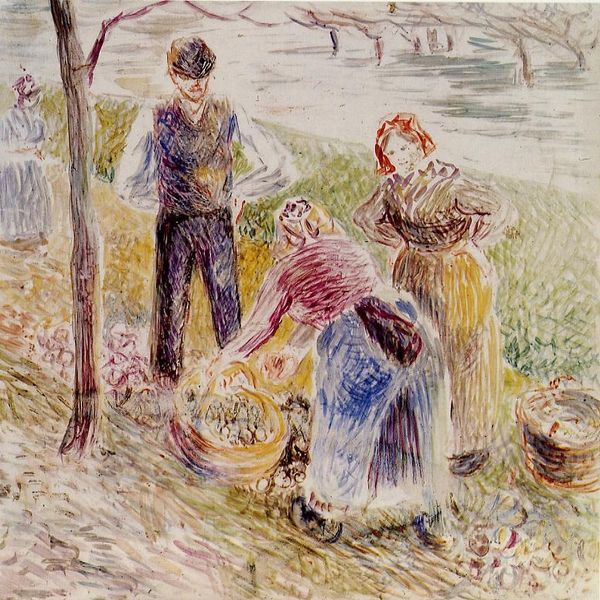
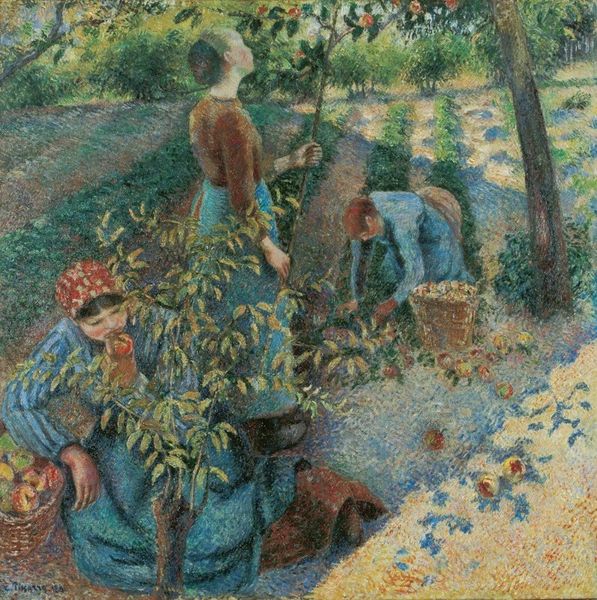
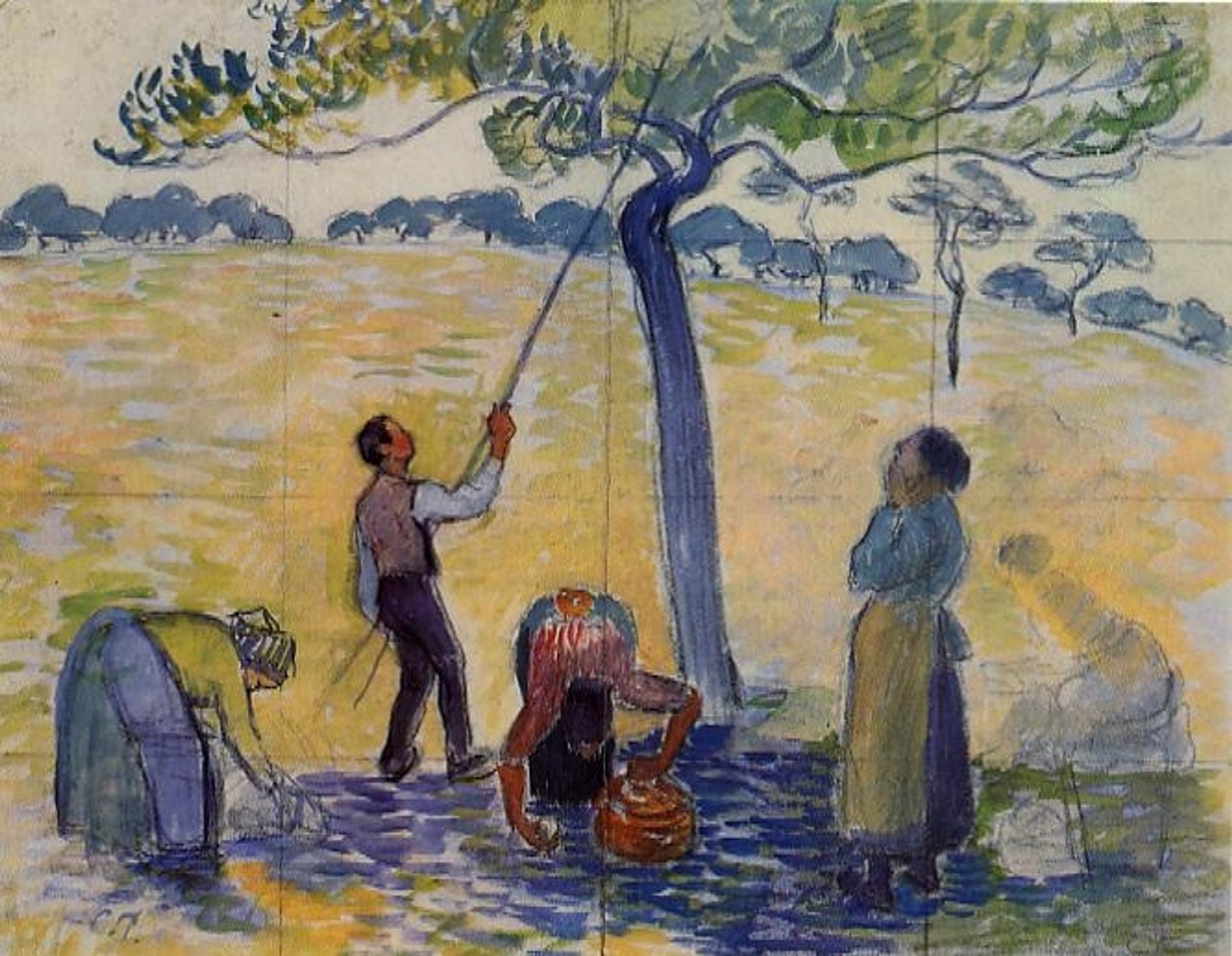
Camille Pissarro made this painting, "Picking Apples," using oil on canvas, but we don't know exactly when. The image portrays agricultural laborers, a subject that connects to the social realities of rural France. During Pissarro's time, the art world largely focused on the lives of the urban bourgeoisie or the dramas of the aristocracy. Here, though, we see the working class represented with a dignity that was rare in art of the period. Pissarro lived in the countryside and had connections with anarchist political movements, which focused on the lives of ordinary people. The painting's meaning stems from the way it challenges traditional hierarchies. It represents a shift in artistic focus towards the everyday experiences of the working class. Historical documents like letters, pamphlets, and agricultural records can further illuminate the social context of this painting and show how Pissarro sought to represent the lives of those often overlooked in mainstream society.

Artwork details
- Medium
- painting, watercolor
- Dimensions
- 46 x 59 cm
- Location
- Private Collection
- Copyright
- Public domain
Tags
painting
impressionism
landscape
impressionist landscape
figuration
watercolor
watercolour illustration
genre-painting
Comments
Be the first to share your thoughts about this work.
About this artwork
Camille Pissarro made this painting, "Picking Apples," using oil on canvas, but we don't know exactly when. The image portrays agricultural laborers, a subject that connects to the social realities of rural France. During Pissarro's time, the art world largely focused on the lives of the urban bourgeoisie or the dramas of the aristocracy. Here, though, we see the working class represented with a dignity that was rare in art of the period. Pissarro lived in the countryside and had connections with anarchist political movements, which focused on the lives of ordinary people. The painting's meaning stems from the way it challenges traditional hierarchies. It represents a shift in artistic focus towards the everyday experiences of the working class. Historical documents like letters, pamphlets, and agricultural records can further illuminate the social context of this painting and show how Pissarro sought to represent the lives of those often overlooked in mainstream society.
Comments
Be the first to share your thoughts about this work.