About this artwork
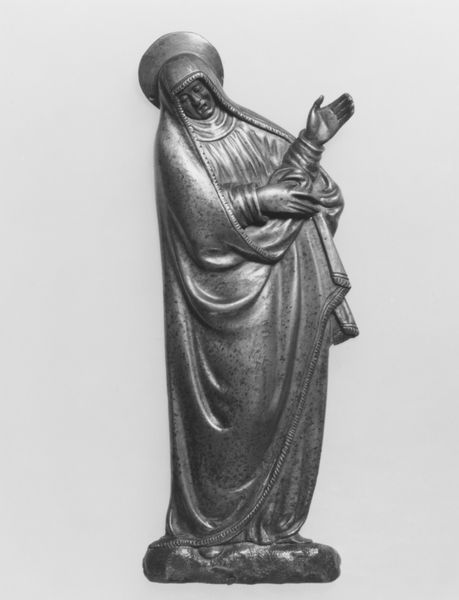
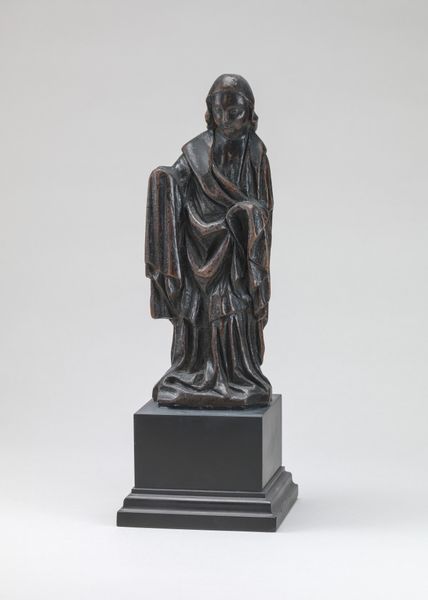
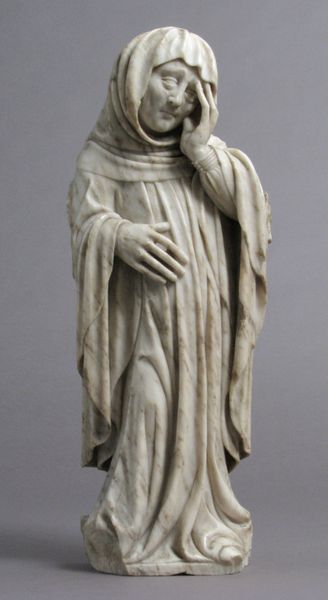
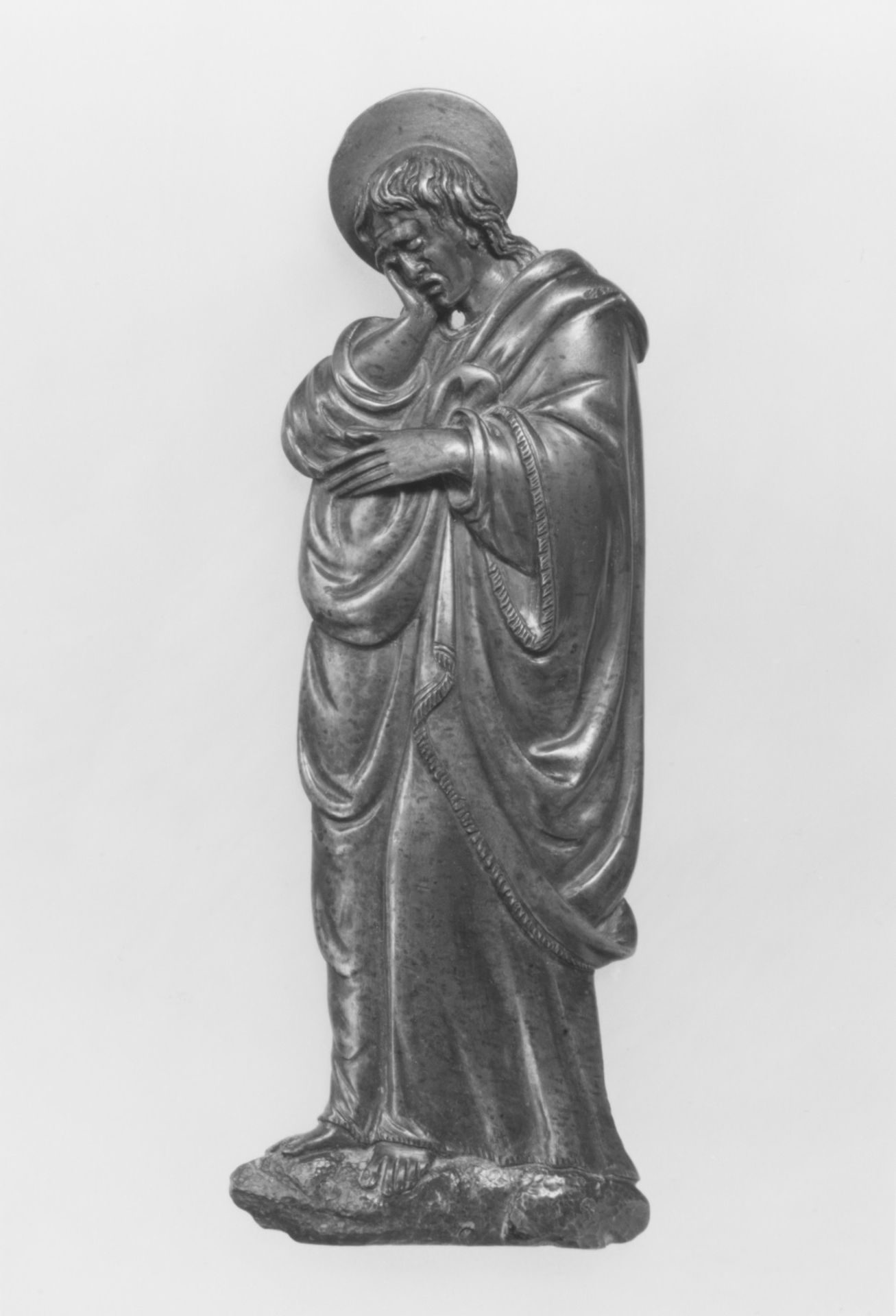
This is Benedetto da Maiano's small bronze sculpture of the Mourning St. John. The halo around St. John's head signifies his sanctity, yet it is his posture that speaks volumes. Observe how John’s downcast gaze and the cradling of his face in his hand is a universal expression of grief, an echo that reverberates through time. This gesture, rooted in ancient mourning rituals, transcends cultural boundaries, appearing in various guises across art history, from classical antiquity to modern photography. Think of the melancholic figures in Roman sarcophagi or the mourning women in medieval crucifixion scenes. The psychological weight of this image lies in its ability to tap into our collective memory of loss. It serves as a potent reminder of the cyclical nature of human emotions. This posture of grief recurs throughout history, evolving yet retaining its core essence, a testament to our shared human experience of sorrow.
Mourning St. John from a Crucifixion Group
15th century

Benedetto da Maiano
1442 - 1497
The Metropolitan Museum of Art
Metropolitan Museum of Art, New York, NYArtwork details
- Medium
- relief, sculpture, marble
- Dimensions
- Height: 9 5/8 in. (24.4 cm)
- Location
- Metropolitan Museum of Art, New York, NY
- Copyright
- Public Domain
Tags
Comments
Share your thoughts
About this artwork
This is Benedetto da Maiano's small bronze sculpture of the Mourning St. John. The halo around St. John's head signifies his sanctity, yet it is his posture that speaks volumes. Observe how John’s downcast gaze and the cradling of his face in his hand is a universal expression of grief, an echo that reverberates through time. This gesture, rooted in ancient mourning rituals, transcends cultural boundaries, appearing in various guises across art history, from classical antiquity to modern photography. Think of the melancholic figures in Roman sarcophagi or the mourning women in medieval crucifixion scenes. The psychological weight of this image lies in its ability to tap into our collective memory of loss. It serves as a potent reminder of the cyclical nature of human emotions. This posture of grief recurs throughout history, evolving yet retaining its core essence, a testament to our shared human experience of sorrow.
Comments
Share your thoughts