About this artwork
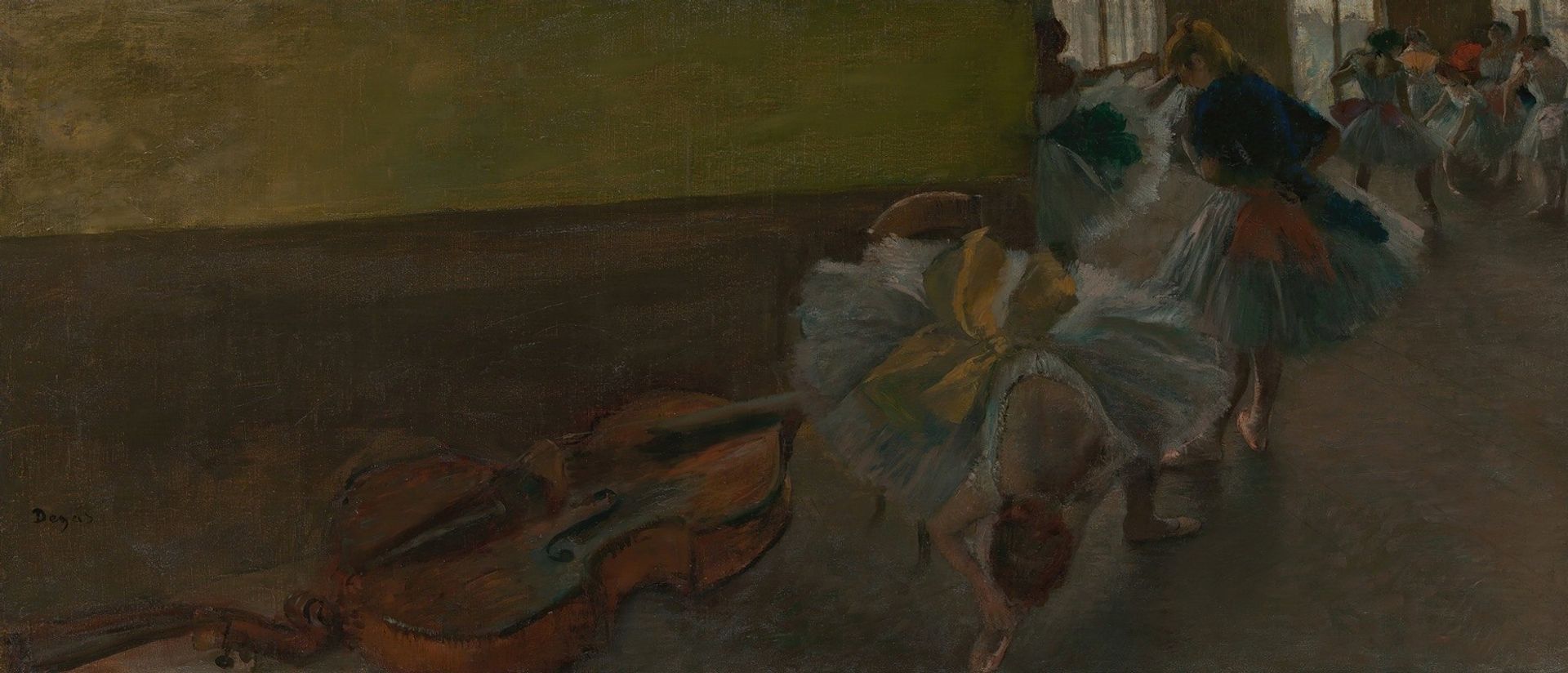
Edgar Degas' painting, "Dancers in the Rehearsal Room with a Double Bass," offers us a glimpse into the world of the late 19th-century Parisian ballet. But it's not just a pretty picture of dancers in motion. This painting, like many of Degas' works, invites us to consider the social realities of the time. Made in France, a period when ballet was a highly structured and hierarchical institution, Degas shows the dancers in a rehearsal, not on stage. Ballet dancers were often from working-class backgrounds, seeking upward mobility through their art. Degas was fascinated by the performance of femininity in the dancers’ movements. To understand this work better, we might research the history of the Paris Opera Ballet, the social status of dancers, and the ways in which artists like Degas engaged with the art institutions of their time. It reminds us that art doesn't exist in a vacuum; it is shaped by, and reflects, the society in which it is created.

Artwork details
- Medium
- painting, oil-paint
- Copyright
- Public Domain: Artvee
Tags
Comments
Share your thoughts
About this artwork
Edgar Degas' painting, "Dancers in the Rehearsal Room with a Double Bass," offers us a glimpse into the world of the late 19th-century Parisian ballet. But it's not just a pretty picture of dancers in motion. This painting, like many of Degas' works, invites us to consider the social realities of the time. Made in France, a period when ballet was a highly structured and hierarchical institution, Degas shows the dancers in a rehearsal, not on stage. Ballet dancers were often from working-class backgrounds, seeking upward mobility through their art. Degas was fascinated by the performance of femininity in the dancers’ movements. To understand this work better, we might research the history of the Paris Opera Ballet, the social status of dancers, and the ways in which artists like Degas engaged with the art institutions of their time. It reminds us that art doesn't exist in a vacuum; it is shaped by, and reflects, the society in which it is created.
Comments
Share your thoughts