About this artwork
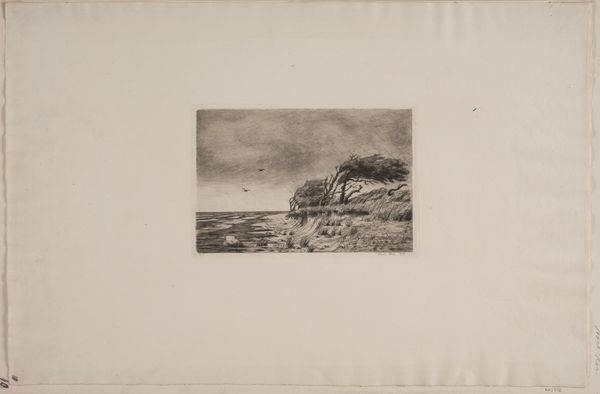
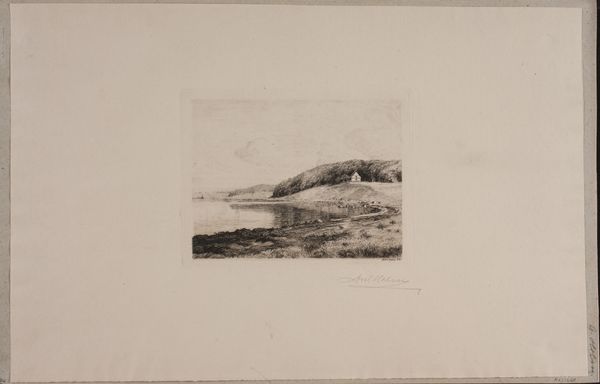
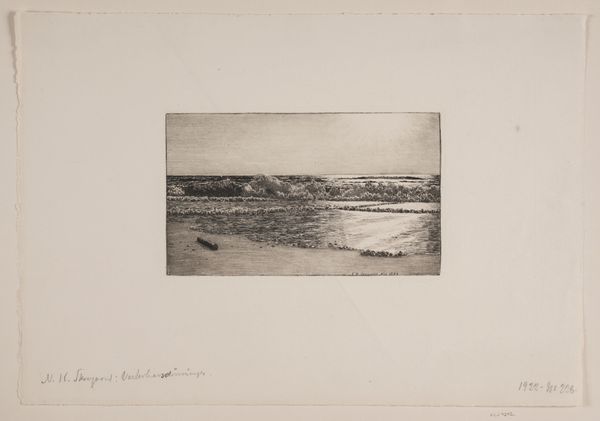
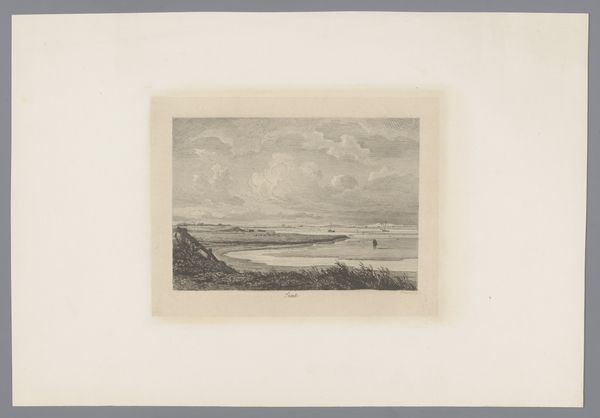
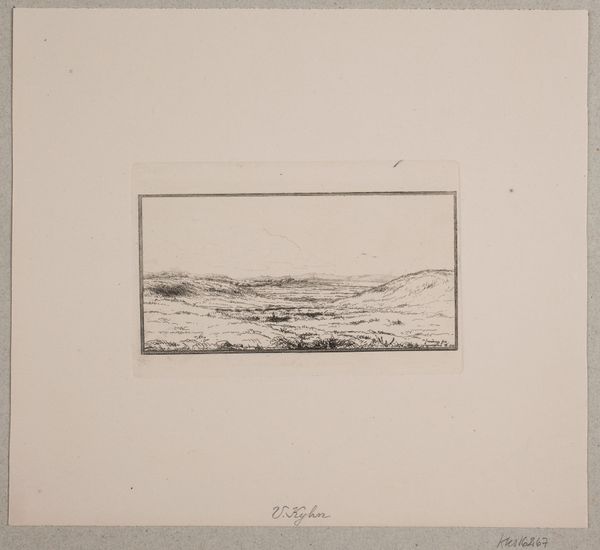
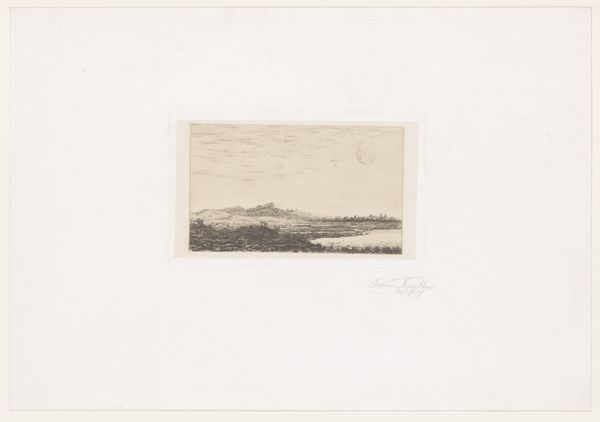
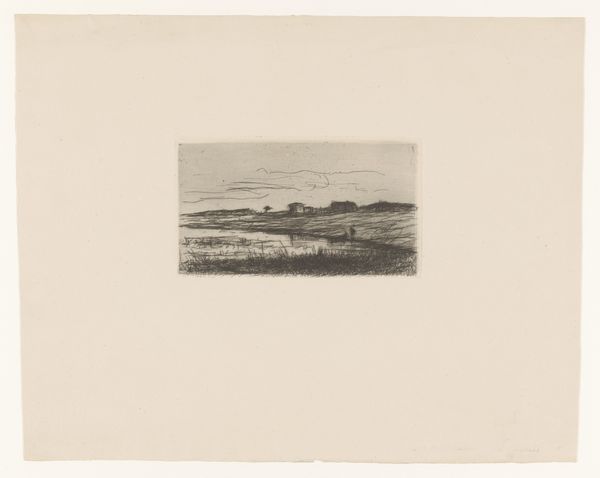
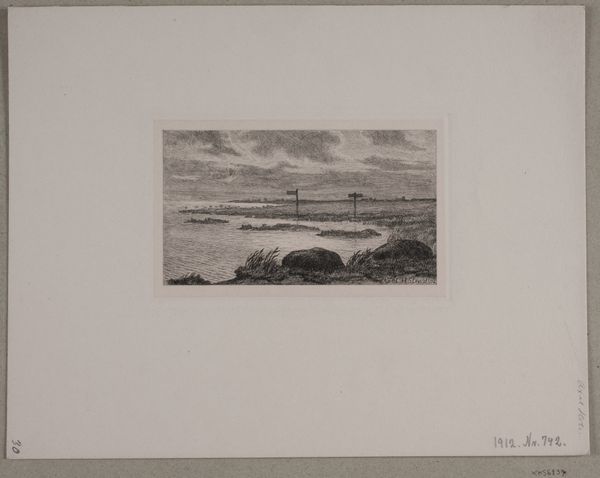
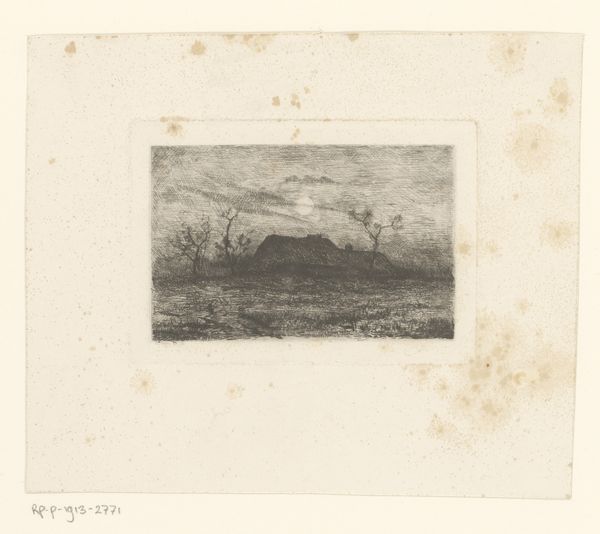
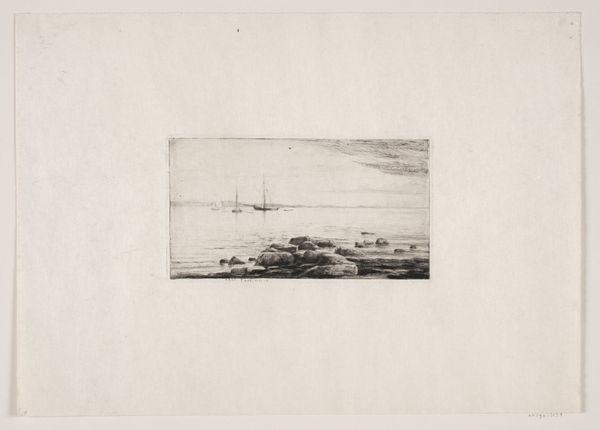
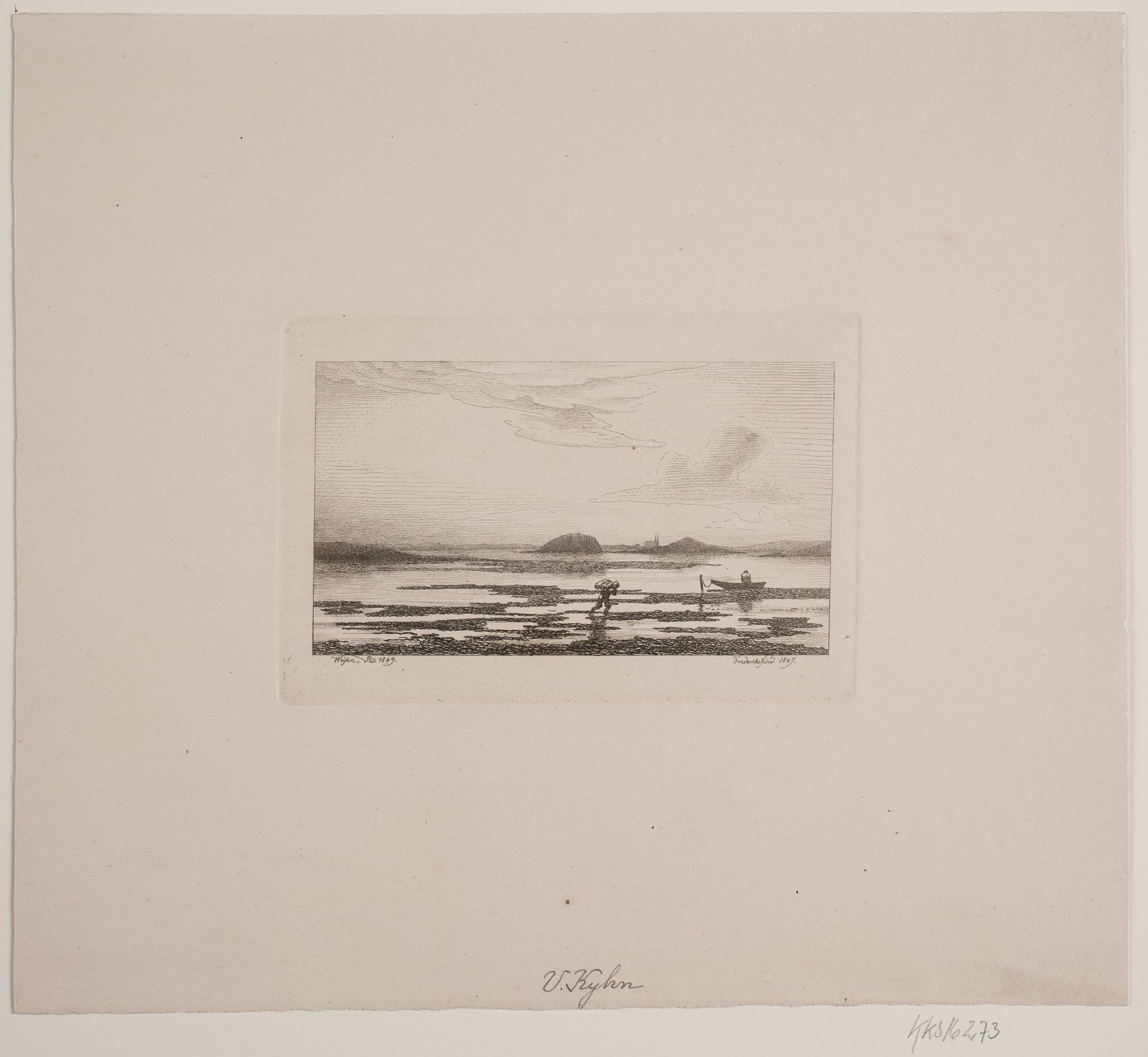
Vilhelm Kyhn made this etching, *Strandparti ved Frederikssund*, sometime in the 19th century. The image depicts a scene on the coast of Denmark, likely near the town of Frederikssund. We see figures engaged in work and leisure, framed by the subtle tonalities of the shoreline. The image subtly addresses the social and economic conditions of 19th-century Denmark. As Denmark modernized, artists began to turn to landscape as a subject in itself. Kyhn’s work often celebrates the Danish countryside. Here, he emphasizes the relationship between the people and their natural environment. The etching medium itself is significant, allowing for wider distribution of images, and thereby shaping a shared vision of Danish identity. Kyhn taught at the Royal Danish Academy, making him central to the development of Danish art and its institutions. To fully understand this image, one could consult exhibition catalogues and the artist's writings. By analyzing the social and institutional contexts of art, we gain insight into its broader cultural meanings.
Strandparti ved Frederikssund
1849


Artwork details
- Medium
- print, etching
- Dimensions
- 98 mm (height) x 145 mm (width) (plademaal)
- Location
- SMK - Statens Museum for Kunst
Tags
Comments
Share your thoughts
About this artwork
Vilhelm Kyhn made this etching, *Strandparti ved Frederikssund*, sometime in the 19th century. The image depicts a scene on the coast of Denmark, likely near the town of Frederikssund. We see figures engaged in work and leisure, framed by the subtle tonalities of the shoreline. The image subtly addresses the social and economic conditions of 19th-century Denmark. As Denmark modernized, artists began to turn to landscape as a subject in itself. Kyhn’s work often celebrates the Danish countryside. Here, he emphasizes the relationship between the people and their natural environment. The etching medium itself is significant, allowing for wider distribution of images, and thereby shaping a shared vision of Danish identity. Kyhn taught at the Royal Danish Academy, making him central to the development of Danish art and its institutions. To fully understand this image, one could consult exhibition catalogues and the artist's writings. By analyzing the social and institutional contexts of art, we gain insight into its broader cultural meanings.
Comments
Share your thoughts