About this artwork
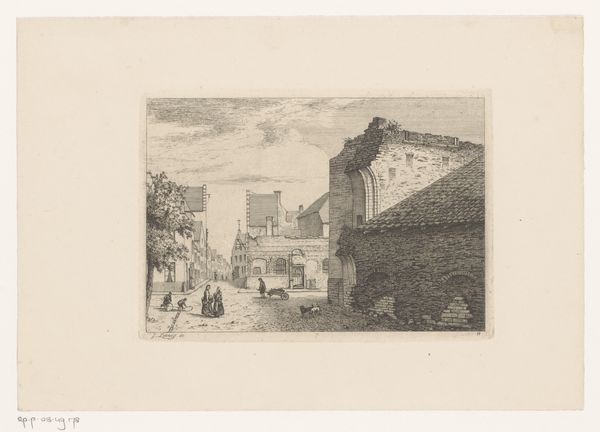
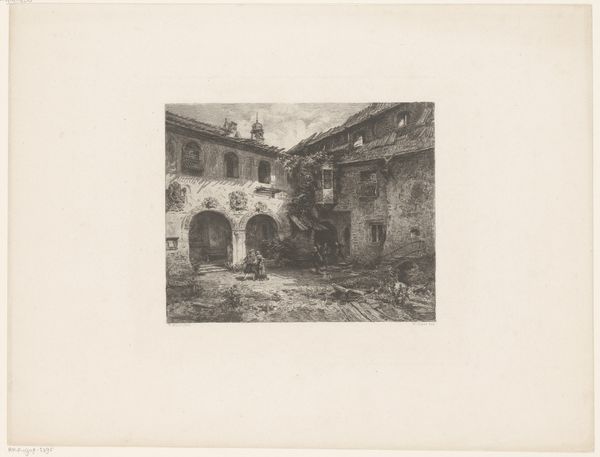
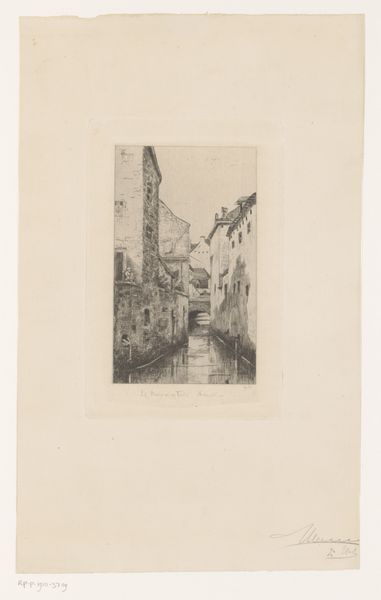
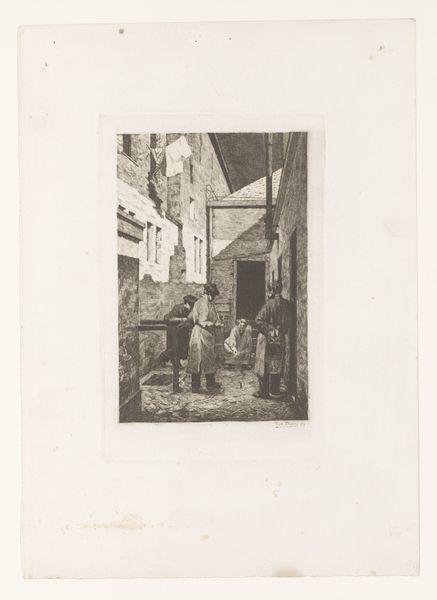
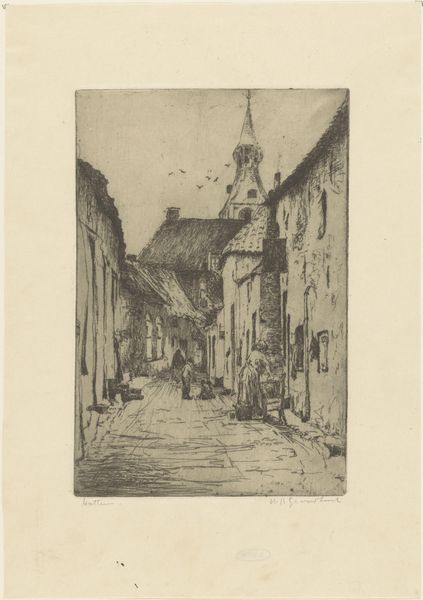
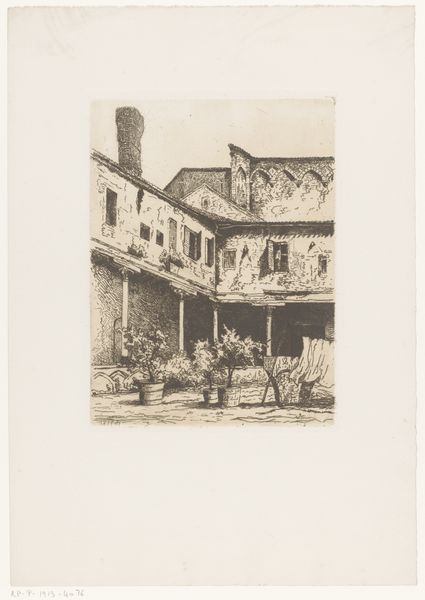
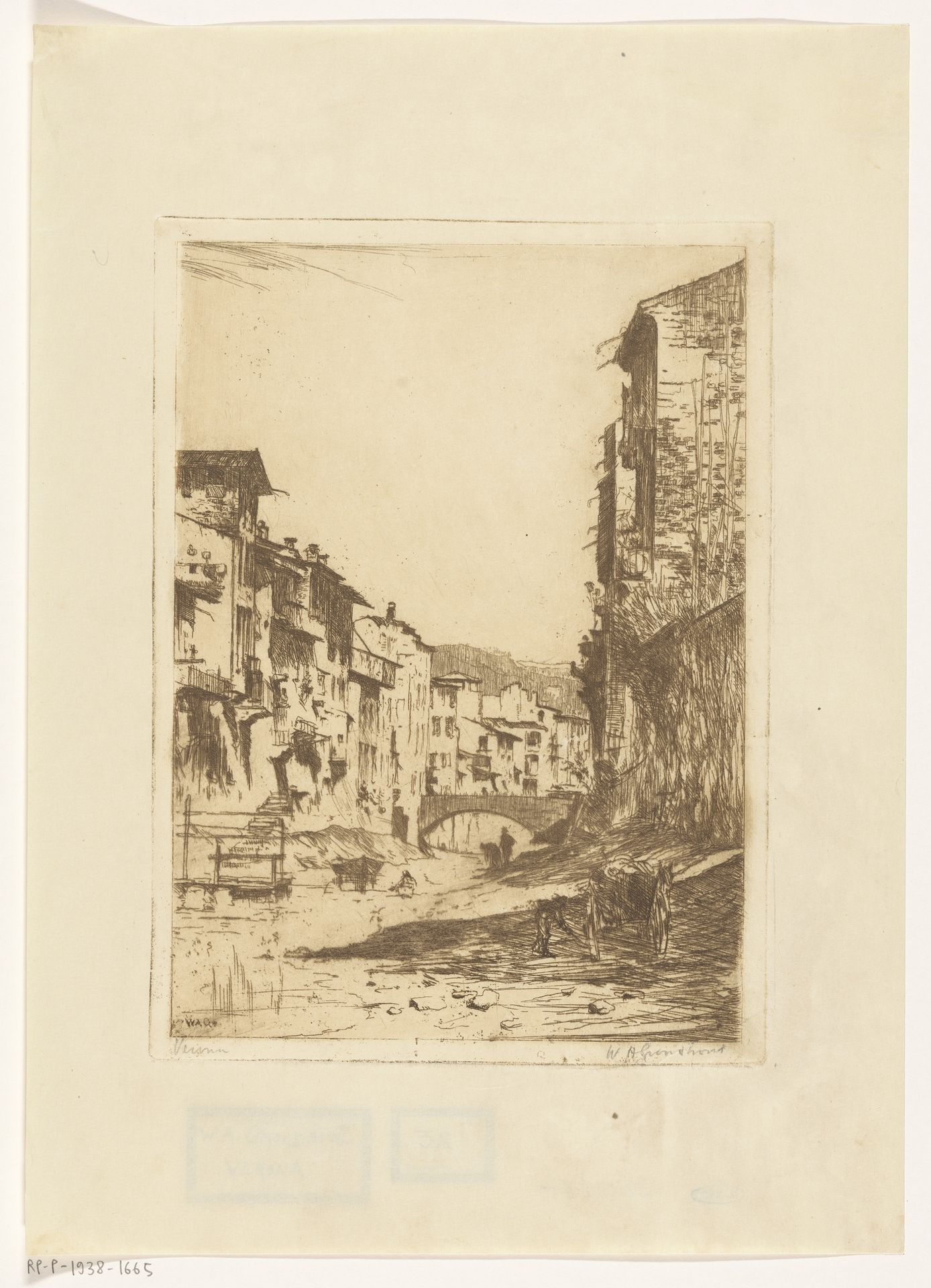
Curator: Looking at this etching of Verona, dating from between 1888 and 1934 by Willem Adrianus Grondhout, one can't help but feel a sense of stillness. Editor: Yes, I am struck by the texture created through the etching process. The roughness gives the scene a sort of tactile quality. I am also curious, though. What type of paper was used, and do we know the state of the etching plates, whether worn, reused? Curator: From a historical perspective, cityscapes like this gained traction with the rise of urbanism. Art became a mirror, reflecting how society was reshaping the landscape, often glorifying progress and sometimes subtly critiquing it. What sociopolitical function does such a view provide? Editor: The print medium suggests a democratizing intent, producing copies makes artwork more accessible. Etching as a craft also involved specific tools, materials, and skills that were very much part of a larger economic structure of production and consumption at the time, making even ‘fine art’ an occupation much like other means of supporting yourself and your family. Curator: I agree that the accessibility speaks volumes, democratizing artistic engagement. What are your final thoughts regarding this particular impression of Verona? Editor: Thinking about it materially, this artwork provides texture but, even better, access to culture in general and offers critical questions about value and status.

Artwork details
- Medium
- print, etching
- Dimensions
- height 283 mm, width 207 mm
- Location
- Rijksmuseum
- Copyright
- Rijks Museum: Open Domain
Tags
Comments
Share your thoughts
About this artwork
Curator: Looking at this etching of Verona, dating from between 1888 and 1934 by Willem Adrianus Grondhout, one can't help but feel a sense of stillness. Editor: Yes, I am struck by the texture created through the etching process. The roughness gives the scene a sort of tactile quality. I am also curious, though. What type of paper was used, and do we know the state of the etching plates, whether worn, reused? Curator: From a historical perspective, cityscapes like this gained traction with the rise of urbanism. Art became a mirror, reflecting how society was reshaping the landscape, often glorifying progress and sometimes subtly critiquing it. What sociopolitical function does such a view provide? Editor: The print medium suggests a democratizing intent, producing copies makes artwork more accessible. Etching as a craft also involved specific tools, materials, and skills that were very much part of a larger economic structure of production and consumption at the time, making even ‘fine art’ an occupation much like other means of supporting yourself and your family. Curator: I agree that the accessibility speaks volumes, democratizing artistic engagement. What are your final thoughts regarding this particular impression of Verona? Editor: Thinking about it materially, this artwork provides texture but, even better, access to culture in general and offers critical questions about value and status.
Comments
Share your thoughts