About this artwork
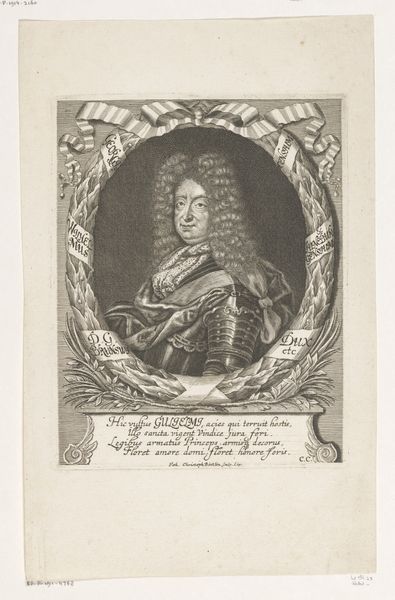
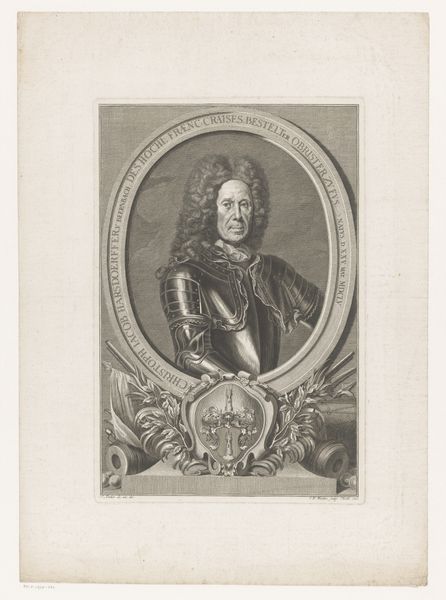
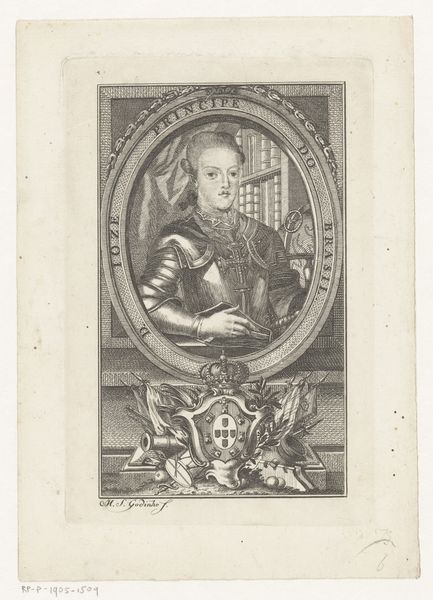
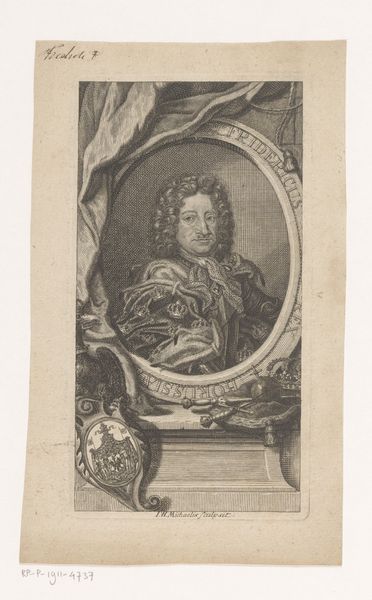
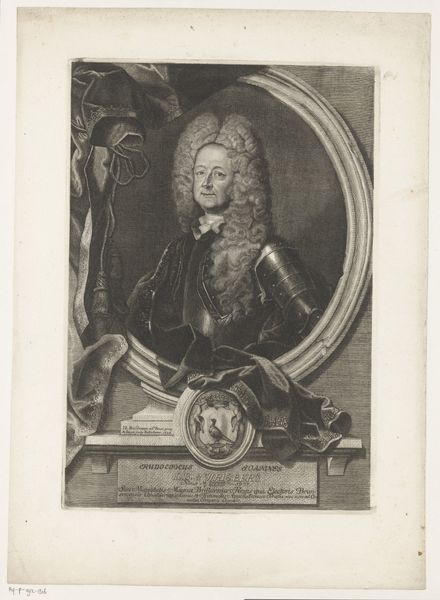
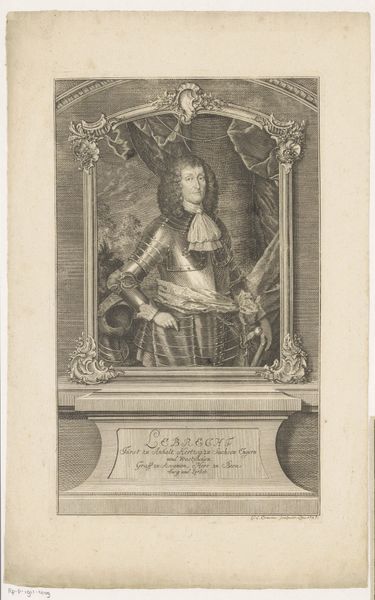
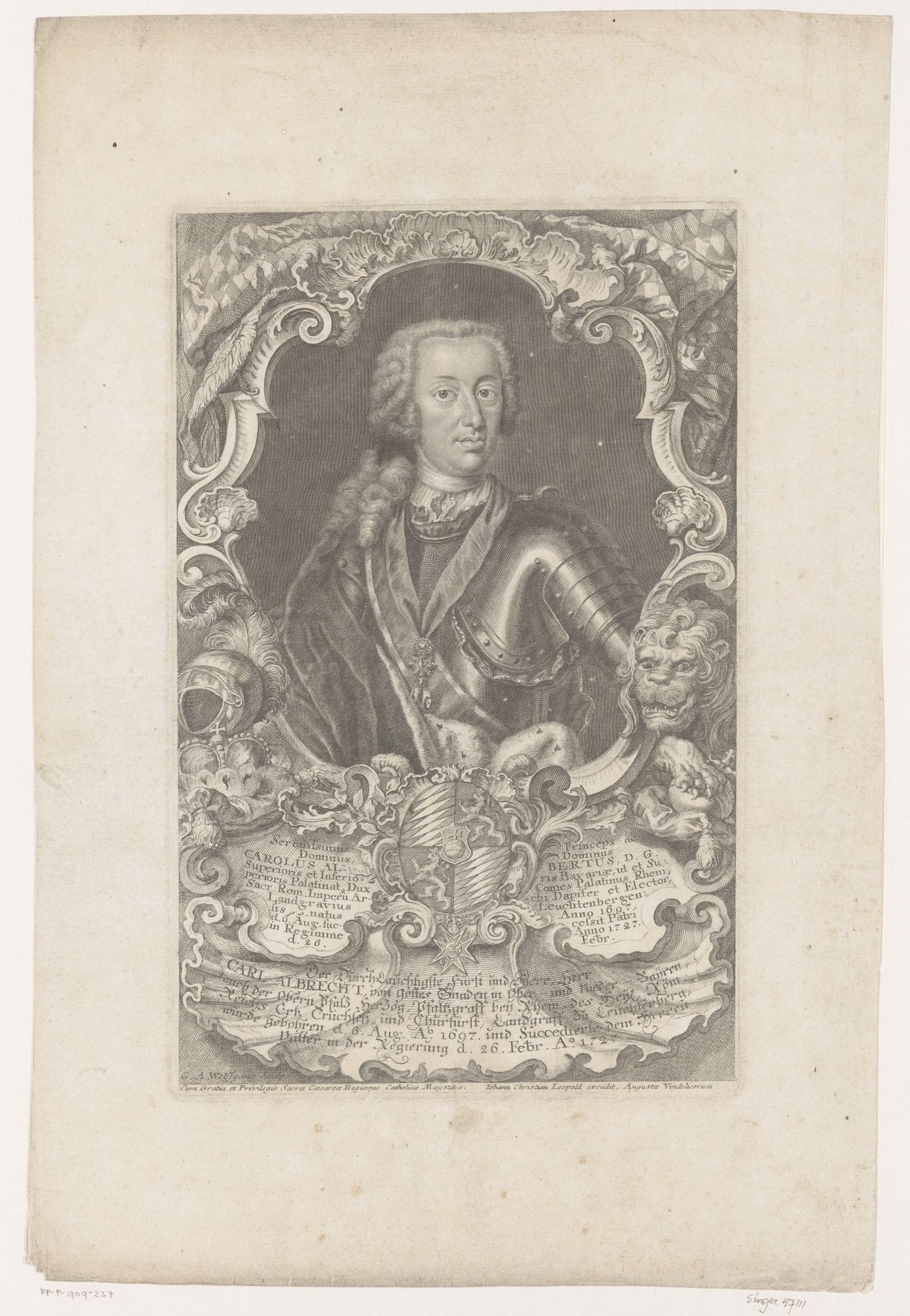
This is Gustav Andreas Wolfgang’s portrait of Karl VII Albert. It captures the Emperor adorned in armor, a symbol of strength, framed by ornate decorations teeming with cultural symbols. Note the recurring motif of the lion, a heraldic symbol of courage and royalty, positioned prominently alongside allegorical figures. These lions evoke ancient mythologies, reminiscent of the Nemean lion of Hercules, embodying primal power. Observe how the image of the lion has transformed over millennia: from a symbol of raw, untamed force to an emblem of regal authority. It is a visual echo resonating through history. Such imagery taps into our collective memory, stirring subconscious associations of power and protection, engaging the viewer on a deeply psychological level. The cyclical nature of these symbols shows how they resurface, evolve, and acquire new meanings, revealing the endurance of cultural memory.
Portret van Karel VII Albert
1727 - 1775

Gustav Andreas (1692-1775) Wolfgang
1692 - 1775Location
RijksmuseumArtwork details
- Medium
- print, engraving
- Dimensions
- height 300 mm, width 191 mm
- Location
- Rijksmuseum
- Copyright
- Rijks Museum: Open Domain
Tags
Comments
Share your thoughts
About this artwork
This is Gustav Andreas Wolfgang’s portrait of Karl VII Albert. It captures the Emperor adorned in armor, a symbol of strength, framed by ornate decorations teeming with cultural symbols. Note the recurring motif of the lion, a heraldic symbol of courage and royalty, positioned prominently alongside allegorical figures. These lions evoke ancient mythologies, reminiscent of the Nemean lion of Hercules, embodying primal power. Observe how the image of the lion has transformed over millennia: from a symbol of raw, untamed force to an emblem of regal authority. It is a visual echo resonating through history. Such imagery taps into our collective memory, stirring subconscious associations of power and protection, engaging the viewer on a deeply psychological level. The cyclical nature of these symbols shows how they resurface, evolve, and acquire new meanings, revealing the endurance of cultural memory.
Comments
Share your thoughts